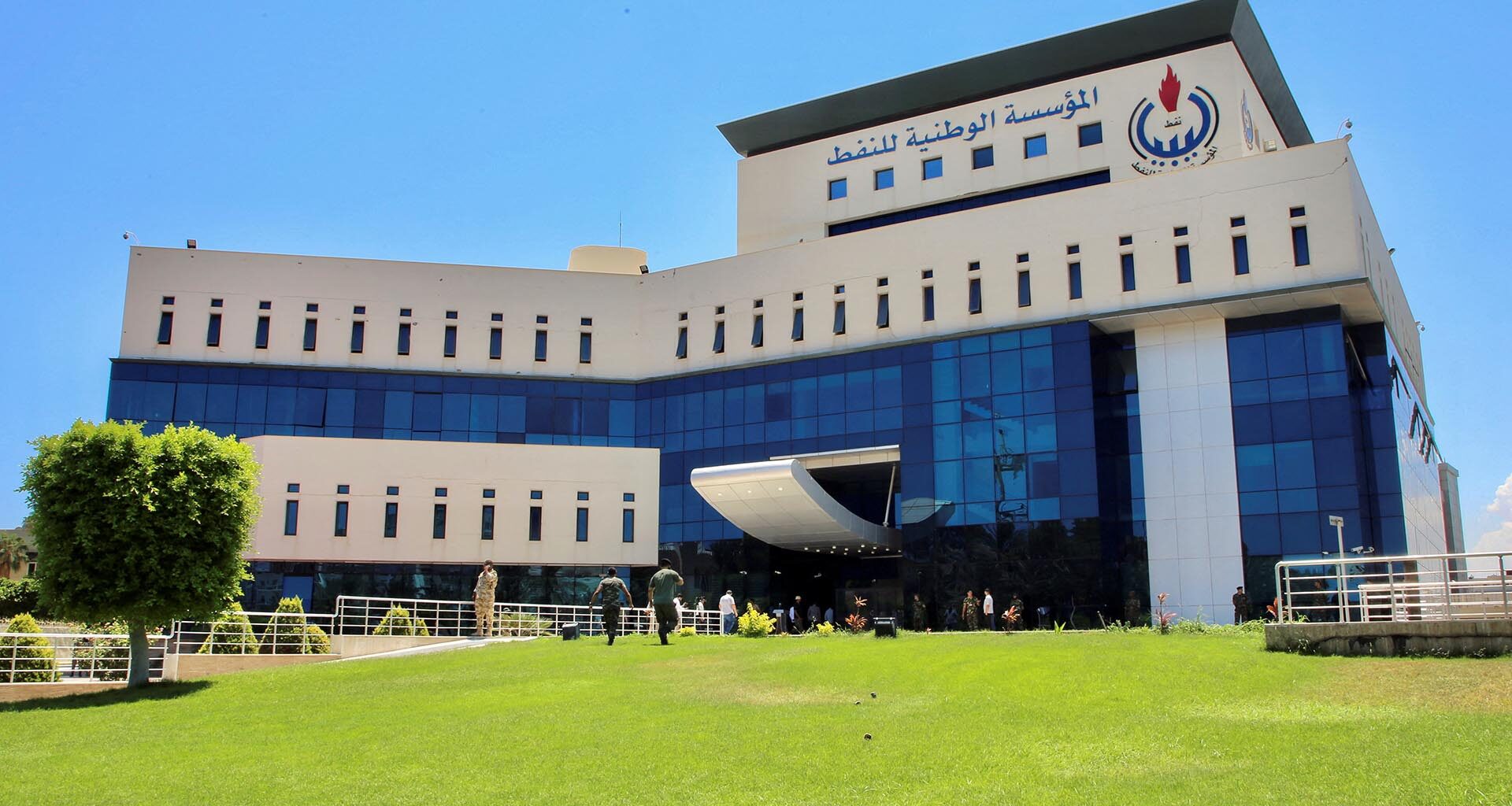
Libya’s National Oil Corporation (NOC) needs to drum up some USD 30-40 bn in investments as it races to achieve its target of lifting its crude output to 2 mn bb / d by 2030, up from around 1.4 mn bb / d today, NOC Chairman Masoud Suleman tells the Financial Times.
To achieve that, Libya is looking into revamping the terms for prospective investors. The NOC is weighing a return to concession-style agreements, under which foreign investors would shoulder more of the upfront capex while retaining more of the profits, or a rework of existing production-sharing terms to the same effect. Under current rules, the NOC has to fund its share of development costs in joint ventures — a structure that has stranded projects whenever state funding runs late.
The pitch comes amid a US push for unity driven by business impulses and rising tensions. Washington has been pushing Libya’s two governments toward unity on business grounds — the first unified budget in 13 years passed earlier this year with visible US encouragement. That runs alongside sharpening security risks amid political assassinations in the east and drone attacks on Zawia Refining Complex in the west — risks that Suleman dismissed as the work of a “small number of outlaws” in a limited area and that investment sites sit well outside the tension zones.
REMEMBER- We previously reported that Libya’s high-quality reserves and the reconstruction opportunity around them would only draw international capital at scale if three conditions are met: A predictable fiscal and governance architecture, an improvement in the supporting infrastructure (roads, airports, and pipelines), and a reliable banking sector, which is currently too fragmented and under-capitalized to intermediate flows on the scale a USD 30-40 bn.
Going local
The Egyptian government is planning to source 89-93% of its FY 2026-27 financing needs from the domestic market, with external borrowing accounting for just 6-9%, according to the ministry’s annual borrowing strategy seen by EnterpriseAM. Other sources, including asset monetization proceeds, are expected to cover the remaining c. 0.5-0.8%.
For the external mix, cheaper money will dominate and new issuances will remain below maturities. Concessional and semi-concessional loans and budget support are expected to provide 66-72% of external borrowing, with international issuances accounting for the remaining 28-34%. The government also intends to keep international issuances below maturities to reduce net external debt. FY 2026-27 calendar includes USD 515.7 mn-equivalent in Panda bonds next October, USD 2 bn in conventional bonds in January 2027, and USD 369.1 mn-equivalent Samurai bonds in March 2027.
IN CONTEXT- Egypt cut the budget sector’s external debt by around USD 2 bn, bringing it down to 19.6% of GDP in March 2026 from 21.8% in June 2025. Total budget-sector debt stood at 83.9% of GDP in March, down from its 96% peak in FY 2022-23, while the average maturity of the budget-sector debt portfolio rose to 10.52 years.
The Saudi player eying Egypt’s gold
Saudi Gold Refinery is one of the bidders for the 42 blocks that Egypt opened for investors this summer, and it’s coming off strong. The firm is pledging to move to production by 2030 if it clinches a concession and plans to self-finance the exploration process, the Riyadh-based firm’s Chairperson Suleiman Al Othaim said yesterday. The goal is to develop a project at the scale of Egypt’s revered Al Sokari mine, Al Othaim said.
But that’s easier said than done. When a firm secures an exploration concession, there’s no guarantee that the reserves and the geology support economic feasibility for production. And even when the geology supports it, reaching economic feasibility is a complex process that requires prudent, phased capex spending. Brute-forcing your way from exploration to production feasibility almost certainly means compressing the exploration process and digging holes at a rate faster than the data allows, unnecessarily burning through capital, as we previously reported in a deep dive.
IN CONTEXT- This bidding phase is the first test of the government’s newly minted rolling exploration system, launched in June, which dismantled the old, highly bureaucratic single-deadline tender format in favor of a rolling application window in which placing an initial bid on a block triggers an automatic 30-day competitive counteroffer period before closing. The new bidding system is part of a larger effort to lure in investors in mining, with the goal of bringing the sector’s contribution to GDP rise to 5-6% by 2030 from under 1% today.
Related