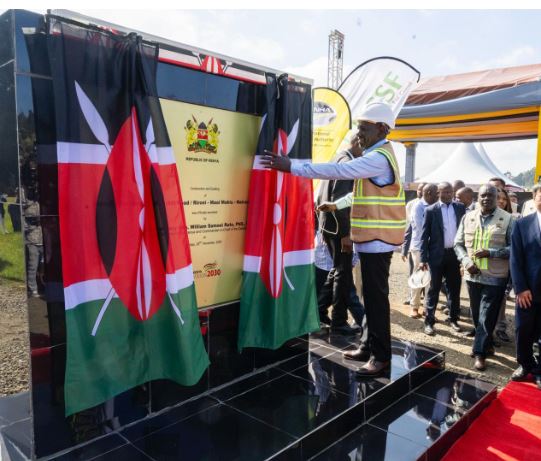
 President William Ruto commissions Rironi-Mau summit road at Kamandura, Kiambu, on November 28, 2025/PCS
As 2025 draws to a close, Kenyans are preparing to usher in
2026 with heightened expectations.
The government has unveiled an ambitious slate of
infrastructure projects across the country, signaling a transformative period
aimed at boosting connectivity, enhancing economic growth, and improving the
standard of living.
These initiatives span road expansions, railway extensions,
sports facilities, water infrastructure, and power transmission projects,
reflecting a comprehensive approach to national development.
The projects are strategically distributed across the
country, targeting both urban and rural areas to ensure equitable economic
opportunities and regional integration.
One of the most anticipated projects is the dualling of the
170-kilometre Rironi–Naivasha–Mau Summit highway, commenced on November
28, 2025, as announced by President William Ruto.
On the same day, construction on the 58-kilometre
Rironi–Maai Mahiu–Naivasha road started, widening a critical southern
corridor.
Speaking at State House Nairobi after a meeting with Zhang
Bingman, President of China Communications Construction Company (CCCC), Ruto
described the project as a “major milestone” for Kenya’s Northern Corridor.
The roadworks will be executed by China Road and Bridge
Corporation (CRBC), a subsidiary of CCCC.
The Rironi–Mau Summit highway is a vital section linking
Nairobi, Nakuru, and Western Kenya.
Ruto emphasised the importance of the project: “This upgrade
will facilitate movement, boost trade, and bring an end to decades of agonising
traffic gridlock, congestion, delays, and disastrous accidents.”
The Rironi–Maai Mahiu–Naivasha extension is expected to
unlock new economic and logistics frontiers.
“On the same day, we will also break ground for the 58km
dualling of the Rironi–Maai Mahiu–Naivasha road, opening new frontiers on a
highway that serves the southern part of our country,” he added.
Both projects are being implemented under a Public-Private
Partnership (PPP) framework through a 30-year
Design-Build-Finance-Operate-Maintain-Transfer (DBFOM-T) model, with the
consortium comprising CRBC and the National Social Security Fund (NSSF).
To recover costs, motorists will pay a toll of Sh8 per
kilometre, with a 1 per annual increment, and toll revenues are tax-exempt for
30 years.
Ruto noted that this approach avoids burdening the national debt.
“We have developed alternative financing mechanisms that do not push the
country into debt … The road … will be built through a toll infrastructure
model under a public-private partnership.”
The four- to six-lane carriageway design includes service roads,
pedestrian and non-motorized traffic infrastructure, interchanges, underpasses,
and overpasses.
These upgrades are expected to enhance regional trade,
reduce road accidents, and improve mobility for millions of Kenyans. While the
projects have been widely welcomed, concerns have been raised regarding toll
affordability and the availability of alternative routes, with the Kenya
National Highways Authority (KeNHA) reportedly mapping out options for
non-tolled access.
Analysts estimate that the projects will create over 25,000
direct and indirect jobs during the construction phase and sustain employment
in logistics, toll operations, and maintenance over the long term.
The projects’ expected completion by June 2027 will
transform the Northern Corridor into a modern transport artery capable of
supporting Kenya’s trade ambitions with neighbouring countries.
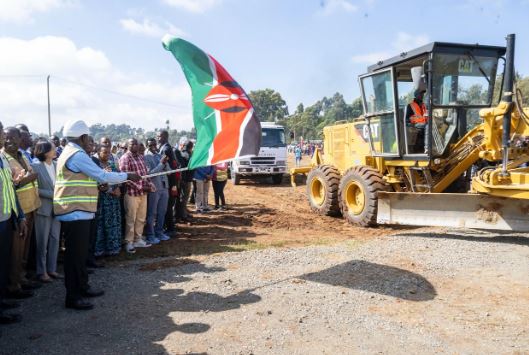 President William Ruto commissions the Rironi-Mau summit road at Kamandura, Kiambu, on November 28, 2025/PCS
On the railway front, Ruto announced the extension of the
Standard Gauge Railway (SGR) from Naivasha to Kisumu and onward to Malaba, with
construction set to begin in January 2026.
Kenya marked a historic milestone with the completion of the
Standard Gauge Railway (SGR) linking Mombasa to Nairobi, a project that has
transformed transport, trade, and regional connectivity in the country. The railway,
officially opened in May 2017, stretches approximately 472 kilometres and was
constructed to modern standards, offering faster, safer, and more efficient
transport for passengers and cargo.
The project, implemented by the China Road and Bridge Corporation
(CRBC), was financed through a combination of government funds and concessional
loans from China, representing one of the largest infrastructure undertakings
in Kenya’s history. The SGR has reduced travel time between Mombasa and Nairobi
from more than 12 hours by road to about six hours by train, revolutionising
passenger mobility and cargo transport.
Then President Uhuru Kenyatta, speaking at the official
launch, hailed the railway as a “game-changer” for Kenya and the East African
region. “The SGR is a symbol of what vision, determination, and partnerships
can achieve. It will transform trade, open opportunities, and connect our people
like never before,” he said
The railway has significantly improved the efficiency of
freight movement from Mombasa Port to Nairobi, reducing congestion on highways,
lowering transport costs, and facilitating trade across the country and with
neighbouring countries.
The announcement of the extension to Malaba followed a
significant infrastructure deal with China
Speaking at the ODM founding members’ dinner in Mombasa on
November 16, 2025, Ruto emphasised the historical significance of the project:
“This SGR project was in the ODM manifesto. That is why I must extend the
railway from Naivasha to Kisumu to Malaba. And by the way, I am going to begin
moving it by January.”
The Naivasha–Kisumu stretch, known as Phase 2B, will cover
approximately 262.3 kilometres, including a branch line linking the revived
Kisumu Port. The Kisumu–Malaba section, Phase 2C, spans about 107.3 kilometres.
The total estimated cost is Sh646 billion, and the project
aims to improve regional connectivity, linking the Rift Valley, Western Kenya,
and the Uganda border.
Kisumu Governor Anyang’ Nyong’o praised the initiative,
stating, “Making it a reality at last is something we in the Lake Region need
to applaud. Kudos, Mr. President.”
It is expected to facilitate the movement of agricultural
produce from the Rift Valley and Western Kenya to the port of Mombasa, boosting
exports and regional trade. The project is also anticipated to create over
15,000 jobs during construction and additional permanent positions in railway
operations, logistics, and port management.
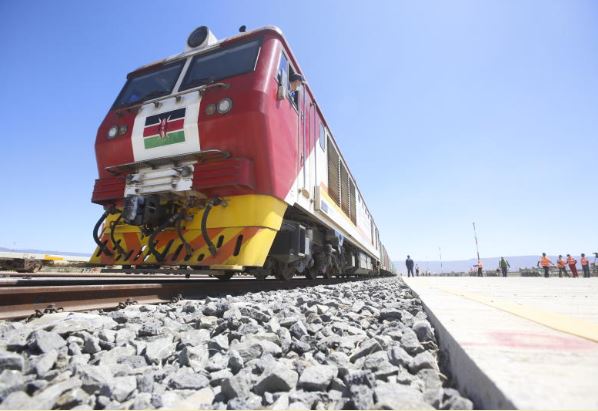 The Government plans to extend the Standard Gauge Railway (SGR) from Naivasha to Kisumu and onward to Malaba
Sports infrastructure is a key focus for 2026. The Talanta
Sports Stadium, forming the heart of the Talanta Sports City project, is
progressing steadily.
Conceived as a multi-purpose facility meeting international
standards, the stadium is designed to host regional and global events. It will
feature advanced turf systems, high-capacity seating, VIP lounges, and
integrated media and event management technology.
The surrounding Talanta Sports City includes training
grounds, indoor arenas, medical and rehabilitation centres, accommodation
facilities, and commercial spaces.
The integrated facility aims to nurture talent from
grassroots to elite levels, positioning Kenya as a hub for athletics, football,
rugby, and other competitive sports.
The project is expected to create thousands of construction
jobs and stimulate long-term employment in sports management, tourism,
hospitality, and facility maintenance. Government officials highlight that the
stadium will also host concerts, exhibitions, and national celebrations,
further boosting economic activity.
Kenya is also advancing large-scale dam projects to meet
growing water needs and enhance irrigation across arid and semi-arid regions.
Key initiatives include the Soin Koru Dam and Mwache Dam,
supported by government oversight and development partners. These projects will
supply clean water for domestic use and support agricultural production,
enhancing food security and livelihoods.
Additional dams, including Kabazi, Kithino, and Crocodile
Jaws, will ensure broader water coverage and strengthen resilience against
drought.
The construction of these dams will generate thousands of
direct and indirect jobs and transform agricultural landscapes by providing
reliable irrigation, reducing dependence on erratic rainfall, and enabling
farmers to cultivate high-value crops year-round.
These initiatives are part of a broader national water
strategy aimed at improving access, ensuring sustainability, and supporting
Kenya’s agricultural growth.
In the power sector, Kenya is developing the Loosuk–Lessos
400 kV transmission line and the Kisumu–Musaga 220 kV line under a PPP
framework.
Led by Africa50 in partnership with POWERGRID of India,
these high-voltage lines will strengthen the national grid, improve power
reliability in western Kenya, and attract private capital into energy
infrastructure.
The Loosuk–Lessos 400 kV line spans 177 kilometres and
includes a new switching station at Loosuk, while the Kisumu–Musaga 220 kV
line, 64 kilometres long, expands substations at Kakamega and Musaga and
extends facilities at Lessos and Kibos. The projects, costing approximately Sh 41.6 billion (US$313 million), will be developed under a
Build-Own-Operate-Transfer (BOOT) model over 30 years, marking the first
independent high-voltage transmission PPPs in Kenya. The lines are expected to
increase grid capacity by 20 per cent, support industrial expansion, and enable
the integration of renewable energy sources into the national grid.
Urban transport is also set for expansion, with plans to
upgrade Kisumu Port, improve Nairobi’s road corridors, and modernize urban mass
transit systems. The port upgrades aim to improve freight handling, reduce
congestion, and strengthen regional trade links. Nairobi’s transport
infrastructure will benefit from improved bus rapid transit (BRT) lanes,
expanded arterial roads, and modernized junctions. These initiatives will
facilitate commuter movement, enhance logistics efficiency, and reduce
transportation costs for businesses.
The combined infrastructure projects are projected to inject
over Sh1.5 trillion into the economy in 2026 alone, creating jobs across
construction, transport, logistics, energy, and service sectors.
Road and rail upgrades are expected to reduce freight costs
by up to 25 per cent, while power and water infrastructure projects will ensure
industrial and agricultural productivity gains. Sports and recreation
facilities will foster talent development, youth engagement, and tourism
growth.
Challenges remain, including land acquisition, community
compensation, funding mobilization, and logistical complexities across diverse
terrains.
Nevertheless, with strong political will, strategic
partnerships, and careful planning, these projects are poised to catalyze
significant economic and social transformation.
As Kenya enters 2026, citizens, investors, and regional
partners will be watching closely, anticipating tangible benefits from these
ambitious undertakings that promise to modernize infrastructure, stimulate
growth, create employment, and enhance the country’s competitiveness in East
Africa and beyond.