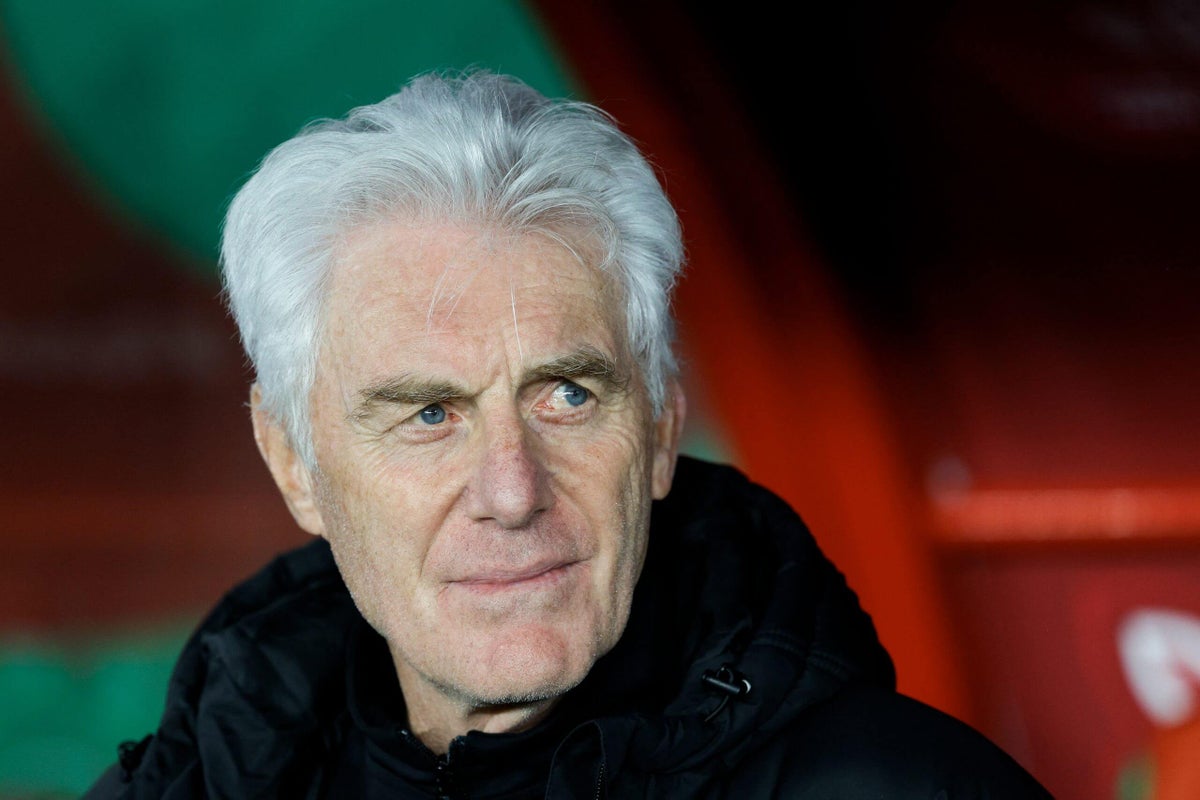
A chorus of boos went up when Hugo Broos appeared on the television screens inside the Al Medina Stadium before South Africa’s defeat to Cameroon in the last 16 at the Africa Cup of Nations.
Cameroon’s fanbase outnumbered their counterparts, but they were not solely responsible for the reception. Moroccan supporters, who probably bought tickets for this game months ago, were incensed by comments Broos has made in the last couple of weeks about conditions in the country.
South Africa were not eliminated because they were playing in a hostile environment, but the crowd’s response to Broos confirmed an ugly truth. The 73-year-old has been at the centre of controversy throughout the tournament. His squad never looked capable of shaking off the cloud which hung over them.
It all started before their opening game against Angola when Broos made comments about defender Mbekezeli Mbokazi and his agent which were described as “racially suggestive and sexist” by one of the country’s political parties. Mbokazi joined South Africa’s pre-tournament training camp late because he was completing a move to MLS side Chicago Fire.
“I will have a chat with him after training,” Broos said. “I can assure you he is a Black guy, but he will come out of my room as a white guy.” Broos, who represented Belgium during his playing career, apologised the next day conceding “his choice of words was not the right one”.
“I played with people of colour, coached with and worked with them in Nigeria and Cameroon and now for four years in South Africa,” he said. “You can ask any of them what kind of man I am. Maybe some will say, ‘He’s a bad coach’. Maybe some others will say, ‘He’s a good coach’, and maybe they will call me stubborn — but no one will call me a racist.”
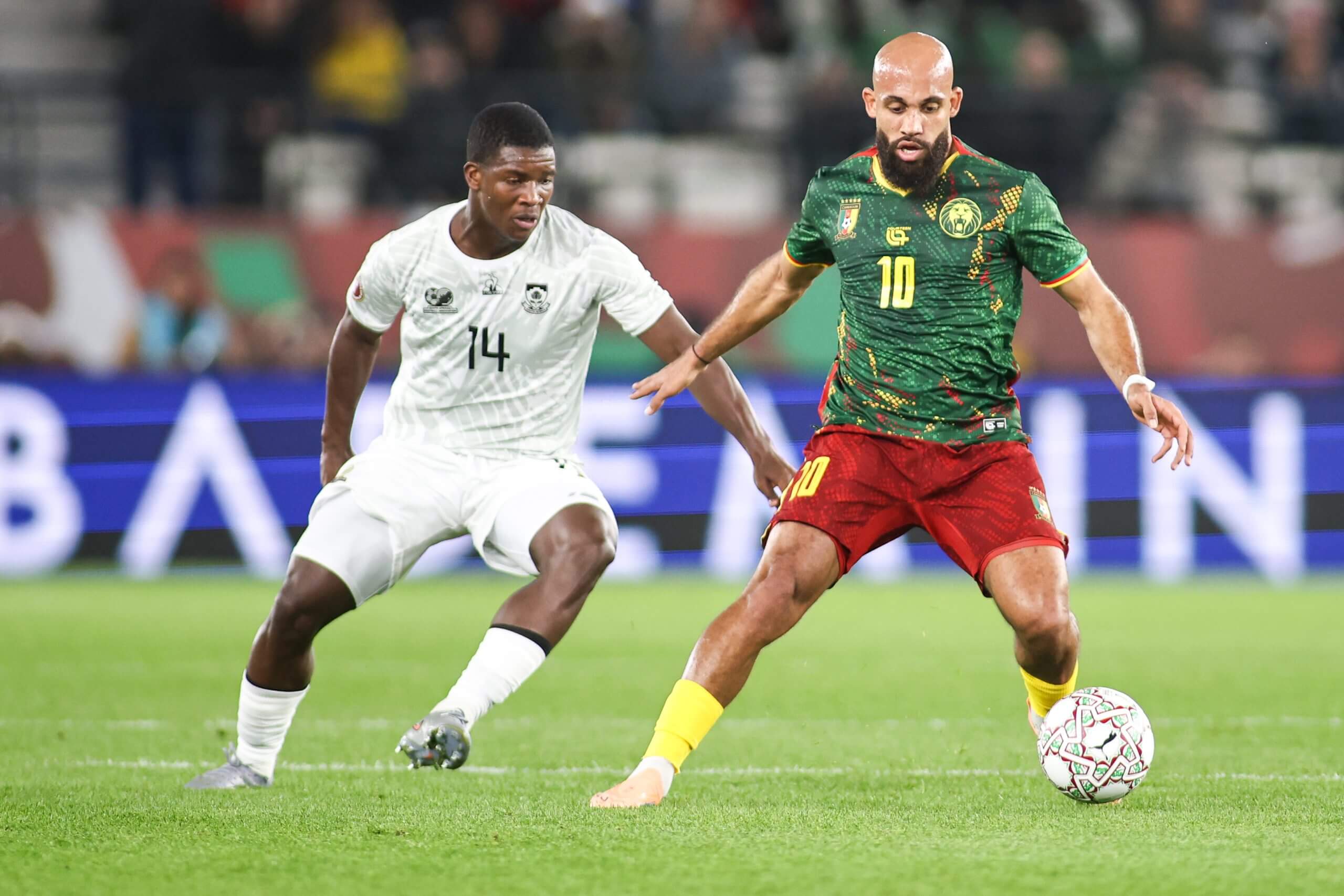
Mbekezeli Mbokazi tracks Cameroon’s Bryan Mbuemo (Torbjorn Tande/DeFodi Images/DeFodi via Getty Images)
If there were sinister undertones to Broos’ comments about Mbokazi and his agent — whom he described as a “little woman… who thinks she knows football” — what he said about Morocco infuriated the locals. Broos said there was “no vibe” at this edition of AFCON, which The Athletic has touched upon, and moaned about travelling times which, even if he had a point, made him sound entitled.
“In a tournament like AFCON, training pitches can be closer to the hotel than 45 minutes,” he said. “That means you lose one hour and a half when you go to train because you are on the bus. It never happened before. I was in Gabon and Ivory Coast. Until now, here in Morocco, I never had to drive more than 15-20 minutes. I think there should have been another pitch here closer to the hotel.”
Social media was flooded with jokes at full-time that the short distance between the stadium and Rabat-Sale airport would at least make him happy.
This tournament should have been an opportunity for South Africa to show everybody how much they have progressed since Broos took charge in 2021. They failed to qualify for two of the previous three editions before finishing third at AFCON 2023 under his stewardship. South Africa eliminated Morocco, who were widely tipped to win because they reached the semi-finals of the 2022 World Cup, and only lost to Nigeria on penalties.
They topped their qualifying group for this summer’s World Cup ahead of Nigeria, despite being docked points for fielding an ineligible player against Lesotho, to seal a return to the finals for the first time since hosting it in 2010. They will be in the same group as South Korea and the co-hosts Mexico.
They finished with six points in the group stage at AFCON, too, but struggled to genuinely impress. Lyle Foster’s 79th minute strike from outside the box secured them a victory over Angola in the opening game, then they lost to Egypt despite playing the entire second half with a man advantage. They needed a late penalty from Oswin Appollis to beat Zimbabwe.
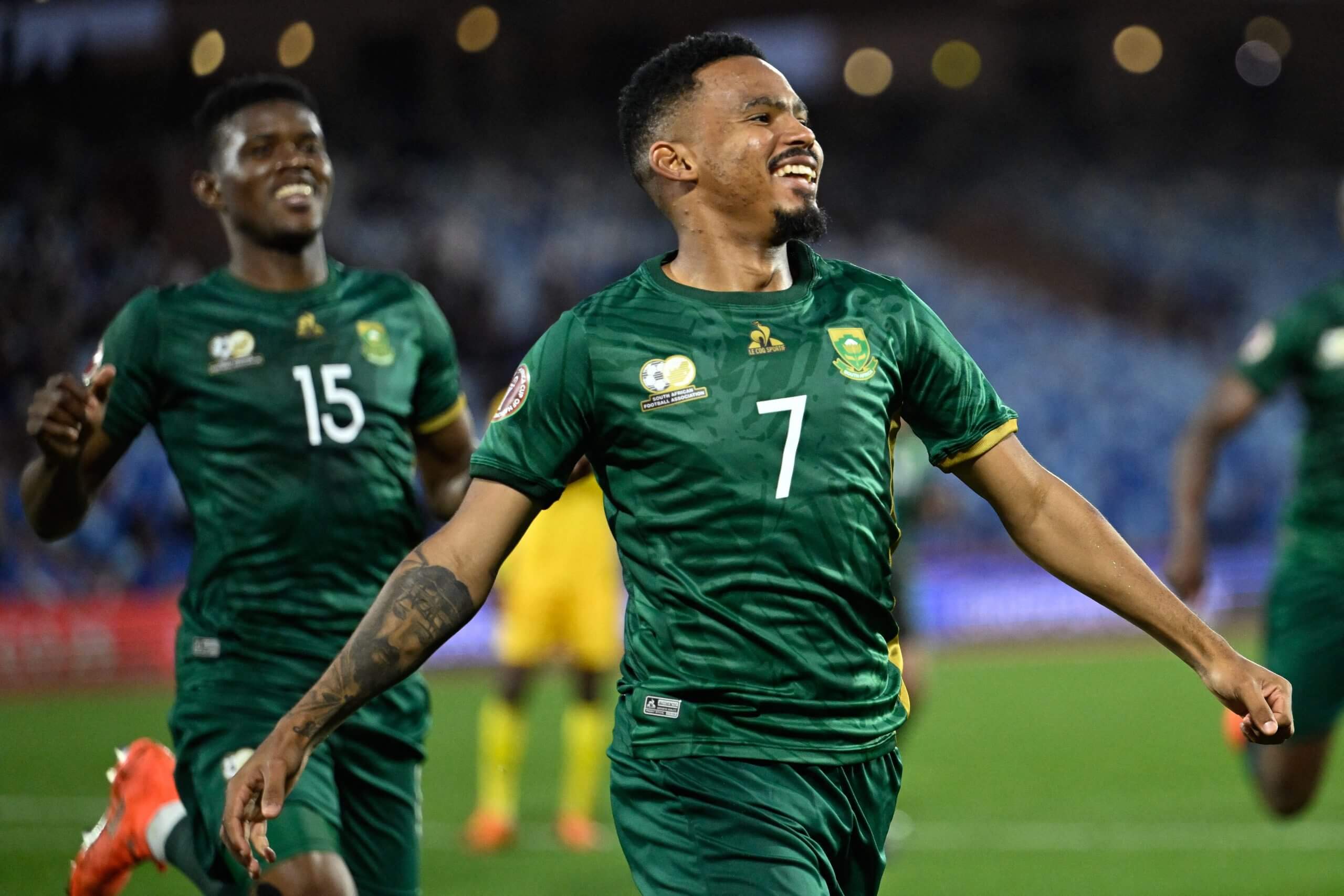
Oswin Appollis celebrates his penalty against Zimbabwe (Khaled Desouki/AFP via Getty Images)
To give Broos credit, South Africa were excellent in the first 20 minutes against Cameroon.
They were slicing through their opponents’ disjointed 3-5-2 formation with ease. Foster and Relebohile Mofokeng both wasted good chances. It looked like they would easily progress until Darlin Yongwa suffered an injury which forced referee Peter Waweru Kamaku to pause the game. Yongwa was replaced by Mahamadou Nagida and Cameroon became more compact, while the quality of Carlos Baleba and Bryan Mbeumo shone through.
Broos did not have anybody in his squad on their level.
Five players were booked during their defeat to Cameroon including Foster, who slapped the linesman’s hand twice and screamed in his face at frustration over a decision. Then he appeared to wrestle for the ball with Cameroon’s goalkeeper Devis Epassy after Evidence Makgopa’s late goal.
Someone on the bench started bickering with Cameroon’s first goalscorer Junior Tchamadeu during a break in play. The underlying tension was bubbling up to the surface.
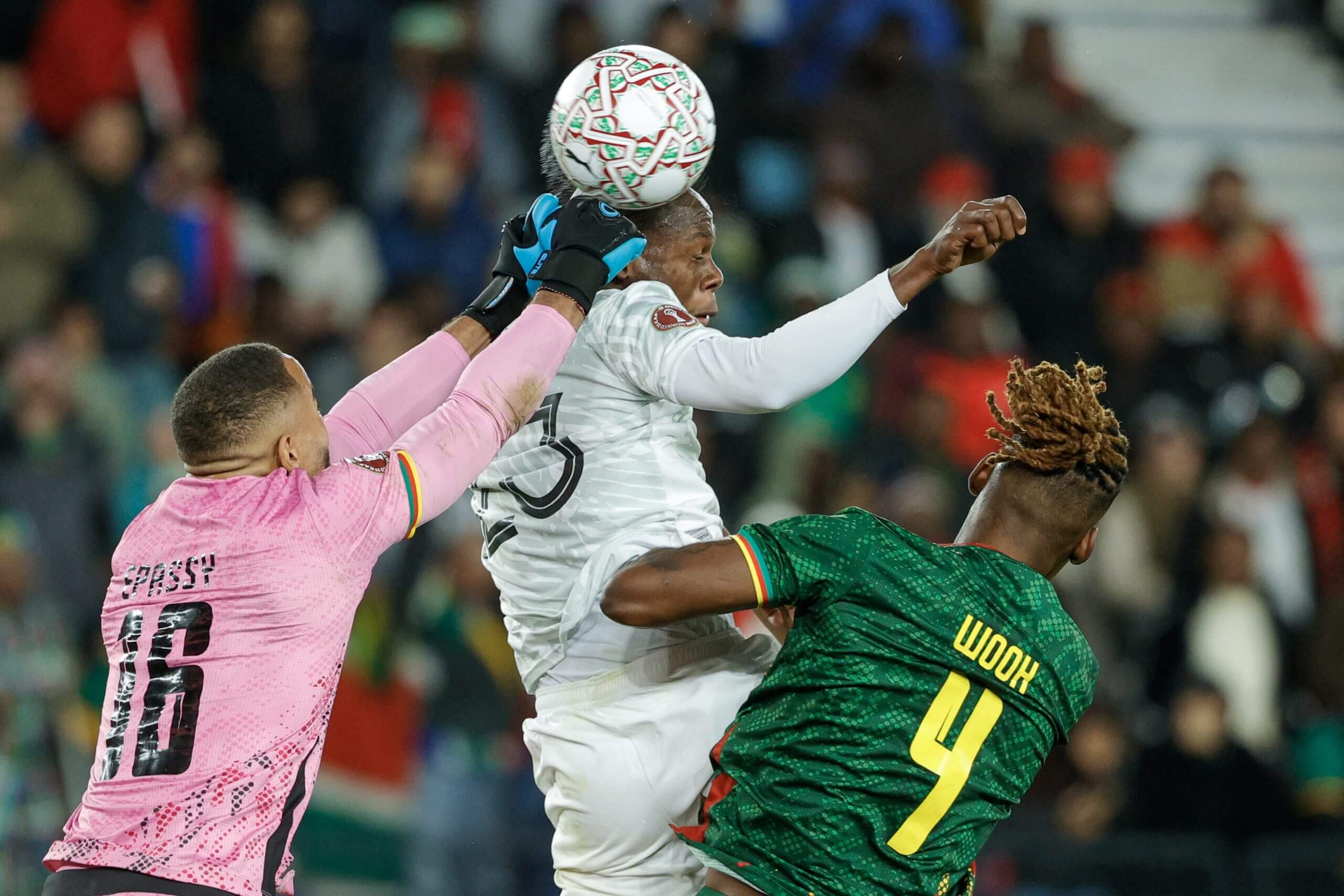
Cameroon’s goalkeeper Devis Epassy challenges Evidence Makgopa in the air (Abdel Majid Bziouat/AFP via Getty Images)
There is another factor which will make this result sting even more for Broos, of course. He won AFCON 2017 with Cameroon, but was sacked 10 months later. He rejected suggestions before the game that he wanted revenge but said he would show “no mercy” to his former employers.
In the end, it was Cameroon who ruthlessly dispatched South Africa to cap off an undignified tournament for their former manager.