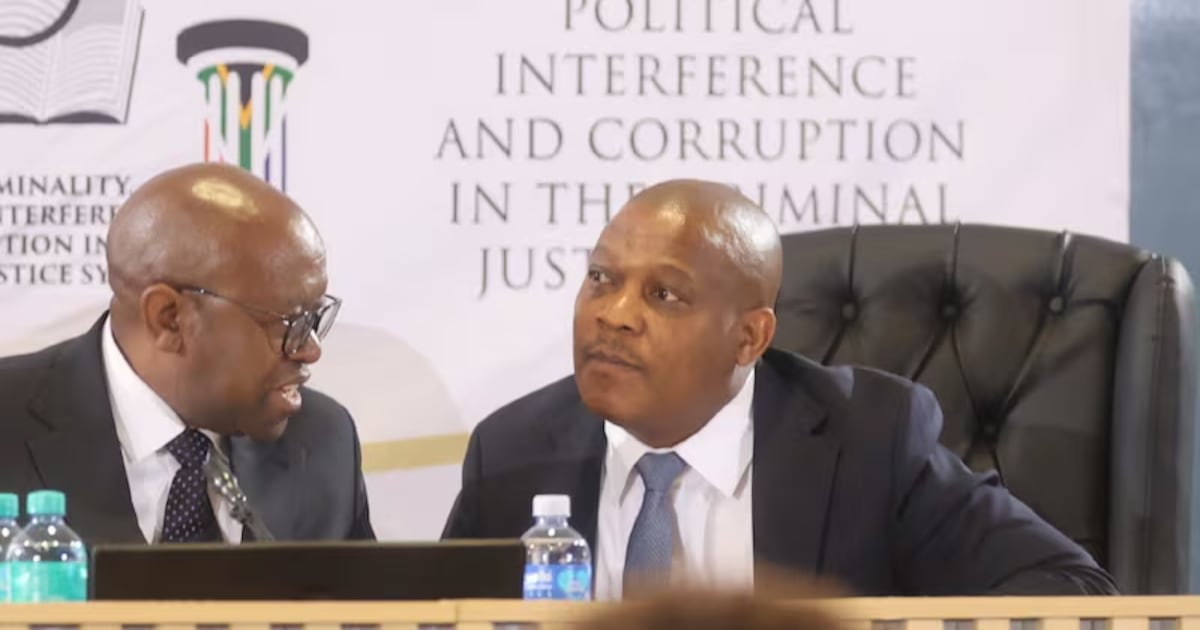
Public hearings at the Madlanga judicial commission, which is probing allegations of criminality, corruption and political interference in the police and criminal justice system, are set to resume on today.
The commission delivered its interim report to President Cyril Ramaphosa on December 17, three months after the first hearing took place on September 17.
Commission spokesperson Jeremy Michaels said the commission will continue hearing evidence from people who have been implicated in the serious allegations made by Kwa-Zulu Natal police commissioner Lt-Gen Nhlanhla Mkhwanazi and other witnesses who corroborated or substantiated those allegations last year.
“As part of its remaining work, dozens of witnesses are due to appear before the commission over the next few months,” he said.
Phase two [of the hearings] provides persons implicated in phase one an opportunity to respond to the allegations made against them…
— Jeremy Michaels, commission spokesperson
“The commission’s evidence leaders, investigators, secretariat and support staff have been working over the recess period to prepare for the hearings.”
Mkhwanazi alleged that suspended police minister Senzo Mchunu and suspended deputy commissioner Shadrack Sibiya were working with criminal cartels.
He said as a result, they might have influenced Mchunu to disband the political killings task team in December 2024 after the properties of alleged cartel members were raided earlier that month.
Katiso “KT” Molefe and Vusimuzi “Cat” Matlala were said to be members of the “big five” cartel that has allegedly infiltrated the criminal justice system and deals with drug distribution, cross-border hijacking and contract killings, among other crimes.
Molefe is on bail after being charged with allegedly orchestrating several hits, including that on Vereeniging engineer Armand Swart, who was killed after a whistleblower from his company flagged corruption linked to a Transnet tender.
Matlala is in the maximum security prison in Kokstad, KwaZulu-Natal, after he was arrested for allegedly ordering the attempted assassination of his former girlfriend, Tebogo Thobejane.
Michaels explained that the commission’s work is separated into three phases.
Phase one was dedicated to establishing the factual foundation for the allegations made by Mkhwanazi.
During this phase, the commission received evidence from witnesses to be able to substantiate the allegations that prompted its establishment.
“However, the evidence was not subjected to testing and questioning in phase one,” Michaels said. “Phase two provides persons implicated in phase one an opportunity to respond to the allegations made against them and, where applicable, to make their own allegations.
“Alongside the responses to the allegations of Mkhwanazi and the witnesses supporting him, phase two also provides for the ventilation of other issues falling within the commission’s terms of reference but not addressed in phase one.
“Phase three will provide for the recall of Mkhwanazi and the witnesses supporting his allegations. In this phase, evidence will be subjected to testing and questioning, and witnesses from phase one will have the opportunity to reply to any evidence adduced against them in phase two.”