
Monday January 26, 2026
Mogadishu (HOL) — Uganda has announced plans to withdraw its troops from Somalia after nearly two decades of continuous peacekeeping operations, a move that could have significant implications for regional security and the fight against the militant group Al-Shabab.
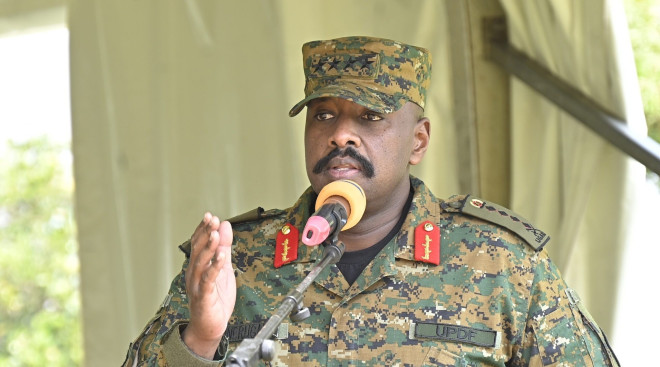
In a brief statement posted on X on Sunday, Uganda’s Commander-in-Chief of the Armed Forces, Gen. Muhoozi Kainerugaba, said the country’s military mission in Somalia had effectively ended and that preparations were underway for a full troop withdrawal.
“After 19 years in Somalia, we intend to completely withdraw from that country very soon,” Muhoozi said, without providing further details or a timetable.
Ugandan troops make up the largest contingent within the African Union Support and Stabilization Mission in Somalia, known as AUSSOM, and have played a central role in securing key government installations, including Aden Adde International Airport, the Port of Mogadishu and other strategic sites in the capital. Estimates place the number of Ugandan soldiers in Somalia at between 5,000 and 6,000.
Uganda has been a cornerstone of international peacekeeping efforts in Somalia since 2007, when it became the first country to deploy troops under the African Union mission. Over the years, Ugandan forces have provided not only manpower but also senior command leadership, helping to push back Al-Shabab and support the rebuilding of Somali security institutions.
No official withdrawal schedule has been announced, and Somali authorities and the African Union have not yet commented on how Uganda’s exit would be managed or what impact it could have on AUSSOM’s operations and Somalia’s fragile security landscape.
The announcement comes as AUSSOM faces mounting financial pressure. The mission, which began its current mandate on Jan. 1, 2025, is grappling with major funding gaps and limited initial commitments. The European Union has reduced its support, while the United States has suspended funding over concerns about burden-sharing, leaving the African Union struggling to cover operational costs and arrears owed to troop-contributing countries.