While most U.S. visitors to Tanzania stick to the well-worn Serengeti-Ngorongoro circuit, a growing number of operators are betting on Tarangire National Park as the circuit’s next breakout destination. With new luxury properties opening, Tanzania’s sixth-largest park is positioning itself as a serious alternative for clients looking for authentic wildlife experiences without the crowds.
Tarangire is famous for its elephants — herds of up to 300 gather along the river in the dry season — but what really sets it apart is how uncommercialized it remains. For years, this was both its biggest selling point and its main challenge, particularly for travel agents catering to the upper end of the market. That’s now starting to shift.
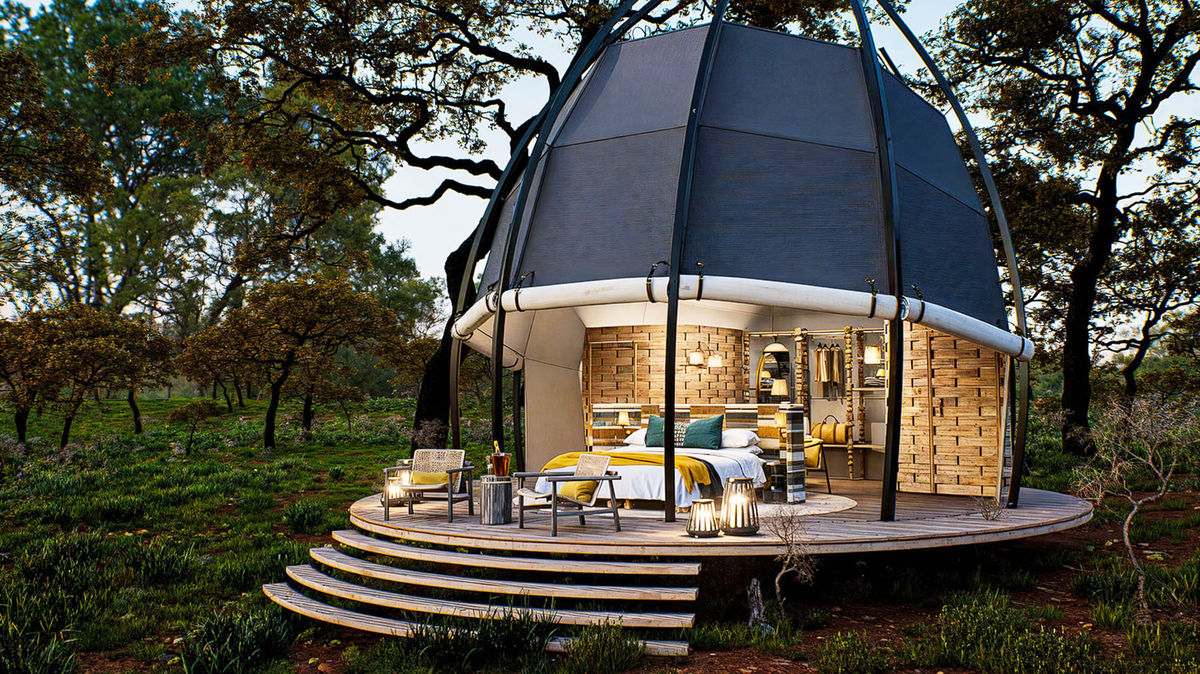
In June, Siringit Collection will open Siringit Tarangire Camp, a property that’s already generating buzz for Belgian architect Bram Bortolin’s distinctive egg-shaped tent design and commitment to local Tanzanian craftsmanship. At $634 per person, per night, all-inclusive, it’s positioned to compete directly with established Serengeti camps while offering something genuinely different.
The camp features eight luxury tented suites, including one interconnecting family suite, each set on raised wooden platforms with private decks overlooking the floodplains. Amenities include a main lounge and dining tent, dedicated bar tent, swimming pool, gym, and firepit area for stargazing. Menus are created by a Michelin-starred chef, and all suites feature ensuite bathrooms with double vanities and both indoor and outdoor showers.
“Tarangire’s rhythm — elephants moving through the grasslands, light shifting across ancient baobabs — inspired every decision,” said Peter Bruins, country manager of Siringit Collection. “We asked ourselves how to honor that sense of place. The answer was to create something beautifully considered and quietly luxurious, then ensure as much as possible is made in Tanzania.”
The camp’s structures and furnishings are locally manufactured, supporting regional artisans while operating entirely on solar power with gravity-fed water systems. “Designing in Tarangire calls for humility,” architect Bram Bortolin explained. “Creating something beautiful and highly functional for guests while keeping the lightest possible footprint on the landscape. The egg-shaped tents were a true technical challenge, but the result feels quietly distinct and deeply rooted in place.”
Siringit isn’t the only operator recognizing Tarangire’s potential. Elewana’s Tarangire Treetops has been building loyal followings with their elevated treehouses built around thousand-year-old baobab trees. The 20-treehouse camp offers accommodation literally integrated into the landscape, with views stretching to Lake Manyara, Mount Kilimanjaro and the Rift Valley wall.
Wildlife and activities
There’s a reason Tarangire is often described as one of East Africa’s best-kept secrets. Beyond the elephants, the park’s seasonal migration brings around 250,000 animals during the dry season, wildlife concentrations that rival anywhere on the continent, but with a fraction of the crowds. Predators are plentiful, big herds of buffalo and zebra roam the plains, and rarer species like fringe-eared oryx and gerenuk are spotted alongside over 500 recorded bird species, including yellow-collared lovebirds.
Activities are a strong suit here: think classic game drives but also walking safaris, night drives for a chance to see nocturnal predators (offered at select camps like Oliver’s and Swala) and hot air balloon safaris for an aerial view of the baobab-dotted landscape. The ancient trees — some over 600 years old — make Tarangire a dream for photographers, especially when herds cluster at the riverbank in the late afternoon light.
Perhaps Tarangire’s biggest selling point is its genuine year-round appeal. The dry season, from June to October, brings dramatic wildlife concentrations as animals flock to the river, with October often delivering the most intense sightings. The short rains of November and December refresh the landscape and bring a flush of migratory birds and wildflowers without disrupting morning game drives. February and March are excellent for birding, while the wettest months (April and May) see lower prices and far fewer visitors, an opportunity for adventurous travelers.
Integration challenges and opportunities
The main challenge for travelers remains logistics. Tarangire sits slightly off the main northern circuit, requiring either road transfers from Arusha (two hours) or flights to Kuro Airstrip. But operators are increasingly viewing this as an advantage, creating itineraries that position Tarangire as a peaceful contrast to busier destinations.
The park integrates well with Lake Manyara for shorter itineraries or serves as an excellent introduction to Tanzania before Serengeti and Ngorongoro. Cultural visits to nearby Masai communities provide authentic interactions often missing from more commercialized destinations.
For travel agents looking to differentiate their Tanzania offerings, Tarangire represents an opportunity to provide clients with experiences that feel both exclusive and genuine.