
Some places feel old enough to have seen the first dawn. Ethiopia is one of them.
The air carries the weight of centuries, and the land moves at its own pace, unbothered by our impatience, unmoved by our noise.
Craft here isn’t branding or nostalgia. It’s survival. Heritage. Muscle memory. Ethiopia isn’t just where coffee originated; it’s where coffee discovered its soul, and maybe we can too.
Before the world complicated things with espresso machines, oat milk debates, and influencers lecturing to you about grind size, wild coffee trees were clinging to the Ethiopian highlands.
Before coffee became a line item on a café menu, it was a ceremony. A welcome. A sign that you mattered enough for someone to roast, grind, and brew for you. Coffee wasn’t invented here; it was found here, like something the earth had been waiting to hand over.
Terroir doesn’t just belong to wine snobs, because apparently Ethiopia owns it. Altitude. Sun. Rainfall. Volcanic soil old enough to shame continents. Every factor brews into the cup you drink.
When you walk through Yirgacheffe, the air smells like jasmine and fresh citrus. Taste Sidamo, and it leans sweet with notes of berries, stone fruit, and chocolate, if the season is feeling generous.
Sip Harrar, and you get wild blueberries, earth, spice, and the kind of flavor that feels like it lived a more complicated life than you. These aren’t tasting notes crafted by PR teams over a Zoom meeting. This is the land speaking in its own language.
Wilpunt / Getty Images
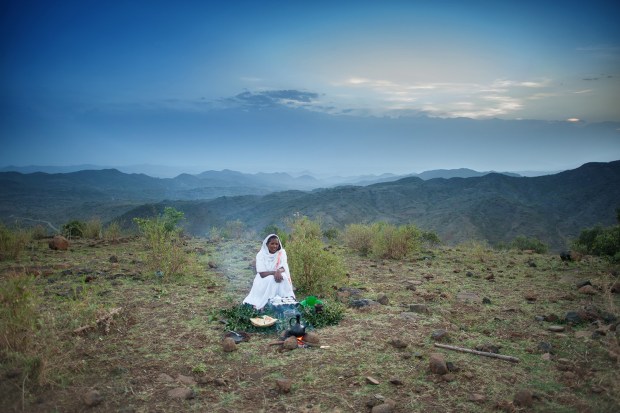
A woman performs a traditional coffee ceremony on a hillside at sunrise outside Lalibela, Ethiopia.
What got me wasn’t just the flavor. It was the patience. The discipline that farmers exhibit when tending to tiny plots is thoughtful, with no wasted movements. Cherries picked by hand, slowly, deliberately. Naturals “also called dry-processed coffee” is dried on raised beds under a sun that doesn’t rush for anyone.
Nothing fast.
Nothing automated.
Nothing forced.
In a world obsessed with shortcuts, Ethiopia refuses to take any. And then there’s the coffee ceremony, which the woman of the house traditionally hosts; the purest expression of what coffee once was, and what it should still be. Green beans roasted in a pan until they crack and fill the room with smoke and promise.
Incense drifting through the air like a quiet reminder that some things are sacred. Coffee brewed in a jebena over charcoal. Three rounds poured, each with its own meaning, none of them disposable.
Coffee here isn’t a caffeine hit. It’s a conversation. A connection. A small, critical moment. That idea, that connection, is what pulled me into The Java Journals. I’ve spent mornings lost in the grind, the pour, the first breath of steam rising from the cup.
Those moments slow me down before the world tries to speed me up. Coffee isn’t about hype or hashtags. It’s about being present long enough to taste your life.
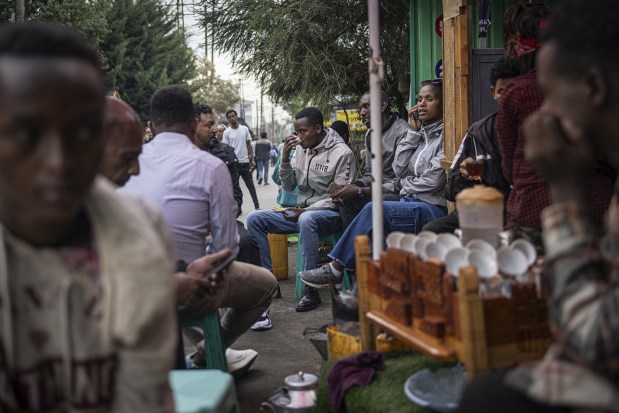 People drink coffee seated along a road of the historical Piazza neighbourhood of Addis Ababa on March 2, 2024. (Michele Spatari/AFP via Getty Images/TNS)
Ethiopia reminds you that your cup comes from somewhere real. From hands that ache. From land that endures. From time to time, the slow, steady kind we keep forgetting exists. Your coffee is more than just a beverage. It’s a legacy. A lesson in patience. Proof that the small things, the grind, the heat, the first sip, make the big things bearable. This is Ethiopia: where coffee was born, where craft never left, and where your morning ritual finds its original heartbeat.
Stay tuned for the next Java Journals journey, from Guatemala’s volcanic mountains to the high-altitude farms of Colombia and beyond. There’s a whole world waiting in your cup.
Send me your suggestions for the next Coffee Region that you want me to write about!
John Noakes is a Connecticut sommelier, writer, and founder of Grateful Coffee Company, as well as the creator of Wine Walkabout and this The Java Journals series— two sides of the same story: night and day, wine and coffee, chaos and calm.