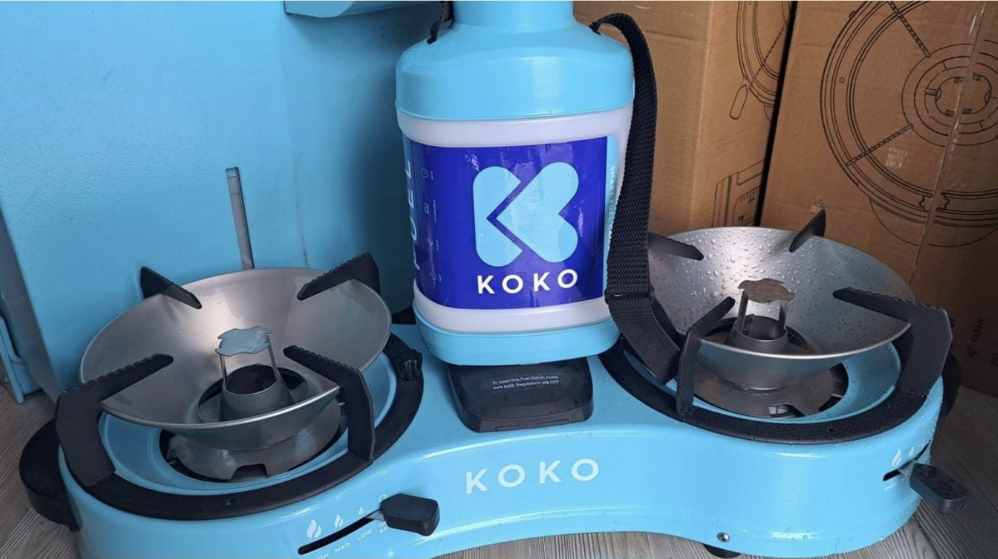
 Koko gas cooker/FILE
The sudden shutdown of KOKO Networks sent shockwaves across
Kenya, catching both employees and customers completely off guard.
Hundreds of staff members were left reeling after the
company abruptly halted operations, with many learning of the decision without
warning, plunging livelihoods into uncertainty and bringing to an end one of
the country’s most ambitious clean-cooking ventures.
The impact extended far beyond KOKO’s workforce. Hundreds of
thousands of customers woke up to find a service they depended on abruptly
unavailable.
For many households and small businesses, the closure meant
an immediate disruption to an essential daily need — cooking fuel.
Sources estimate that up to 1.5 million households across
Kenya relied on KOKO’s ethanol fuel as a cheaper, cleaner alternative to
charcoal and kerosene.
According to sources familiar with the matter, the decision
to shut down followed two days of intense internal meetings at the company’s
Nairobi offices.
Once the call was made, the shutdown was swift and total.
Fuel distribution stopped, thousands of automated refill machines were switched
off, and staff were instructed not to report to work.
The closure was communicated through mass text messages sent
to employees and customers on January 31.
KOKO Networks was not a small or fragile startup. Founded in
2013, the company had grown into one of Kenya’s most visible clean-energy
enterprises, operating more than 3,000 automated ethanol dispensing machines
across urban and peri-urban areas.
Over its lifetime, KOKO raised more than US$100 million in
debt and equity from major international investors, including Verod-Kepple,
Rand Merchant Bank, Mirova, and the Microsoft Climate Innovation Fund, with
backing also linked to World Bank-aligned institutions.
That level of financial support reflected strong global
confidence in clean cooking as both a development and climate solution, as well
as in carbon markets as a way to bridge affordability gaps in emerging
economies.
KOKO positioned itself at the intersection of these trends,
presenting a model that promised to tackle deforestation, indoor air pollution,
and energy poverty simultaneously.
At the core of KOKO’s operations was a business model built
around carbon credits, certificates issued for verified reductions in
greenhouse gas emissions.
By encouraging households to switch from charcoal or
kerosene to bioethanol, KOKO reduced carbon emissions and earned carbon credits
for every tonne of emissions avoided.
These credits were then sold on international markets to
companies seeking to offset their own emissions.
Revenue from carbon credit sales was used to heavily
subsidise both fuel and cookstoves for low-income households.
Ethanol refills were priced from as little as Sh30, making
them significantly cheaper than charcoal in many urban areas.
Cookstoves were sold for about $12 (Sh1,500), far below the
market price of roughly $115 (Sh13,000).
This pricing strategy allowed KOKO to scale rapidly,
embedding its fuel into daily life for millions of Kenyans.
The fuel became a staple in many low-income households,
praised for its affordability, efficiency, and environmental benefits.
Beyond cost savings, ethanol reduced indoor air pollution, a
major contributor to respiratory illness, particularly among women and
children.
The shift away from charcoal also supported forest
conservation efforts by reducing demand for wood fuel, a leading driver of
deforestation in Kenya.
However, the entire model rested on one critical regulatory
approval; a Letter of Authorisation from the Kenyan government.
The letter allowed KOKO to sell all carbon credits generated
by its operations on international markets. Without it, the company could not
monetise the emissions reductions that financed its subsidies.
Sources say the government’s refusal to issue the
authorisation became a single point of failure for the business.
Once the letter was denied, the impact was immediate and
severe. Without access to carbon credit revenues, KOKO could no longer sell
fuel and stoves at subsidised prices.
Executives concluded that the company would be unable to
meet its financial obligations, forcing a shutdown.
The decision to close followed days of internal
deliberations, as management weighed whether operations could continue under
any alternative financing arrangement.
Ultimately, the conclusion was that without government
approval to sell carbon credits, the business was no longer viable. Staff were
informed of the closure on Friday and instructed not to report to work,
according to multiple sources.
The shutdown affects more than 700 direct employees,
including engineers, logistics staff, customer service workers, and corporate
teams.
Thousands of agents who operated KOKO’s extensive
distribution network are also impacted, losing a critical source of income. For
many, the sudden halt has left little time to prepare for the loss of jobs and
commissions.
Beyond employment, the closure raises broader concerns for
Kenya’s clean-energy transition. An estimated 1.5 million households that had
adopted bioethanol as an alternative to charcoal and kerosene now face
uncertainty over their cooking options.
Energy experts warn that many households may revert to
charcoal, potentially reversing gains in forest conservation, public health,
and emissions reduction.
KOKO’s collapse also highlights the vulnerabilities facing
climate-dependent business models in emerging markets, particularly those
reliant on regulatory approvals and international carbon markets.
While carbon credits have been promoted as a tool to finance
climate solutions in low-income settings, the KOKO case underscores how policy
decisions can abruptly reshape the viability of such ventures.
Once hailed as a flagship example of how private capital
could support climate action and development goals, KOKO Networks’ abrupt
shutdown has left customers stranded, workers jobless, and investors nursing
losses.