
Madagascar accounts for nearly 60% of Africa’s clove output and export earnings
Tanzania and Comoros rely heavily on cloves as key agricultural export crops
Kenya remains a minor producer, with output largely absorbed by the domestic market
Nigeria’s clove industry reaffirmed its ambition last week to position the country among Africa’s leading players, announcing plans to launch its first large-scale cultivation campaign in 2026. As this expansion takes shape following the announcement in Abuja, four countries currently dominate clove production and exports on the continent.
Madagascar
Madagascar alone accounts for nearly 60% of Africa’s annual clove production. Estimates from the Food and Agriculture Organization of the United Nations show that the country produced an average of 24,419 tons of cloves per year between 2020 and 2024. Official data indicate that clove farming covers more than 70,000 hectares and involves over 18,000 farmers, mainly in the Analanjirofo region.
Additional output comes from the southeastern regions, from Mananjary to Taolagnaro, as well as the Sava and Diana regions. Cloves are also Madagascar’s second-largest agricultural export after vanilla. FAO data show that clove exports generated average annual revenues of $178.3 million between 2020 and 2024.
Tanzania
Tanzania produced an average of 8,580 tons of cloves per year between 2020 and 2024, according to FAO estimates, ranking it as Africa’s second-largest producer. The crop covers more than 7,000 hectares, with most production concentrated in the Zanzibar archipelago, mainly on the islands of Unguja and Pemba.
Cloves are among Tanzania’s traditional agricultural export commodities, alongside cashew nuts, sisal, tea, cotton, and tobacco. FAO data show that clove exports generated average annual revenues of $30.6 million over the 2020–2024 period.
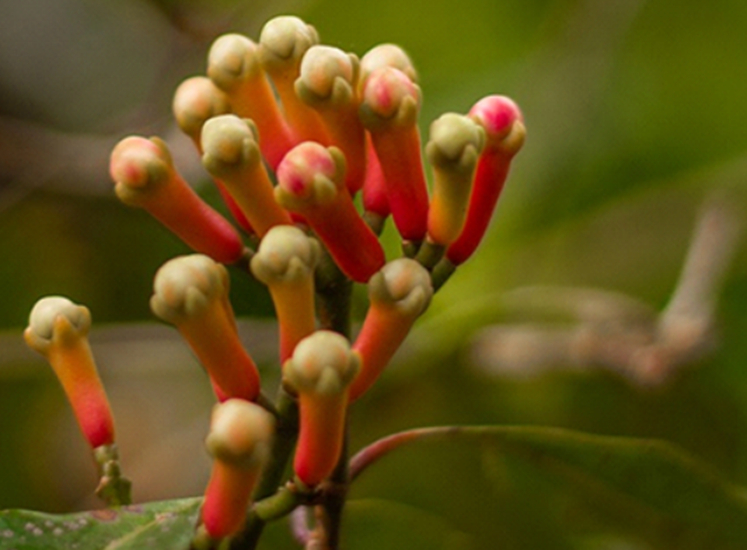
Union of the Comoros
FAO data indicate that the Union of the Comoros produced an average of 7,308 tons of cloves per year between 2020 and 2024. Clove cultivation covers more than 30,000 hectares and is concentrated on the islands of Anjouan and Mohéli, which benefit from favorable climatic conditions. The Comoros is the only country on the list where cloves represent the most important agricultural value chain.
Cloves are the country’s main agricultural export, accounting for nearly 60% of annual agricultural export revenues. As a result, the economy is highly exposed to fluctuations in global clove prices. Central bank data show that clove exports generated average annual revenues of $22.4 million between 2020 and 2024.
Kenya
East Africa’s largest economy produced an average of 2,141 tons of cloves per year between 2020 and 2024. Clove cultivation covers more than 2,000 hectares and is concentrated in coastal areas, including the counties of Mombasa, Kwale, Kilifi, and Lamu.
Unlike the other countries listed, Kenya has not yet developed a structured clove value chain or a significant export presence. Most production is destined for the domestic market. FAO data show that the country generated only about $108,000 in average annual revenues from clove production between 2020 and 2024.