Home » VISA AND PASSPORT NEWS » United States Joins Malawi, Zambia, Gambia, Mauritania, Sao Tome and Príncipe, Tanzania, Bhutan, Botswana, Central African Republic, Guinea, Namibia, and Turkmenistan in Expanding High Visa Bond Requirements for Travelers Applying to Enter the U.S.
Published on
January 6, 2026
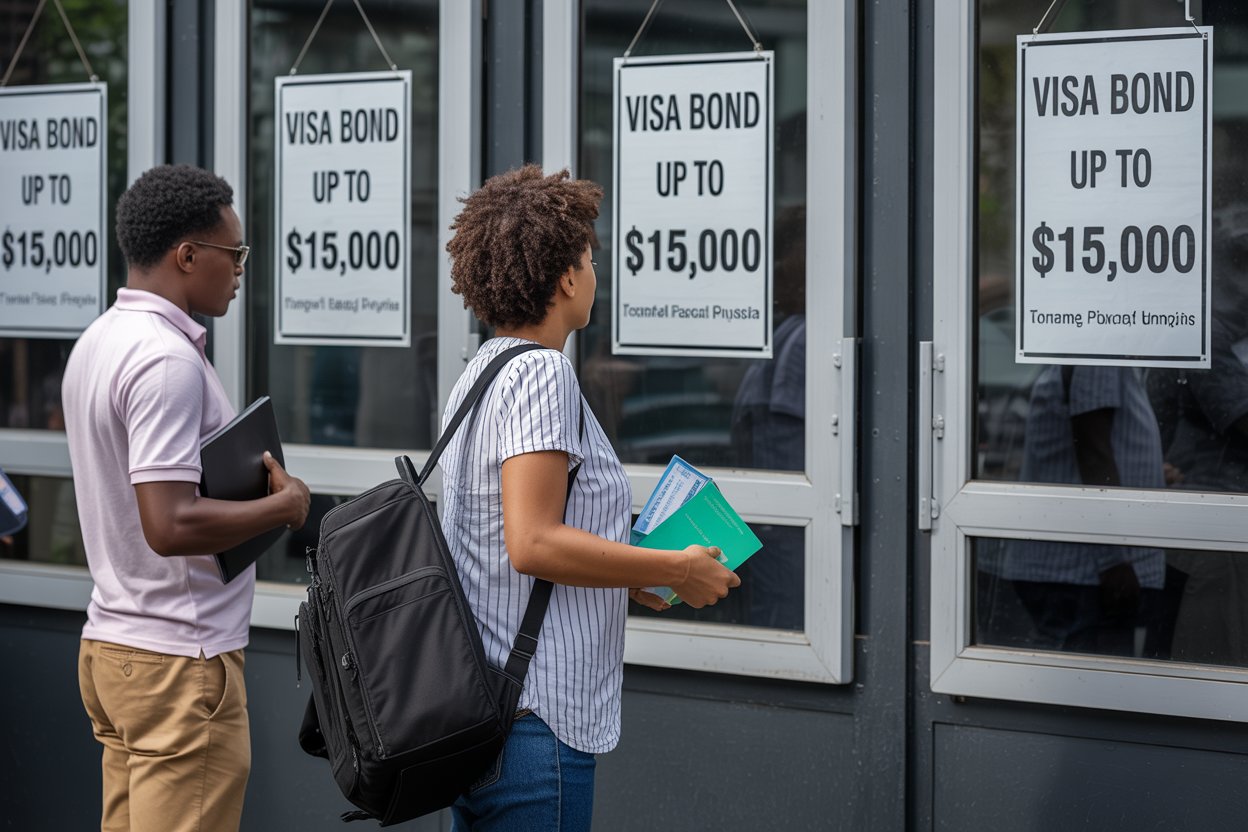
In a major update to U.S. visa policy, the United States has expanded its visa bond program to include multiple additional countries whose citizens now must post refundable bonds of up to $15,000 when applying for non‑immigrant visas such as B‑1/B‑2 (business and tourism). Nationals of Malawi, Zambia, The Gambia, Mauritania, São Tomé and Príncipe, Tanzania, Bhutan, Botswana, the Central African Republic, Guinea, Guinea‑Bissau, Namibia, and Turkmenistan are now subject to this requirement as part of efforts to discourage visa overstays and strengthen immigration compliance. The expanded list brings the total number of affected countries to 13, most of which are in Africa, and alters the financial landscape for travelers seeking entry to the United States.
What the Visa Bond Requirement Means
Under the U.S. Department of State’s policy (aligned with section 221(g)(3) of the Immigration and Nationality Act), passport holders from the listed countries must submit a visa bond as part of their application process. The bond program targets travelers from countries identified as having high overstay rates or deficiencies in screening or vetting systems. Consular officers determine the exact bond amount — $5,000, $10,000, or up to $15,000 — during visa interviews.
Key features of the requirement include:Refundable Bonds: Bonds are refundable after departure on time and full compliance with visa conditions.Not a Guarantee: Posting a bond does not ensure visa issuance; applicants must still meet all eligibility criteria.Designated Entry Ports: Travelers subject to the program may be required to enter and exit the U.S. through specific ports of entry.The program is part of broader efforts by the U.S. government to tighten entry requirements and reduce visa overstays.Details of Impacted Countries
The expansion adds seven new nations as of January 1, 2026 — Bhutan, Botswana, Central African Republic, Guinea, Guinea‑Bissau, Namibia, and Turkmenistan — to the existing bond list that previously included Malawi, Zambia, The Gambia, Mauritania, São Tomé and Príncipe, and Tanzania. Nationals of each of these countries must now prepare for the visa bond requirement when applying for U.S. visitor or business visas.
Malawi and Zambia: Among the earliest countries included in the bond pilot program, reflecting high overstay rates identified in government data.The Gambia: Added in Autumn 2025.Mauritania, São Tomé and Príncipe, Tanzania: Included later in October 2025.Bhutan, Botswana, Central African Republic, Guinea, Guinea‑Bissau, Namibia, Turkmenistan: Newly added countries subject to bond rules starting January 1, 2026.
Each country’s citizens are now included in visa bond requirements alongside tightened visa screening, including mandatory in‑person interviews and enhanced travel and social media history disclosures.Why This Policy Is Being Expanded
U.S. officials defend the bond requirement as a tool to ensure foreign visitors comply with the terms of their visas and depart the United States as required. The bond program aims to reduce visa overstays — a key metric in U.S. immigration policy — by creating financial accountability for applicants from select nations. Proponents argue that higher bond requirements encourage compliance and support border security objectives. Critics, however, warn that the high cost could deter legitimate travelers, hamper tourism and business travel, and disproportionately affect citizens of developing countries.
Travel Advisory for Affected Nationals
For travelers from the impacted 13 countries, the following advice is crucial:
Plan for Higher Costs: Factor visa bond payments into travel budgets when applying for U.S. visas.Understand Refund Conditions: The bond is refundable if all visa conditions are met and the traveler departs on time; applicants should keep documentation to support compliance.Prepare for In‑Person Interviews: Applicants must be ready for mandatory interviews and to provide detailed personal, travel, and social media information.Stay Updated with Policy: Because the pilot program could evolve, applicants should regularly check the U.S. Department of State’s official travel website for updates.How This Affects Travel and Mobility
The expanded visa bond program may have several effects on travel patterns and visitor behavior:
Reduced Visa Applications: Higher upfront costs could dissuade some travelers from applying for U.S. visas.Shift in Travel Destinations: Citizens from these countries might prioritize alternative destinations with fewer financial barriers.Longer Preparation Times: Travelers should anticipate extended preparation periods for visa applications due to added financial and procedural requirements.
Travelers from Malawi, Zambia, The Gambia, Mauritania, São Tomé and Príncipe, Tanzania, Bhutan, Botswana, Central African Republic, Guinea, Guinea‑Bissau, Namibia, and Turkmenistan will soon face new financial hurdles when seeking to visit the United States. Under the expanded visa bond program, these nationals are required to post a bond ranging from $5,000 to $15,000 to apply for U.S. visas, a refundable amount that must be paid before consular officers will proceed with visa processing. While the bond is designed to be returned if applicants comply with visa terms or if visas are denied, the upfront cost marks a significant change for citizens of these countries and may make U.S. travel cost‑prohibitive for many.
The expansion of the U.S. visa bond program to include citizens of Malawi, Zambia, The Gambia, Mauritania, São Tomé and Príncipe, Tanzania, Bhutan, Botswana, Central African Republic, Guinea, Guinea‑Bissau, Namibia, and Turkmenistan marks a significant shift in American visa policy, reflecting a broader push to tighten entry rules and ensure compliance with immigration norms. For travelers from these nations, the introduction of refundable bonds of up to $15,000 adds a substantial financial requirement to the visa application process. While the bonds are refundable with compliant travel, the upfront cost and stricter screening may reshape travel decisions, tourism flows, and bilateral mobility for these countries’ citizens seeking to visit the United States in 2026 and beyond
