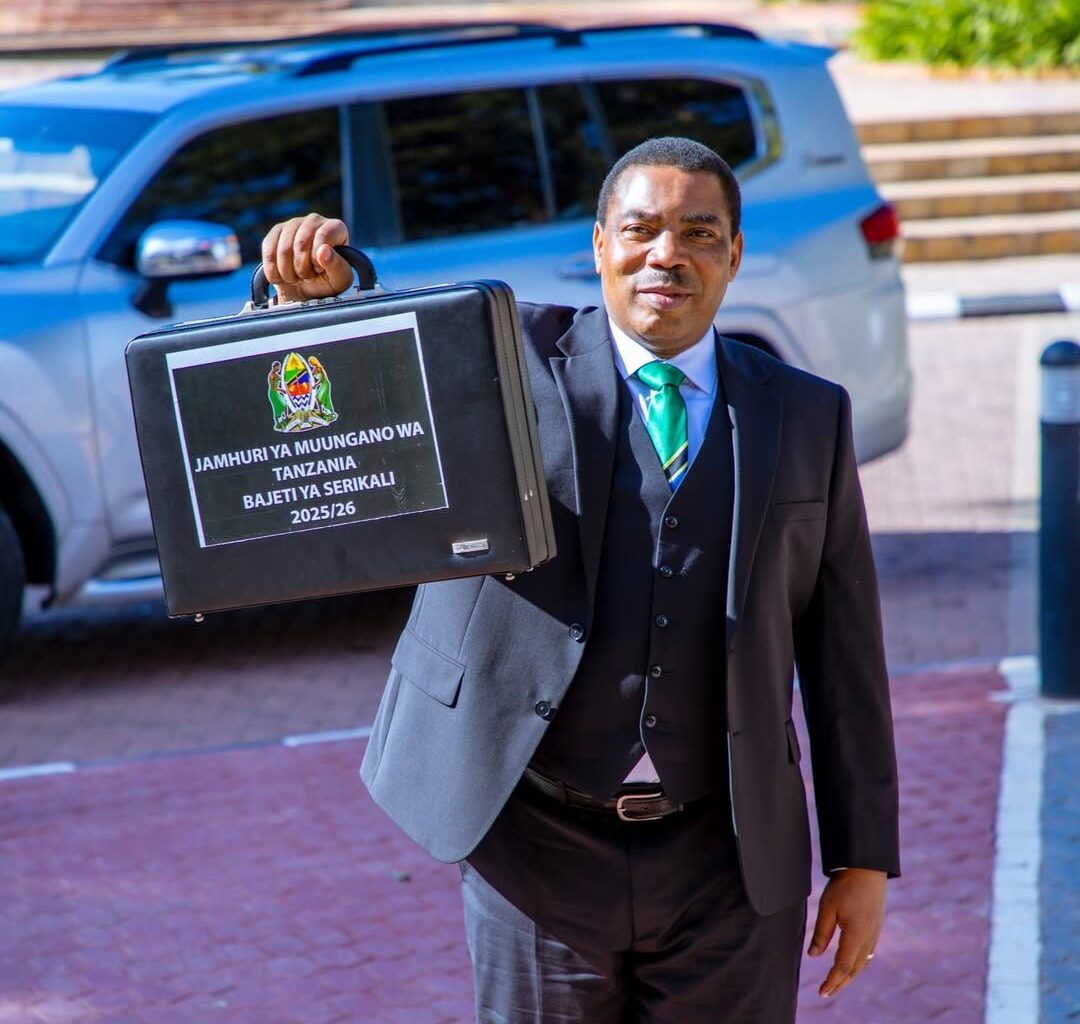
Tanzania Budget Analysis 2026/27: Can Tanzania Sustain 10% Budget Expansion? | TICGL
Comprehensive Analysis of Tanzania’s TZS 61.9 Trillion Budget Framework
📅
Published: February 3, 2026
🏢
TICGL Economic Research
⏱️
15 min read
🎯 Key Findings at a Glance
TZS 61.93T
Proposed 2026/27 Budget
75.4%
Domestic Revenue Share
6.3%
Projected GDP Growth 2026
✓ FEASIBLE
Overall Assessment
Tanzania’s proposed TZS 61.9–61.93 trillion national budget for FY 2026/27 marks the largest fiscal framework in the country’s history and represents a 9.6% increase from the TZS 56.49 trillion approved for FY 2025/26—effectively mirroring the government’s stated objective of a “10% budget increase.” This expansion, while substantial, is not unprecedented: it follows a 12.3% increase in 2025/26 and reflects Tanzania’s consistent growth-oriented fiscal policy.
The expansion comes at a time when Tanzania’s economic fundamentals show notable resilience. In 2025, Mainland GDP grew by 5.9%, exceeding earlier projections and supported by strong sectoral performance across mining (+19%), tourism (+21–22%), and construction. Inflation remained controlled at 3.5%, well within the Bank of Tanzania’s 3–5% target band, while nominal GDP reached approximately USD 87.44 billion (TZS 235 trillion), reflecting robust nominal growth of 10.3% year-over-year.
A defining feature of the 2026/27 budget is its financing structure, which signals a strategic shift toward domestic resource mobilization rather than debt accumulation. Domestic revenue is projected to rise by 20% to TZS 46.69 trillion, increasing its share of total budget funding from 71.6% to 75.4%—the highest level in recent years. Meanwhile, borrowing levels remain stable at approximately TZS 15–15.5 trillion, representing only a marginal 1.6% increase from the previous year. This revenue-led growth is further supported by tax revenue expanding 26.5% to TZS 36.9 trillion, driven by improved tax administration and formalization efforts by the Tanzania Revenue Authority (TRA).
Debt sustainability indicators further reinforce the feasibility of the expansion. Tanzania’s public debt-to-GDP ratio stands at 40.6%, well below the commonly used 55% risk threshold for developing economies and the 60% threshold for emerging markets. Moreover, this ratio is on a declining trajectory, aided by strong nominal GDP growth (10–12% annually) and a strategic prioritization of concessional borrowing over commercial debt—factors that help keep debt servicing costs manageable even as the budget expands.
Looking ahead, medium-term growth projections strengthen the case for sustainability. GDP growth is forecast to reach 6.3% in 2026 and average nearly 6.9% between 2026 and 2029, driven by large-scale infrastructure projects including the Julius Nyerere Hydropower Project (JNHP), Standard Gauge Railway (SGR) expansion, and accelerating LNG exploration. These investments, combined with sectoral diversification and a focus on industrialization under Tanzania’s Fifth Development Plan (FYDP IV), position the economy for sustained expansion.
However, sustainability is not guaranteed and depends on effective risk management. Declining development partner grants (down 44.8% to TZS 563.1 billion), climate-related shocks affecting agriculture (which contributes 26% of GDP and employs 65% of the workforce), and post-election political tensions following the disputed 2025 elections pose potential headwinds. Global commodity price volatility and external economic conditions also add layers of uncertainty.
In sum, the proposed 10% budget expansion is occurring in a context of solid growth, rising domestic revenue capacity, controlled inflation, and manageable debt levels. The central issue, therefore, is not whether Tanzania can afford the expansion, but whether the government can maintain this growth trajectory while managing external risks and ensuring that fiscal resources are deployed efficiently toward productive investments that drive long-term economic transformation.
Introduction
✓ VERDICT: FEASIBLE AND SUSTAINABLE
Tanzania has proposed a record TZS 61.9–61.93 trillion budget for FY 2026/27, representing a 9.6% increase from TZS 56.49 trillion in 2025/26—effectively matching the government’s stated 10% expansion target. This analysis evaluates whether this budget increase is realistic, sustainable, and aligned with Tanzania’s economic performance and medium-term fiscal capacity.
5.9%
2025 GDP Growth
↑ Exceeded Target
3.5%
Inflation Rate
↓ Within Target Band
+26.5%
Tax Revenue Growth
↑ Strong Performance
55%
Debt Risk Threshold
↓ Below Limit (40.6%)
1. Budget Evolution and 10% Increase Assessment
📊 Key Insight
The proposed 2026/27 budget at TZS 61.9–61.93T is essentially a 10% increase, differing by only TZS 170-200 billion from the hypothetical TZS 62.14T target (10% above 2025/26’s TZS 56.49T). This precision suggests the budget aligns closely with official fiscal guidelines.
Fiscal YearBudget (TZS Trillion)% ChangeGDP GrowthKey Notes2024/202550.29—5.5%Baseline pre-election2025/202656.49+12.3%6.0–6.1%Infrastructure focus, elections2026/2027 (Proposed)61.9–61.93+9.6%6.3% (Projected)Record high, largest budget ever10% Increase Target~62.14+10.0%—Almost identical to proposalTanzania Budget Evolution (2024/25 – 2026/27)
Three-year budget trajectory showing consistent expansion aligned with economic growth
Budget Growth Rate Comparison
Annual percentage changes demonstrating controlled fiscal expansion
The budget trajectory reflects Tanzania’s commitment to maintaining an expansionary fiscal stance while adapting to economic realities. The 2025/26 budget saw a sharp 12.3% increase to accommodate election-related expenditures and accelerated infrastructure development. The 2026/27 proposal moderates this growth to 9.6%, a rate that is more sustainable and closely aligned with projected economic expansion.
This near-perfect alignment with the 10% target is not coincidental. It demonstrates the Ministry of Finance’s adherence to medium-term fiscal planning frameworks that balance growth ambitions with macroeconomic stability. The consistency also signals predictability to investors and development partners, reducing uncertainty in Tanzania’s fiscal policy direction.
📚 Related TICGL Resources 2. Financing Structure: Revenue-Led Growth
💰 Key Insight: Domestic Revenue-Driven Expansion
Budget increase funded 78% by domestic revenue growth, 22% by stable borrowing. Domestic revenue share rose from 71.6% to 75.4%—highest in 4+ years, reducing dependence on external financing and strengthening fiscal sovereignty.
The 2026/27 budget marks a significant milestone in Tanzania’s fiscal independence. Unlike previous years where external borrowing played a larger role, this budget expansion is predominantly financed through enhanced domestic revenue mobilization. Tax revenue collections are projected to surge by 26.5% to TZS 36.9 trillion, reflecting the Tanzania Revenue Authority’s (TRA) success in expanding the tax base, improving compliance, and digitalizing revenue collection systems.
Revenue Source2025/20262026/2027ChangeDomestic RevenueTZS 38.9T
(71.6% share)TZS 46.69T
(75.4% share)+20.0% ↳ Tax Revenue (TRA)TZS 29.17 trillionTZS 36.9 trillion+26.5% ↳ Other RevenuesTZS 9.73 trillionTZS 9.24 trillion-5.0%Grants from PartnersTZS 1.02 trillionTZS 563.1 billion-44.8%Total BorrowingTZS 15.0 trillionTZS 15.24 trillion
(24.6% share)+1.6% ↳ Development Projects—TZS 7.4 trillion— ↳ Debt Repayment—TZS 7.8 trillion—Budget Financing Composition Comparison
Shift toward domestic revenue demonstrates enhanced fiscal sovereignty and reduced external dependency
Revenue Source Growth Analysis (2025/26 to 2026/27)
Tax revenue expansion (+26.5%) drives overall domestic revenue growth, compensating for grant reductions
Domestic Revenue Share of Total Budget (Historical Trend)
Rising to 75.4%, marking the highest domestic revenue contribution in recent fiscal history
This revenue-led growth strategy offers several advantages. First, it reduces vulnerability to external shocks such as changes in development partner priorities or global financial conditions. Second, it demonstrates Tanzania’s growing economic maturity and capacity to finance its own development agenda. Third, it provides greater fiscal flexibility and policy autonomy, allowing the government to align spending with national priorities rather than donor conditionalities.
The 44.8% decline in development partner grants (from TZS 1.02 trillion to TZS 563.1 billion) is notable and may reflect international concerns over governance issues, particularly following the contested 2025 elections. However, the government’s ability to compensate for this decline through enhanced domestic revenue collection demonstrates resilience and adaptability in fiscal planning.
Critically, borrowing levels remain essentially flat at TZS 15.24 trillion (up only 1.6%), representing just 24.6% of the total budget. This borrowing allocation is strategically divided between development projects (TZS 7.4 trillion) and debt repayment (TZS 7.8 trillion), ensuring that new borrowing does not lead to unsustainable debt accumulation while continuing to fund critical infrastructure investments.
+TZS 7.79T
Domestic Revenue Increase
↑ 20% Growth
+TZS 7.73T
Tax Revenue Increase
↑ 26.5% Growth
-TZS 457B
Grant Reduction
↓ 44.8% Decline
+TZS 240B
Borrowing Increase
↑ Only 1.6% Rise
3. Economic Performance: 2025 Calendar Year
📈 2025 Economic Snapshot
Tanzania’s economy demonstrated robust performance in 2025, with GDP growth of 5.9% exceeding projections, inflation controlled at 3.5%, and strong sectoral gains across mining (+19%), tourism (+21-22%), and construction. This solid foundation supports the 2026/27 budget expansion.
Economic Indicator2025 PerformanceContext/NotesReal GDP Growth (Mainland)5.9%Exceeded 5.5–6.0% target rangeNominal GDPUSD 87.44B (~TZS 235T)+10.3% YoY nominal growthInflation Rate3.5% averageWithin 3–5% target bandMining Sector Growth+19%Driven by gold, graphite, gemstonesTourism Sector Growth+21–22%1.8M arrivals, USD 3.8B receiptsForex Reserves>USD 6.3 billion4.9 months of import coverPrivate Credit Growth+20.3%Strong business expansion signalFiscal Balance (estimated)Revenue TZS 25.8T (15.2% GDP)Deficit 5.2% of GDP; sustainableTanzania GDP Growth Performance (2023-2025)
Consistent growth trajectory with 2025 exceeding target projections
Key Sector Growth Rates – 2025
Broad-based economic expansion across multiple high-performing sectors
Macroeconomic Stability Indicators
Inflation within target band and strong forex reserves demonstrate macroeconomic stability
Tanzania’s 5.9% GDP growth in 2025 represents a significant achievement, particularly in a year marked by political uncertainty due to contested elections. The growth was broad-based, with multiple sectors contributing positively. The mining sector’s 19% expansion was driven by increased gold production, graphite exports, and gemstone mining, benefiting from favorable global commodity prices and continued investment in exploration and processing.
The tourism sector’s remarkable 21-22% growth, with 1.8 million international arrivals and USD 3.8 billion in receipts, demonstrates Tanzania’s growing competitiveness as a premier safari and beach destination. This recovery and expansion beyond pre-pandemic levels reflects successful marketing campaigns, improved infrastructure (particularly in national parks), and increased flight connectivity.
Inflation control at 3.5% is particularly noteworthy given global inflationary pressures in 2024-2025. The Bank of Tanzania’s prudent monetary policy, combined with good agricultural harvests and stable food prices, kept inflation within the 3-5% target band. This price stability supports purchasing power and creates a favorable environment for business planning and investment.
Foreign exchange reserves exceeding USD 6.3 billion (equivalent to 4.9 months of import cover) provide a substantial buffer against external shocks. This reserve position, well above the IMF’s recommended minimum of 3 months, indicates that Tanzania has the capacity to manage balance of payments fluctuations and maintain exchange rate stability.
The 20.3% growth in private sector credit signals strong business confidence and expansion. This credit growth, significantly higher than nominal GDP growth, suggests that businesses are investing in capacity expansion, working capital, and new ventures—all positive indicators for sustained economic momentum in 2026 and beyond.
TZS 235T
Nominal GDP 2025
↑ USD 87.44B
1.8M
Tourist Arrivals
↑ USD 3.8B Revenue
4.9 months
Import Cover
↑ Above IMF Minimum
5.2%
Fiscal Deficit/GDP
↓ Sustainable Level
4. Medium-Term Growth Trajectory (2026-2029)
🚀 Assessment: Growth Exceeds Budget Expansion
Nominal GDP growth (~10–12% including inflation) substantially exceeds the ~10% budget increase, ensuring fiscal sustainability. Budget-to-GDP ratio remains stable or improves, demonstrating that the fiscal expansion is well-aligned with economic capacity.
Period/YearGDP Growth RateKey Growth Drivers2025 (Actual)5.9%Mining, tourism, construction, agriculture2026 (Projection)6.3%LNG exploration, SGR expansion, JNHP impact2026–2029 Average~6.9%LNG, industrialization, Vision 2050 alignmentGDP Growth Projections (2025-2029)
Accelerating growth trajectory driven by major infrastructure and industrial investments
Nominal vs Real GDP Growth Comparison
Nominal GDP growth (10-12%) comfortably exceeds budget growth (~10%), ensuring fiscal sustainability
Budget-to-GDP Ratio Projection (2024-2027)
Stable or declining ratio demonstrates fiscal prudence despite budget expansion
Tanzania’s medium-term growth outlook is anchored by several transformational mega-projects that are expected to significantly expand productive capacity and economic output. The Julius Nyerere Hydropower Project (JNHP), upon completion, will add 2,115 MW of electricity generation capacity—nearly doubling Tanzania’s current installed capacity. This reliable and affordable power supply will unlock industrial expansion, reduce energy costs, and attract energy-intensive manufacturing investments.
The Standard Gauge Railway (SGR) expansion is progressively connecting Tanzania’s economic centers with regional neighbors and ports, dramatically reducing transportation costs and transit times. Current phases link Dar es Salaam to Morogoro and are extending to Dodoma and beyond. Upon full completion, the SGR network will facilitate more efficient movement of goods (particularly agricultural products and minerals), reduce logistics costs by an estimated 40-60%, and integrate Tanzania more deeply into regional value chains.
Perhaps most transformational is Liquefied Natural Gas (LNG) development. Tanzania possesses over 57 trillion cubic feet of proven natural gas reserves, primarily offshore in the Indian Ocean. Major energy companies including Shell, Equinor, and ExxonMobil have exploration licenses and are advancing feasibility studies for LNG export facilities. If investments materialize as projected, LNG operations could begin generating substantial revenues by 2028-2029, fundamentally transforming Tanzania’s fiscal landscape and export profile.
The government’s Fifth Development Plan (FYDP IV), aligned with Vision 2050, emphasizes industrialization, value addition, and economic diversification. Targets include increasing manufacturing’s share of GDP from ~7% to 15% by 2030, expanding agro-processing to reduce raw export dependency, and developing special economic zones (SEZs) focused on textiles, leather, pharmaceuticals, and electronics assembly. These initiatives, supported by improved infrastructure and business environment reforms, are designed to create higher-value economic activities and employment.
Critically, the 6.3% real GDP growth projection for 2026, rising to an average of 6.9% for 2026-2029, translates to approximately 10-12% nominal GDP growth when inflation (projected at 3-5%) is included. This nominal growth rate exceeds the 10% budget increase, meaning the budget-to-GDP ratio remains stable or even declines. This is the fundamental reason the fiscal expansion is sustainable: the economy is growing faster than government spending, preventing unsustainable fiscal imbalances.
🔑 Key Growth Drivers (2026-2029)
⚡ Energy Infrastructure
JNHP adding 2,115 MW capacity
🚄 Transport Connectivity
SGR expansion reducing logistics costs
⛽ LNG Development
57 TCF reserves, exports by 2028-29
🏭 Industrialization
Manufacturing target: 7% → 15% of GDP
🌾 Agro-Processing
Value addition to agricultural exports
🌍 Regional Integration
EAC and AfCFTA market access
6.9%
Avg Growth 2026-29
↑ Above Historical
10-12%
Nominal GDP Growth
↑ Exceeds Budget Growth
2,115 MW
JNHP Capacity
↑ Doubles Supply
57 TCF
Gas Reserves
↑ LNG Export Ready
5. Debt Sustainability and Risk Profile
✓ Debt Assessment: Well Within Sustainable Limits
Tanzania’s public debt-to-GDP ratio of 40.6% remains well below the 55% risk threshold for developing economies. Borrowing levels are stable at TZS 15–15.5 trillion annually, with a strategic focus on concessional financing that minimizes debt servicing costs.
Debt sustainability is a critical consideration when evaluating fiscal expansion. Tanzania’s debt position reflects prudent management and strategic borrowing practices. The 40.6% debt-to-GDP ratio is not only below international risk thresholds but is also on a declining trajectory due to faster nominal GDP growth relative to debt accumulation. This provides Tanzania with significant fiscal space for continued infrastructure investment while maintaining macroeconomic stability.
Debt IndicatorCurrent StatusSustainability AssessmentPublic Debt-to-GDP Ratio40.6% (2025)✓ Well below 55% threshold; decliningAnnual Borrowing LevelTZS 15–15.5T (medium-term avg)✓ Stable; not escalatingShift to Domestic Revenue71.6% → 75.4% of budget✓ Reduces external riskConcessional Borrowing FocusPrioritized in medium-term plan✓ Lower debt servicing costsDeficit Target (recent years)~3% of GDP (targeted)✓ Fiscally prudent; manageableTanzania’s Debt Position vs International Thresholds
Tanzania’s 40.6% debt-to-GDP ratio provides substantial buffer below risk thresholds
Public Debt-to-GDP Ratio Trend (2020-2027)
Declining trajectory demonstrates improving fiscal sustainability despite budget expansion
Annual Borrowing Levels (TZS Trillion)
Stable borrowing at TZS 15-15.5T annually, split between development and debt repayment
The government’s shift toward concessional borrowing from multilateral development banks (World Bank, African Development Bank) and bilateral partners offers significantly lower interest rates (typically 1-3%) and longer repayment periods (25-40 years) compared to commercial debt. This strategy reduces the debt service burden as a percentage of revenue, preserving fiscal resources for development expenditure rather than interest payments.
Moreover, the deficit target of approximately 3% of GDP aligns with international best practices for developing economies. This moderate deficit level allows for continued public investment in infrastructure and social services while ensuring that debt accumulation does not outpace economic growth. The 2026/27 budget maintains this disciplined approach, with the fiscal deficit projected to remain within manageable bounds.
40.6%
Debt-to-GDP Ratio
↓ Below 55% Threshold
14.4%
Buffer to Risk Level
↑ Substantial Headroom
TZS 15.2T
Annual Borrowing
→ Stable, Not Escalating
~3%
Deficit Target/GDP
✓ Fiscally Prudent
6. Risk Factors and Mitigation Strategies
⚖️ Balanced Risk Assessment
While Tanzania’s fiscal outlook is positive, sustainability depends on managing both upside opportunities and downside risks. This section evaluates key positive factors, risk factors, and mitigation strategies.
6.1 Positive Factors📈 Accelerating Growth Momentum
5.9% growth in 2025 provides strong foundation for 6.3% target in 2026, with flagship projects (LNG, SGR, Julius Nyerere Hydropower) driving medium-term expansion toward 6.9% average.
💰 Revenue-to-GDP Improvements
Tax-to-GDP ratio rising toward 18% target through Medium-Term Revenue Strategy, reducing reliance on borrowing. Domestic revenue now funds 75.4% of budget, up from 71.6%.
🏭 Sectoral Diversification
Mining (+19%), tourism (+21–22%), construction, finance, and electricity sectors all performing strongly, reducing dependence on any single sector.
🤝 Private Sector Engagement (FYDP IV)
Government targets 70% private sector funding for development projects, reducing pressure on public finances while accelerating industrialization.
6.2 Risk Factors⚠️ Post-Election Political Tensions
The disputed 2025 elections and subsequent political instability could deter foreign investment, disrupt tourism/trade, and undermine business confidence—jeopardizing growth and revenue targets.
💸 Aid/Grant Reductions
Development partner grants declined 44.8% (TZS 1.02T → TZS 563.1B), potentially signaling international concern over governance and increasing fiscal pressure.
🌾 Climate Shocks on Agriculture
Agriculture contributes 26% of GDP and employs 65% of workforce. Climate variability (droughts, floods) could disrupt food production, affecting growth and inflation.
📉 Global Commodity Volatility
Heavy reliance on gold exports exposes Tanzania to international price fluctuations. Tourism also vulnerable to global economic downturns and security perceptions.
Risk and Opportunity Assessment Matrix
Balanced view of positive factors (green) versus risk factors (orange) facing the 2026/27 budget
6.3 Mitigation Strategies
🛡️ Comprehensive Risk Mitigation Framework
The government’s emphasis on domestic financing (75.4% of budget) reduces external vulnerability. Stable borrowing levels (TZS 15–15.5T annually) with prioritization of concessional loans minimizes debt service burden. Focus on private-sector-led development (70% of FYDP IV) leverages external capital without adding to public debt. Medium-term fiscal consolidation targets (~3% deficit-to-GDP) ensure macroeconomic stability.
🎯
Domestic Revenue Focus
75.4% budget funding from domestic sources reduces aid dependency
💼
Private Sector Partnership
70% FYDP IV funding from private capital reduces fiscal burden
📊
Fiscal Consolidation
~3% deficit target maintains macroeconomic stability
🌍
Concessional Borrowing
Prioritizing low-cost multilateral loans over commercial debt
7. Overall Evaluation: Is the ~10% Budget Increase Feasible?
✅ FINAL VERDICT: FEASIBLE AND SUSTAINABLE
Based on comprehensive analysis of economic performance, financing structure, debt sustainability, and risk factors, the proposed TZS 61.9–61.93 trillion budget for FY 2026/27 representing a ~10% increase is both realistic and prudent.
Assessment CriteriaVerdictEconomic Alignment✓ REALISTIC: Nominal GDP growth (~10–12%) exceeds budget growth (~10%), ensuring sustainable fiscal ratios.Financing Strategy✓ PRUDENT: Increase funded primarily through domestic revenue mobilization (TZS 46.69T, +20%), not higher borrowing (+1.6%).Debt Sustainability✓ SUSTAINABLE: Debt-to-GDP ratio at 40.6%, well below 55% threshold, with declining trajectory. Borrowing stable at TZS 15–15.5T.Economic Performance✓ GROWTH-SUPPORTIVE: Strong 2025 baseline (5.9% growth, 3.5% inflation) supports accelerated 6.3% target for 2026, averaging 6.9% through 2029.Policy Framework✓ ALIGNED: Budget matches official medium-term framework (avg ~TZS 68T/year, 2026/27–2028/29) and Vision 2025/2050 goals.Risk Outlook⚠ MONITORED: Political tensions, aid reductions, climate/commodity volatility require vigilance, but mitigation strategies in place.Budget Sustainability Assessment – All Criteria
Comprehensive evaluation across six key criteria demonstrates strong feasibility with manageable risks
🎯 Key Sustainability Factors
10-12%
Nominal GDP Growth
Exceeds Budget Growth
40.6%
Debt-to-GDP Ratio
Well Below Threshold
75.4%
Domestic Revenue Share
Record High Level
+1.6%
Borrowing Growth
Minimal Increase
Conclusion
✅ VERDICT: FEASIBLE AND SUSTAINABLE
The proposed TZS 61.9–61.93 trillion budget for FY 2026/27—effectively a ~10% increase from TZS 56.49 trillion—is both realistic and prudent. It is financed primarily through enhanced domestic revenue mobilization rather than debt escalation, supported by strong economic performance (5.9% growth in 2025), and aligned with medium-term growth projections (6.3% for 2026, averaging 6.9% through 2029).
Key sustainability factors include:
(1) Nominal GDP growth (~10–12%) exceeding budget growth, maintaining stable fiscal ratios(2) Debt-to-GDP ratio at sustainable 40.6%, well below the 55% threshold(3) Domestic revenue share rising to 75.4%, reducing external dependence(4) Stable borrowing levels with focus on concessional financing
While risks exist—particularly post-election political tensions, aid reductions, and climate/commodity volatility—the government’s emphasis on domestic financing, fiscal consolidation, and private-sector partnership (70% of FYDP IV) provides robust mitigation. The budget positions Tanzania to continue its trajectory toward Vision 2025/2050 goals while maintaining macroeconomic stability.
This budget represents continuity in Tanzania’s expansionary fiscal stance, matching official guidelines almost exactly, and is growth-supportive without compromising debt sustainability.
Report prepared: February 3, 2026
Sources: Tanzania Ministry of Finance, Bank of Tanzania, IMF, World Bank, Reuters, Official Budget Guidelines
Stay Informed with TICGL
For more in-depth analysis of Tanzania’s economy, business intelligence, and investment opportunities, explore our comprehensive resources and join our research community.