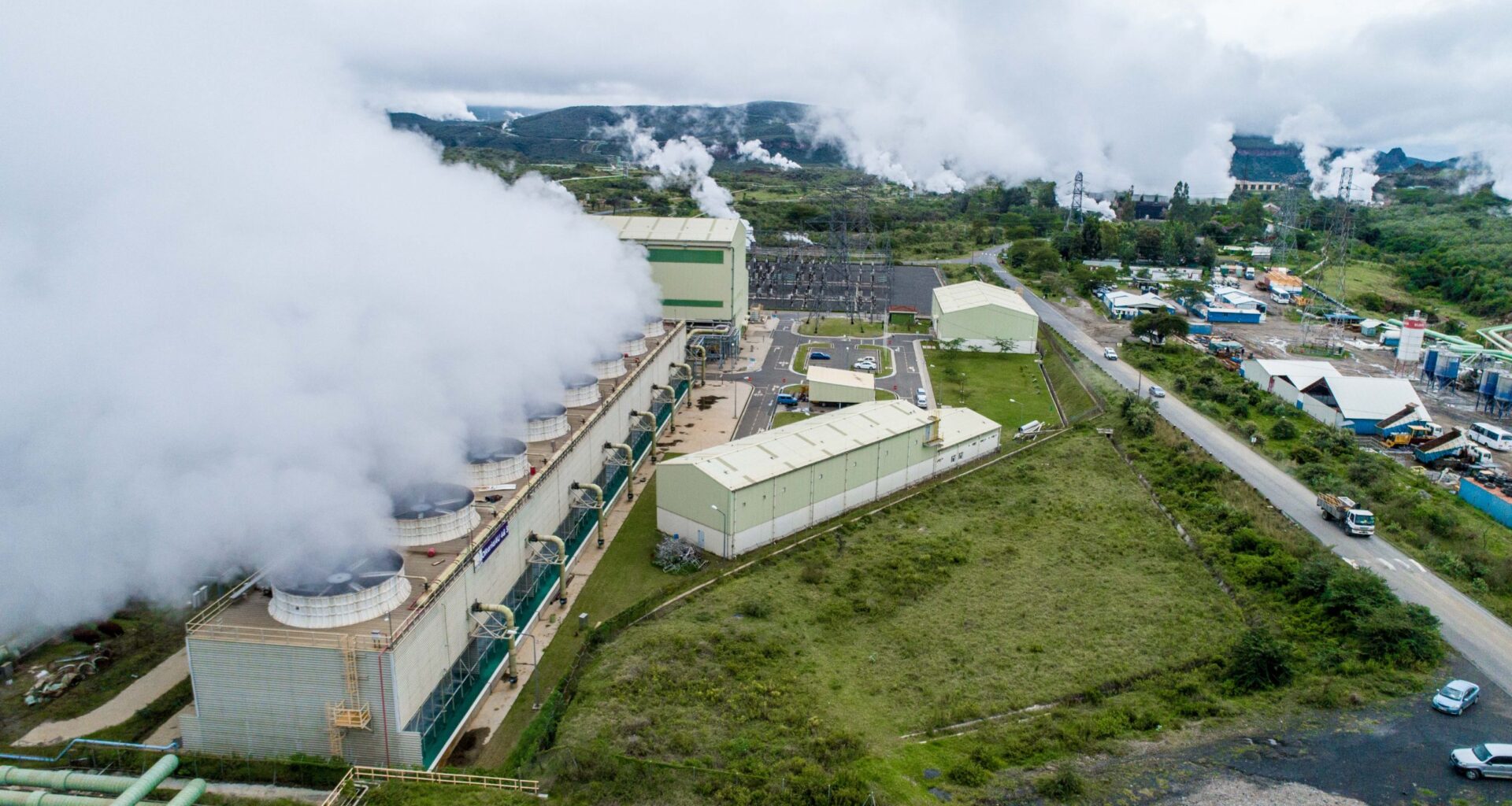
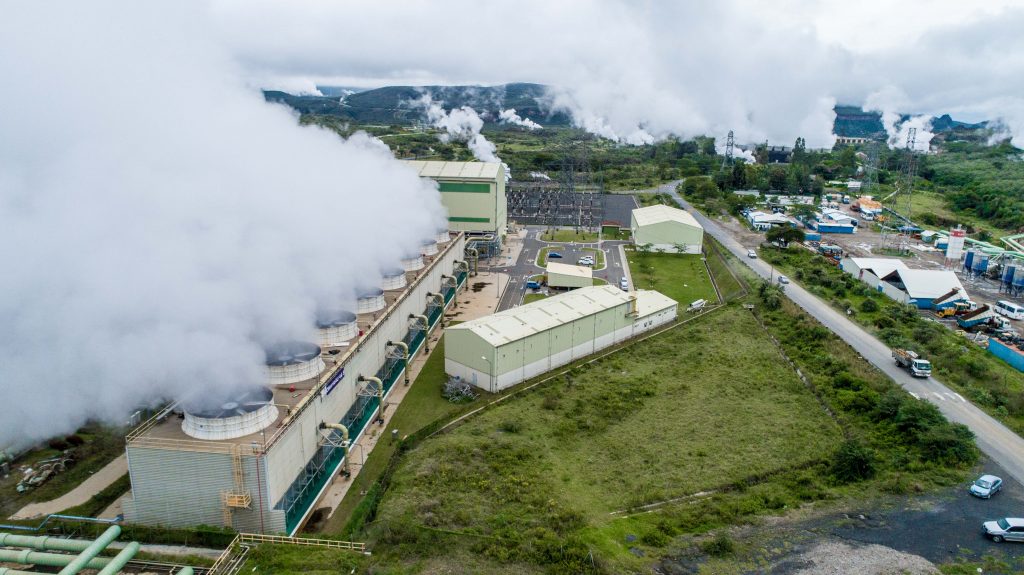
KenGen’s newest 83MW geothermal power plant, Olkaria I Unit 6 (source: KenGen)
A newly proposed Geothermal Energy Strategy in Kenya sets out new installed capacity targets with measures and reforms to accelerate geothermal growth.
The Ministry of Energy and Petroleum of Kenya is setting expanded targets for geothermal growth, coupled with proposals for how these targets can be achieved through legislative and market reforms. These proposals are now detailed in a draft (as of January 2026) National Geothermal Strategy 2026-2036.
The draft strategy has now been made available on the Ministry’s website, along with a form for comments from stakeholders.
New geothermal growth targets
Setting the framework for the strategy is a new target for geothermal installed capacity of 1413.5 MW by 2035. To achieve this, part of the strategy is to accelerate the development of greenfield geothermal sites by an additional 1 greenfield site every two years. Moreover, the Ministry seeks to increase commercial direct use projects to diversify revenue opportunities and increase revenues for geothermal development.
Other measures to achieve this target include the improvement of private sector participation in the projects, and the co-location of special economic zones near geothermal resource areas to leverage on cheap power and direct use.
With Kenya about to surpass the 1-GW threshold for installed capacity later this year, it appears to be on pace to attain its 2035 target. Private off-take agreements have also been signed to utilize geothermal steam from the Olkaria and Menengai fields, notably for green ammonia production and cement manufacturing.
Industry challenges and threats
Although the geothermal industry in Kenya has matured greatly in the last couple of years, there are still some challenges that have hindered further investment and growth. A major theme mentioned in the strategy is the single offtake system the lack of potential applications in the vicinity of geothermal resources. Thus, a model of diverse applications has been proposed by the strategy.
For instance, grid supply and industrial parks remains feasible for the Olkaria, Menengai, Suswa, and Longonot fields. For the Northern Rift Valley fields, green hydrogen, mining, and eco-tourism use has been recommended. For the Southern and Central Rift Valley fields, export markets are recommended to be considered.
 Roses in Oserian’s greenhouses in Kenya (source: Oserian)
Investors are also faced with lengthy land acquisition processes, the lack of cost-reflective steam tariffs, litigation risks, and regulatory gaps in geothermal direct use applications. This underscores the need to reform the steam tariff framework and provide social safeguards to strengthen investor confidence.
New incentive schemes
The draft strategy proposes a number of possible interventions to bridge the gap that is hindering geothermal growth in Kenya. These proposals include the following:
Issuance of forward-bankable PPAs upon completion of geoscientific studies to facilitate financing
Implementation of a cost-reflective tariff
A requirement to sign off-take guarantees of at least 25 years with industrial power users
The strategy also proposes a number of measures to help maintain a tariff of not more than USD 0.07/ kWh for geothermal power:
Tax exemptions on geothermal development (drilling, equipment, and associated services) as previously reported
PPAs with periods of 30 years or above
Undertaking of the development of power interconnection infrastructure
Moreover, the Government of Kenya will actively seek for innovative financing schemes (grants, green funds, carbon credits) for geoscientific studies and drilling, and consider a policy shift so that public entities like KenGen and GDC can enter agreements with Independent Power Producers. The aim for these measures is to reduce upstream risk and fast-track the de-risking of all geothermal fields.
Source: Ministry of Energy and Petroleum