
TL;DR
Engineering Consolidation: People familiar with the changes linked Microsoft’s security-engineering consolidation to several hundred layoffs. Leadership Reset: Hayete Gallot, Microsoft’s security chief, may have replaced at least eight executives and redirected teams toward artificial intelligence products. Product Priorities: Security Copilot, code-vulnerability scanners and tools that monitor enterprise software agents are the main product lanes. Confirmation Gap: Microsoft has not publicly confirmed the staffing scale, named replacements or concrete product road-map changes.
Microsoft has reportedly consolidated security engineering teams on in a move tied to several hundred layoffs. Employees would bear the immediate cost as engineering capacity shifts toward AI defenses.
In a separate, undated change, Hayete Gallot, Microsoft’s executive vice president of security, is said to have replaced eight or more executives. She reportedly also has redirected additional teams toward AI security products, although neither the timing nor the precise scope of the wider changes has been publicly confirmed.
Microsoft declined to comment about the internal changes. On February 4, Microsoft appointed Gallot to lead security, reporting directly to Satya Nadella, the company’s chairman and CEO. Her formal authority does not establish either figure.
Leadership Reset Reaches Engineering
Replacing executives and consolidating engineering would give Gallot control over both leadership and execution. Executives affected by the shake-up had reported to Charlie Bell, Microsoft’s former security chief, according to people familiar with the changes. In February, Microsoft moved Bell into an individual-contributor engineering role focused on quality.
A smaller leadership group could reduce the approvals needed to redirect staff, budgets and product work. Fewer management layers would also put Gallot’s priorities closer to the engineers responsible for delivering them.
Gallot linked the leadership reset to Microsoft’s ability to turn early decisions into execution:
“The entire industry is getting reimagined from the ground up. And it will reward the companies that see the shift early, make the hard choices, and execute with discipline. A few months ago, we made those choices. Now we must execute.”
Hayete Gallot, Executive Vice President (via The Information)
Her reference to hard choices does not verify the scale of the personnel changes. Engineers remaining after any layoffs would still need to maintain existing defenses while building the products Gallot wants to emphasize.
Microsoft is also shifting resources to develop more AI security products while reducing emphasis on some traditional offerings. Microsoft’s generally available Security Copilot platform already operates in a field where enterprise assistants can retrieve sensitive data and find vulnerabilities in software.
Gallot returned to Microsoft in February after serving as Google Cloud’s president of customer experience and spending more than 15 years in Microsoft roles. Her experience across engineering, sales and customer operations gives the role both technical and commercial dimensions as Microsoft develops products for corporate security teams.
What the AI Security Shift Changes
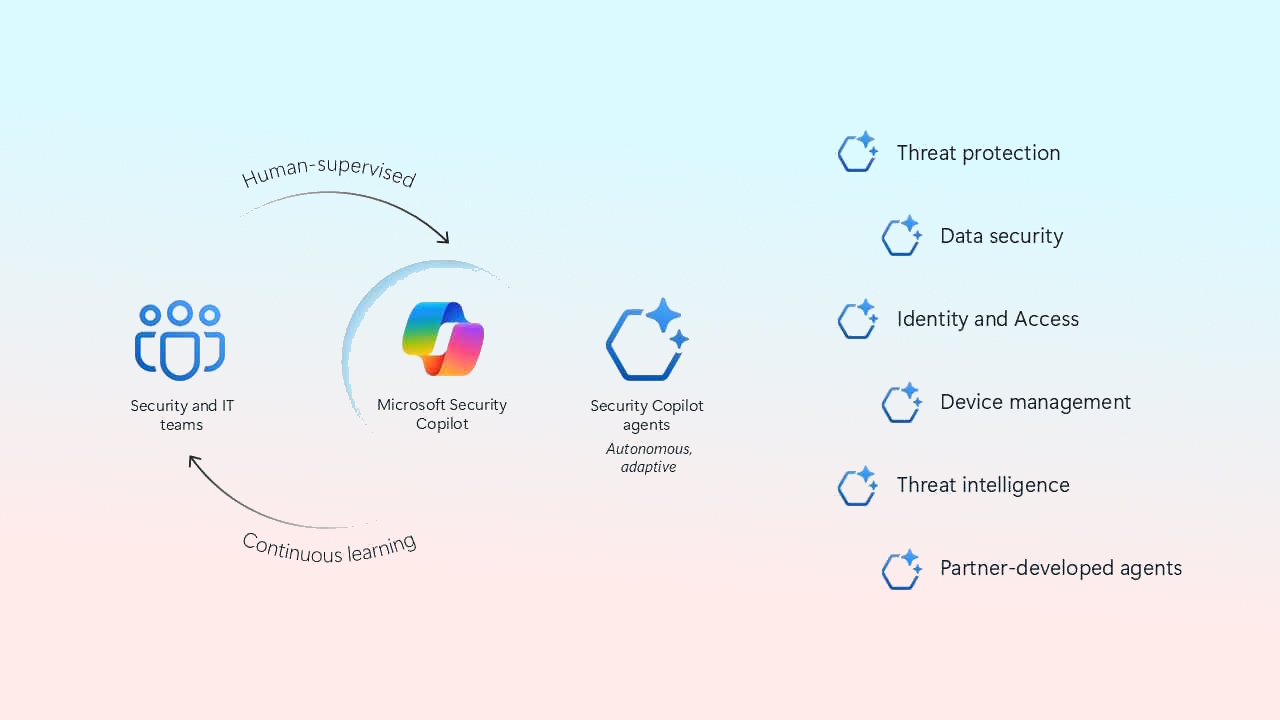
Gallot is prioritizing Security Copilot, code-vulnerability scanners and tools for monitoring enterprise AI agents. Security Copilot is Microsoft’s AI-assisted security platform. It embeds agents across detection workflows, allowing software to investigate alerts, gather relevant information and coordinate responses across company systems.
Microsoft already makes the platform generally available to security and IT teams through products including Defender, Entra, Intune and Purview; the reorganization does not represent a new launch. Security Copilot agents automate high-volume tasks while human teams retain control over consequential actions.
Code scanners search for exploitable flaws before attackers can use them. Monitoring products oversee software agents that act across business systems on a user’s behalf, where manipulated instructions can turn legitimate access into a route for abuse.
Microsoft’s AI security overhaul aims to answer demand for defenses and capture corporate spending flowing increasingly to OpenAI and Anthropic. Connected services can provide a secure end-to-end option for businesses, while combined product and engineering management could shorten the path from threat research to deployable defenses.