
At last month’s DTW Ignite, telco SaaS company Wavelo showcased its industry vision for AI-driven telco operations, demonstrating how real-time data and event-driven architectures can help communications service providers (CSPs) transition toward autonomous networks.
As Silver Partner of the show, the company took part in the Autonomous Networks Summit with their session, From Ambitious Goals to Operational Reality: Ensuring Success with a Real-Time Data Strategy, by CEO Justin Reilly and Rob Bennett of Boost Mobile, as well as two TM Forum Catalyst projects, exploring how Agentic AI can create new opportunities for operators — from orchestrating services for large-scale events to enabling autonomous assurance for connected IoT ecosystems.
In a quick interview following the event, Bob Dietrich, Director of Solutions Engineering at Wavelo, sat down with The Fast Mode to reflect on the key trends behind telcos’ shift towards AI-driven operations, in particular Agentic AI, and how the company is empowering operators to make this transition.
The agentic ambition
 Bob Dietrich, Director, Solutions Engineering, Wavelo
Bob believes the event emphasized two trends that have long shaped the company’s strategy. “DTW Ignite was an exciting event for Wavelo,” he explains, “Because it reinforced two major industry shifts that we’ve been investing in for several years: real-time event-driven operations and Agentic AI. Agentic AI represents the next evolution of telecom operations. Traditional AI helps people make better decisions, but Agentic AI enables systems to take action autonomously while remaining governed by business policies and human oversight. For that to work, AI needs timely, trusted information — and that’s where Wavelo plays an important role.”
The company’s flagship platform, which is built around an event-driven architecture that continuously streams operational, customer, and network events in real time, enables AI agents to react immediately to changing conditions, whether that’s network congestion, subscriber experience degradation, or new business opportunities.
Bringing Agentic AI to the marketplace
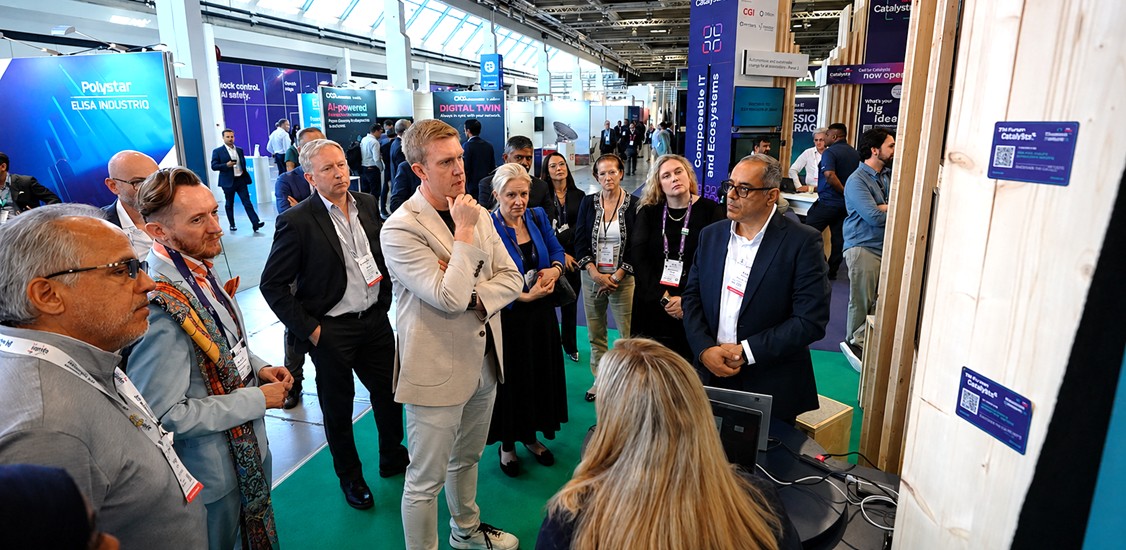
One of Wavelo’s major showcases at DTW Ignite was the TM Forum Moonshot Catalyst, Value-Driven Agentic AI Marketplaces for Mega Events, which was also named a finalist for a TM Forum Catalyst Award.
Bob tells us, “We were thrilled to be part of the Moonshot Catalyst and honored that the project was recognized as a finalist for a TM Forum Catalyst Award. The project explored how communications service providers can use an Agentic AI Marketplace to dynamically compose, orchestrate, and monetize services across multiple vendors during highly demanding environments such as major sporting events.”
Wavelo contributed two key capabilities to the solution. The company’s Telemetry Agent continuously monitored network performance and customer experience, detecting issues such as congestion or SLA degradation and converting those events into business intents that triggered autonomous remediation. It also contributed the Billing Agent, ensuring that sponsored services, premium connectivity, roaming upgrades, and other commercial offerings could be automatically monetized as part of the end-to-end workflow.

“Together with our partners—including FlexigenAI’s orchestration platform and EY’s Agent Factory—the Catalyst demonstrated that the real value of Agentic AI comes from governed collaboration between specialized agents rather than isolated AI models,” says Bob. “It also reinforced the importance of open standards and event-driven architectures for enabling interoperable, multi-vendor ecosystems that allow CSPs to innovate faster while maintaining operational control.”
The company also participated in a second Catalyst project, Autonomous & Sustainable Moving IoT Ecosystems at Scale, which demonstrated how autonomous assurance can support mission-critical IoT services across connected vehicles, drones, and smart infrastructure.
Driving scale and governance
By combining real-time data with open APIs, TM Forum standards, and governed automation, the company aims to help operators adopt Agentic AI at their own pace, building confidence with each use case while creating a scalable foundation for future autonomous operations.
“The key to successful Agentic AI adoption is recognizing that autonomy and governance must evolve together,” Bob adds. “Operators don’t need to replace their OSS/BSS overnight. Instead, they can incrementally introduce AI agents into targeted business processes while maintaining human oversight, policy controls, and clear accountability. As confidence grows, those agents can collaborate across domains, automating increasingly complex operational and business outcomes without sacrificing trust, security, or compliance.”

Building the ecosystem
As operators increasingly adopt multi-vendor AI environments, common standards and interoperable architectures will also be essential to ensure AI agents can exchange information, coordinate actions, and operate consistently across OSS, BSS, and network domains.
Bob tells us, “The conversation is now about how AI can operate collaboratively and at scale. Operators are looking beyond individual copilots toward coordinated ecosystems of specialized AI agents that can automate operations while remaining governed and trusted.”
For Bob, that evolution also reinforces the importance of industry collaboration. “An encouraging takeaway from the show was the industry’s continued focus on open standards. Across both Catalysts, TM Forum Open Digital Architecture, event-driven APIs, and emerging standards like A2A and MCP were central themes. That reinforces our belief that the future won’t be built by a single vendor—it will be built through interoperable ecosystems connected by real-time data.”
Navigating the next wave
As the telecom industry moves closer to autonomous networks, DTW Ignite made one message increasingly clear: the future of AI in telecom will depend not only on more capable models, but on the ability to orchestrate them with trusted data, open standards, and robust governance. Wavelo’s vision closely reflects that direction, advocating an event-driven, AI-native operating model where specialized AI agents can collaborate across network, customer, and business domains to deliver real-time outcomes.