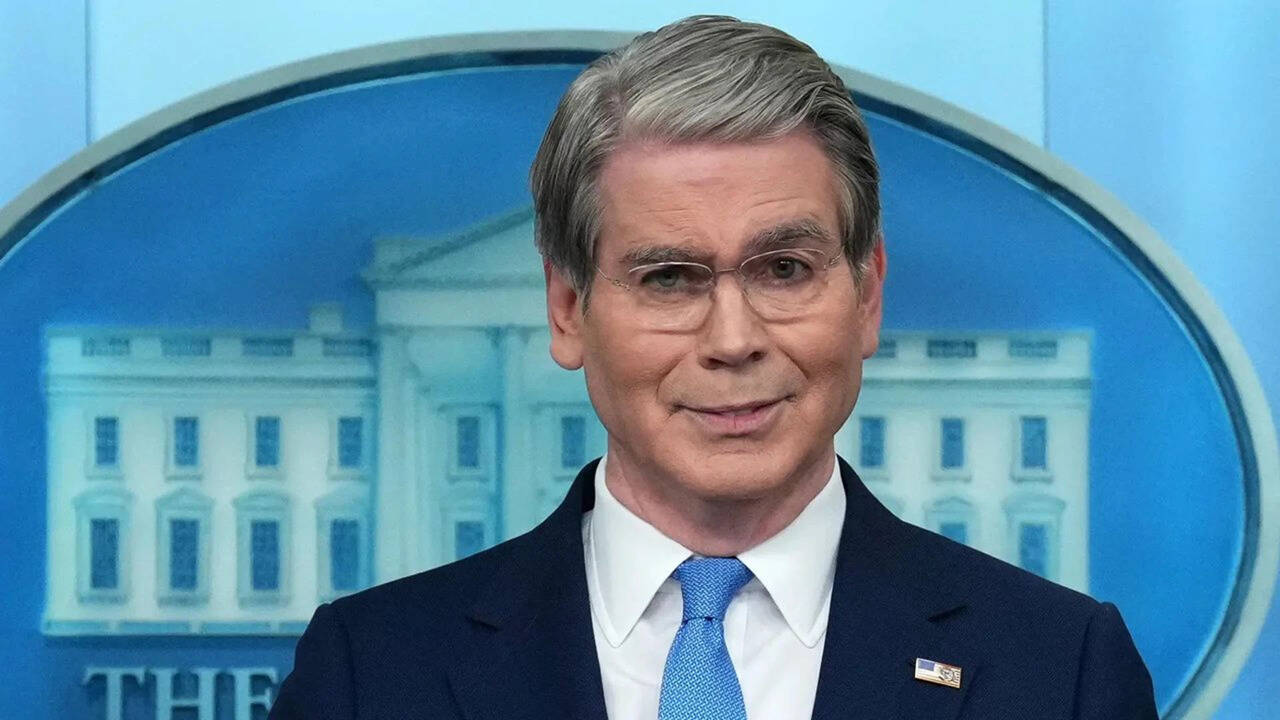
 ChatGPT maker OpenAI and Claude developer Anthropic have already raised concerns with the US government about Chinese AI companies allegedly using their models without authorisation. Now, US Treasury Secretary Scott Bessent has said that the Trump administration is investigating if Chinese AI systems have been developed using outputs from American models. He added that officials have identified what he described as evidence of US AI models appearing in some Chinese systems.Speaking to Fox Business, Bessent said, “We are finding watermarks of our U.S. large language models on many of the Chinese models, and that’s unacceptable. We’re going to be looking at that in the coming days or weeks.” He also warned that the US could impose sanctions if it determines that Chinese AI companies benefited from intellectual property theft.Bessent’s remarks come after Anthropic wrote to the US Senate Committee on Banking, Housing, and Urban Affairs last month, alleging that Alibaba had carried out what it described as “the largest known distillation attack” against the company. OpenAI has also previously urged US policymakers to address concerns around AI model distillation and intellectual property protection.
US Treasury Secretary Scott Bessent warns of possible sanctions
During the interview, Bessent said the administration opposes intellectual property theft and could take action if evidence shows overseas AI models were developed using American technology without authorisation.“If we see, especially that overseas models are stealing from our great companies, we have the ability to sanction them because of this theft,” he noted.Bessent said the technical process involved is known as distillation, an AI training technique in which a smaller model is developed using the outputs of a larger, more capable model.
Chinese AI models gaining ground
Chinese open-weight AI models have become increasingly competitive with offerings from US companies. Earlier this month, Chinese startup Moonshot AI introduced its Kimi K3 model, which has outperformed some models from OpenAI and Anthropic across several industry benchmarks.The comments also come ahead of planned AI discussions between the US and China in September. According to the news agency Reuters, Bessent is expected to lead the US delegation during the talks, which will take place before Chinese President Xi Jinping‘s planned visit to the US on September 24.
AI companies also face copyright lawsuits
While US AI companies have raised concerns about model distillation, both Anthropic and OpenAI have faced legal challenges over the data used to train their AI systems.Anthropic agreed to pay $1.5 billion to settle a class-action lawsuit brought by authors who alleged the company downloaded books from pirated databases without permission.OpenAI and Microsoft were also sued by The New York Times in 2023, with the publication alleging that its copyrighted content was used without consent to train AI models.