NORTH CHARLESTON — For years, Bonnie Knighton watched some of her students fall behind in science class. She noticed how her English-language learners and students with disabilities often struggled to keep up with complex scientific vocabulary.
Last spring, she began experimenting with artificial intelligence tools to help bridge that gap, after seeing other teachers share ideas on social media.
“If I see something, I’m like, ‘Oh, that’s really cool, will it work for my kids?’ ” she said.

News coverage by The Post and Courier’s Education Lab relies on contributions to the paper’s Public Service and Investigative Fund, a community-supported nonprofit. You can find more information and donate at postandcourierfund.com.
Knighton used an AI tool to translate lessons into students’ native languages and adapt materials so more students could understand them.
For instance, to help kids learn about the solar system, she used a tool to turn the planets into a “social media Kardashian-ish type of thing,” where each planet was a family member with relationships and interactions like a pop culture, reality-TV family.
“The kids loved it,” she said. “If I can connect on that level and use AI with my creativity, my (students’) engagement is going to go up.”
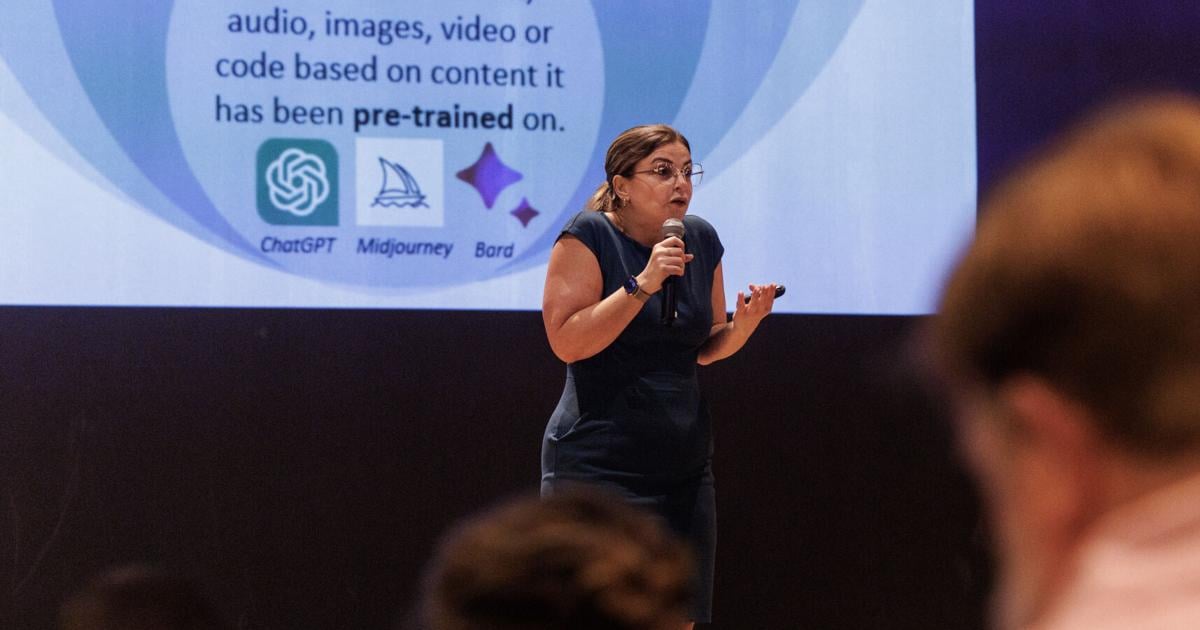
On a sunny July afternoon, Knighton stood before a room of fellow educators, demonstrating how she uses AI to adapt lessons and help students access the same content regardless of their language proficiency or learning needs.
What she taught her colleagues is part of a broad shift underway in the Charleston County School District to prepare educators and students to deploy AI in classrooms during the 2026-27 academic year.
The effort was on full display as the district devoted more than a dozen sessions at its three-day annual professional development event to AI literacy and classroom application, training teachers who will help bring best practices to their classrooms.
The local push to train educators comes amid broader debates over the role of technology in schools. While supporters say AI can help personalize instruction and improve efficiency, critics worry about accuracy, privacy, academic integrity and the cognitive risks of students becoming over-reliant on the tools.