Meta and OpenAI are the latest tech giants to get on board with Texas’ new data center standards for energy consumption and water use to operate in the state.
Texas Gov. Greg Abbott announced on Aug. 10, in two separate news releases, that the California-based tech companies would comply with Texas’ push to shield residents from rising energy costs driven by the construction and expansion of data centers in the state.
These announcements, along with those of other industry leaders, follow Abbott’s order for a full audit of proposed data centers connected to the state grid to ensure they comply with Abbott’s directive to state regulators requiring data centers to fully fund the costs of the electric infrastructure needed to serve their operations.
Here’s a quick look at which tech companies said they would comply with Texas’ new data center requirements and what those guidelines are.
Meta, OpenAI, Google and Amazon say they’ll follow Texas data center rules
According to several news releases from Abbott’s office, the following tech companies have said they will comply with Texas’ new data center standards:
Abbott also announced on Aug. 7 that Amazon had sent a letter stating that it is committed to working with the state and embracing the governor’s standards, with Google saying it welcomed Texas’ standards and committed to working with state leaders to ensure data centers increase affordability, protect resources and create new jobs.

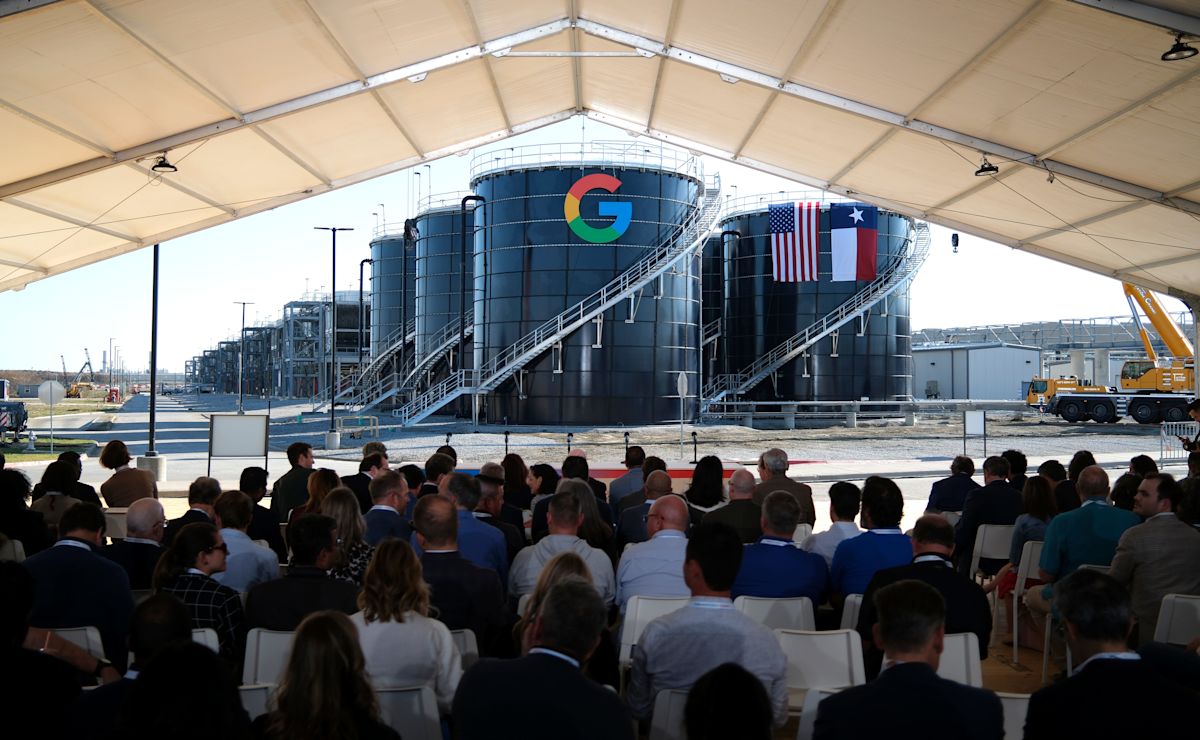
MIDLOTHIAN, TEXAS – NOVEMBER 14: Attendees await the arrival of Texas Gov. Greg Abbott and Alphabet and Google CEO Sundar Pichai at the Google Midlothian Data Center on November 14, 2025 in Midlothian, Texas. Google announced today that it plans to invest $40 billion dollars in new Texas data centers through 2027. (Photo by Ron Jenkins/Getty Images)
What are Texas’ new data center standards?
Abbott directed the Public Utility Commission of Texas (PUCT) and the Electric Reliability Council of Texas (ERCOT) on June 10 to ensure data centers do the following:
Pay for their electric infrastructure instead of shifting costs onto Texas families and small businesses.
Reduce electricity costs for Texans.
Do not disrupt residential neighborhoods to preserve Texas’ quality of life.
Pay their own way and eliminate reliance on outdated taxpayer-funded incentives.
Abbott gave state regulators until July 17 to inform his office of the actions taken under current law, identify the limits the law places on the issues and recommend legislative proposals necessary to implement these objectives.
These standards were only the start, as Abbott ordered a construction freeze on proposed data centers to allow PUCT and ERCOT to conduct a full audit to determine whether they comply with the new guidelines.

An anti-data center sign that reads “Protect Texas Water” sits on a bench at The Garden, at 1801 Buddy Holly Ave, during the South Plains Swing Tour on July 18, 2026, in Lubbock, Texas.
Texas pauses new data center approvals for statewide audit
Abbott directed PUCT and ERCOT on Aug. 3 to examine each data center project and how they will:
Pay their own way by disclosing all taxpayer-funded incentives, grants, abatements and other public financial assistance tied to the project.
Provide their own power by detailing projected electricity demand and plans for on-site generation or other measures to reduce reliance on the ERCOT grid.
Protect Texas water resources by identifying water sources, projected water use, water reuse procedures and water-efficient cooling technologies.
Outline measures to reduce impacts on neighboring property owners and communities, including noise mitigation, light controls, setbacks, traffic improvements, emergency response coordination and other community protection measures.
Provide full transparency by disclosing project ownership and controlling interests.
Abbott noted that PUCT and ERCOT must receive and audit this information before data center projects can move forward.
As of Aug. 3, ERCOT was considering about 474 gigawatts of requests to connect to the Texas grid — more than five times ERCOT’s record peak demand — with data centers accounting for about 90% of the new power requests.
Trump says Texas is making a mistake pausing data centers
President Donald Trump waves as he disembarks Air Force One at Joint Base Andrews, Maryland, U.S., August 9, 2026.
While some state leaders, like Texas Agriculture Commissioner Sid Miller, say Abbott’s new data center standards don’t go far enough to protect Texas — particularly the agriculture community — one national leader says the guidelines could hurt the state’s economy.
In an Aug. 7 interview with Punchbowl News, President Donald Trump said Texas is making a mistake by pausing data center projects.
Dig Deeper: Trump: Data centers could be ‘bigger than oil’ as Texas seeks pause
“I saw Texas the other day, sort of against it,” Trump said. “I think it’s a mistake, and I’m not taking positions here. I just think it’s a mistake. There are other communities that want it, and when a community wants it, it means a lot of money is going to come to the community.”
Trump went on to say he thinks data centers are important for economic reasons and that “data centers could be bigger than oil.”
How many data centers are in Texas?
There are 335 existing data centers in Texas, with at least 248 more in the works, as of June 26, according to the Texas Tribune.
Most Texas voters oppose data centers in their communities, poll finds
Residents hold signs inside the El Paso City Council meeting Tuesday, June 9, 2026, at City Hall in El Paso, Texas, regarding the construction of a Meta data center.
A poll from the University of Texas and the Texas Politics Project released June 24 found that 56% of Texas registered voters oppose the construction of data centers in their communities, with 42% strongly opposed.
Several cities and counties have also been trying to take matters into their own hands. The San Marcos City Council, on June 16, adopted a new ordinance that amends its zoning rules to effectively ban data center development in the city, citing concerns about the strain these projects would place on local water and energy resources.
The Texas Tribune also reported on June 6 that Hill County leaders passed a moratorium on data centers, but it was later rescinded after a developer sued the county for $100 million. Hood County commissioners approved a similar moratorium but withdrew it after a Texas state senator requested an attorney general’s opinion on whether counties could impose such restrictions.
Mateo Rosiles is the Texas Connect reporter for USA TODAY and its regional papers in Texas. Got a news tip for him? Email him at mrosiles@usatodayco.com.
This article originally appeared on USA TODAY: Meta, OpenAI join list of tech giants following Texas data center rules