As drought and extreme storms make it increasingly difficult to manage reservoirs and safeguard water systems, Lehigh University researchers believe artificial intelligence-powered models can help system operators prepare for a more precarious future.
Thousands of reservoirs across the country employ their own complex rule books to govern who has water rights and how restrictions are handled, and researchers say using AI to incorporate those guidelines into model predictions will help managers understand how climate change or policy decisions could affect their work.
“The purpose of this model is to have people make better decisions, not to replace people,” said Hongyi Li, associate professor of civil and environmental engineering and faculty member of Lehigh’s Center for Catastrophe Modeling and Resilience, known as CAT.
The center supports public sector workers who help their communities weather natural disasters, and this project will help those who seek to control floods, administer drought restrictions, and maintain hydropower operations, CAT associate director Ethan Yang said.
Yang and fellow CAT faculty member Brian Davison will collaborate with lead researcher Li on the federally funded project, dubbed RIVER-AI: Reservoir-Groundwater Interactions for River Flow Variability, Energy, and Resilience with AI.
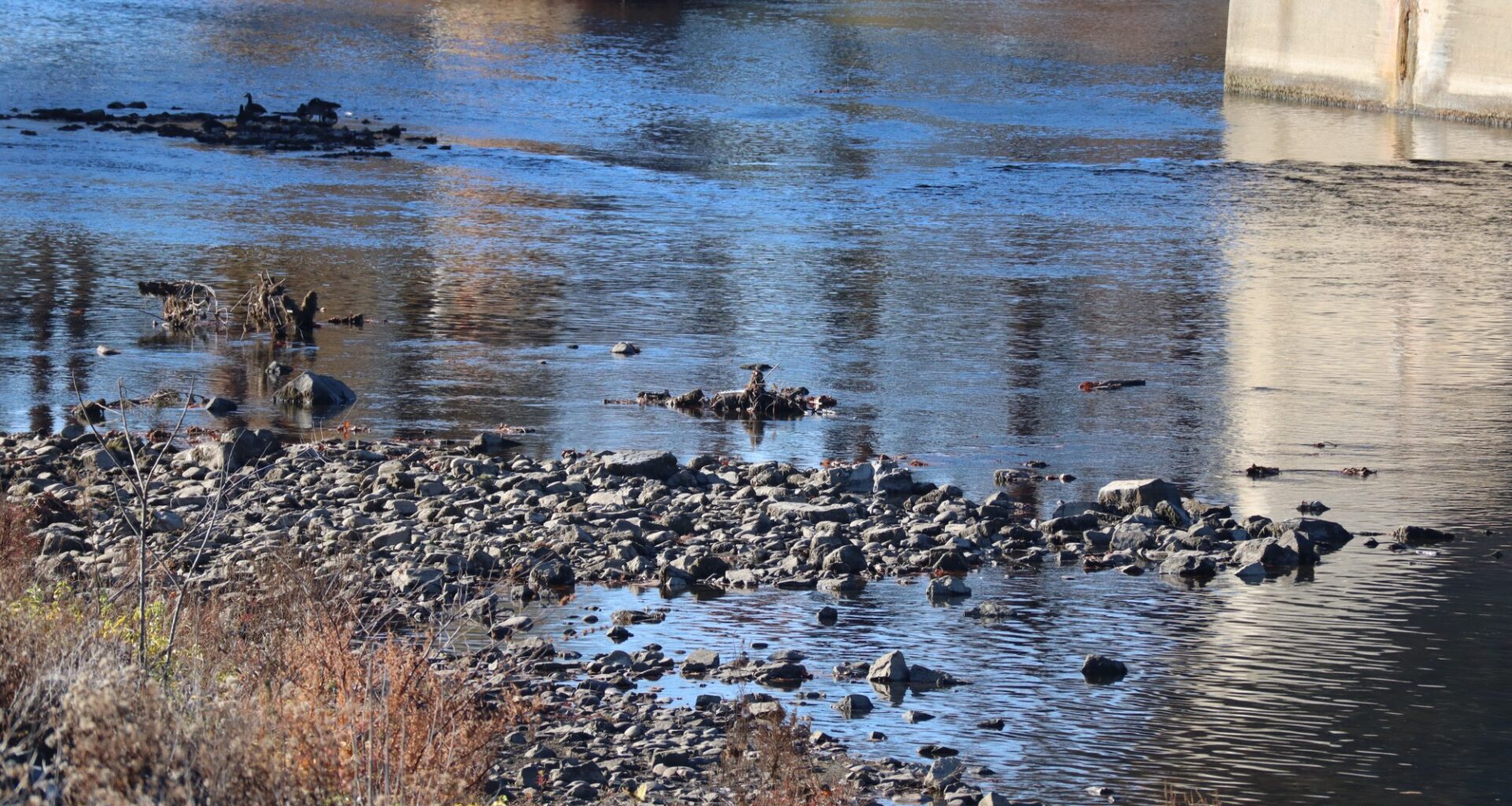
The project initially will focus on data from the upper reaches of the Delaware River Basin, encompassing portions of New York and Pennsylvania. The Delaware River provides drinking water for more than 14 million people and supplies both New York City and Philadelphia.
Researchers see nationwide applications for their work, however, and already are set to partner with two federal labs and other academic institutions, including the University of Texas at Austin and the City College of New York.
Using AI will make it faster to model how a water system operates under stress and also will allow researchers to analyze scenarios that can’t be tested in the physical world because they’d damage reservoirs or cause harm downstream, Yang said.
Worsening drought in the West has shown how difficult it can be for water system operators to collaborate across state borders, and more reliable models could help researchers advise decisionmakers on how to negotiate with each other as supply dwindles, he said.
Using AI for science
Work on the project officially starts Sept. 1 and is funded through next May, although Li said he aims to finish the first phase in six months. The project is part of the U.S. Department of Energy’s Genesis Mission, which seeks to use AI to empower scientists to complete work that was not previously possible.
Prior models could be manually trained to incorporate the rules governing a specific reservoir, but it was a slow, case-by-case process that was difficult to scale, Yang said.
Instead, researchers will train an AI model on the general principles used to operate a facility, such as a hydropower dam, then improve that model’s capabilities by feeding in guidelines from specific reservoirs, he said.
Water control manuals that govern the operations of an individual reservoir can run hundreds of pages, and those guidelines aren’t always available for public systems, so the ability of AI models to both learn general principles and distill information from large amounts of text will be key to building a tool that can be used to assess any reservoir in the nation, Yang said.
The project should prove useful to the researchers tasked with gathering up-to-date data on whether a particular watershed can support residential and industrial water usage demands, said Brian Gramlich Rahm, a senior extension associate in the Department of Biological and Environmental Engineering at Cornell University.
Gramlich Rahm is the director of the New York State Water Resources Institute. Each state has such an institute, funded through the U.S. Geological Survey, and their job has become more complicated as data center development increases the demand for water, he said.
As the systems used to power and cool data centers rapidly evolve, reliable information on their water usage is hard to find, Gramlich Rahm said. The work of searching through industry reports for answers might feel familiar to New York and Pennsylvania scientists who did similar work to try to assess the impact of the fracking boom, he added.
Although Gramlich Rahm said he likes the idea of using AI to research “tricky problems,” he acknowledged there is some irony in using the technology to assess watersheds under strain when data center usage to power AI is one of the stressors.
Gramlich Rahm said he’d rather see AI put to use addressing scientific questions than making it faster for him to buy cat food online, but added that everyone has a different conception of what uses are appropriate, leaving society with an uncomfortable, unresolved debate about priorities.
“It’s a conversation that we’re not having,” Gramlich Rahm said.