
AI adoption in Mexico rose from 38% to 48% of organizations in one year, but the majority remains focused on basic applications while only 13% has reached an advanced, transformative stage, according to a study commissioned by Amazon Web Services (AWS) and conducted by Strand Partners.
AI adoption in Mexico is moving beyond experimentation, but the next stage will depend less on access to technology and more on whether companies can integrate AI into their operations, develop talent, and build the infrastructure required to deploy increasingly autonomous systems. This was one of the central messages at the AWS Summit Mexico City 2026, where AWS presented the findings of the 2026 “Unlocking the Potential of AI in Mexico” study, conducted by global consultancy Strand Partners.
The study found that AI adoption increased from 38% to 48% of Mexican organizations in one year, equivalent to about 500,000 additional companies. More than 2.5 million companies now use AI, reads the study.
However, adoption does not necessarily translate into transformation. Sixty-three percent of organizations remain focused on basic applications and incremental improvements, compared with 72% a year earlier. Only 13% has reached what the study defines as the most advanced and transformative stage.
The distinction is becoming relevant as companies move from using AI as an individual productivity tool toward deploying it across business processes.
From AI Experimentation to Organizational Change
The study points to organizational readiness as one of the main constraints. Only 24% of companies have a formal and comprehensive AI strategy, while 23% consider their workforce to have strong digital skills.
Talent was identified as the top national priority by 57% of companies surveyed. At the same time, 60% believe AI can help reactivate employment in historically underserved regions, while 65% expect the technology to help integrate independent workers and small businesses into the formal economy.
The challenge is therefore not limited to technology acquisition. For companies, the ability to define where AI creates measurable value, prepare employees to work with it and integrate it into existing processes increasingly determines whether adoption produces business results.
The same pattern appears in investment. Sixty-three percent of AI adopters increased their spending on the technology over the past year, and 44% now operate with a dedicated AI budget. Yet 46% do not have a reliable way to measure AI return on investment.
This creates a gap between investment and measurement. While 88% of AI adopters report productivity improvements and 86% report positive returns, almost half of companies still lack a reliable framework for quantifying those results.
Agentic AI Moves Toward Enterprise Deployment
According to the study, 37% of organizations have heard of agentic AI, but only 6% have fully implemented it and 28% remain in pilot stages. Just 22% of companies consider themselves completely or highly prepared to adopt the technology. Startups are further ahead, with 39% describing themselves as prepared, almost twice the general average.
The early results reported by organizations already using agentic AI also point to operational applications. Fifty-five percent report faster decision-making and execution, while 51% report greater operational efficiency.
The shift was reflected in AWS presentations at the event, where the company positioned AI agents as systems capable of supporting work, software development, security and business processes rather than simply generating content.
Shally Stanley, Vice President of Professional Services, AWS, says the next stage of AI development requires a continuous cycle connecting development, deployment, security, and modernization.

Shally Stanley, Vice President of Professional Services, AWS
“AI agents can help translate requirements into designs and implementation tasks, generate and validate code, identify production problems and continuously modernize software,” says Stanley.
The company also highlighted AWS services designed to support agent development and deployment, including Amazon Bedrock and tools for agent observability, knowledge management, and security.
The underlying issue is scale. As agents perform multiple reasoning, planning, and verification steps for a single interaction, inference workloads can increase substantially. For businesses, that makes infrastructure and model selection part of the operating strategy rather than a purely technical consideration.
AWS also presented Forward Deployed Engineering, a new business unit designed to place AWS engineers alongside customer teams to develop production systems. Stanley says the initiative is backed by a US$1 billion investment aimed at expanding engineering capacity and accelerating customer outcomes.
AI Needs Context, Infrastructure, and Trust
The summit also highlighted a problem that becomes more significant as AI systems gain autonomy: access to reliable business context. An AI model can generate an answer without knowing how a particular company operates, which data sources are authoritative or which rules apply to a specific decision. For enterprise agents, that limitation can affect the quality of decisions and the reliability of automated workflows.
AWS presented new capabilities intended to connect agents with structured and unstructured corporate data, including documents, images, videos, databases, and data warehouses. The objective is to allow agents to retrieve information while maintaining controls over what users are authorized to access.
The security implications are equally relevant. As agents begin to execute actions rather than simply provide recommendations, companies need visibility into how decisions are made, along with mechanisms to detect and remediate vulnerabilities.
For businesses operating in regulated sectors, these requirements can determine whether an AI application can move from a pilot to production.
Juan Diego Gomez, Founder and CEO, Nauphlis.io, said that challenge from the perspective of a company using AI to evaluate human behavior for financial, employment, and other decisions.
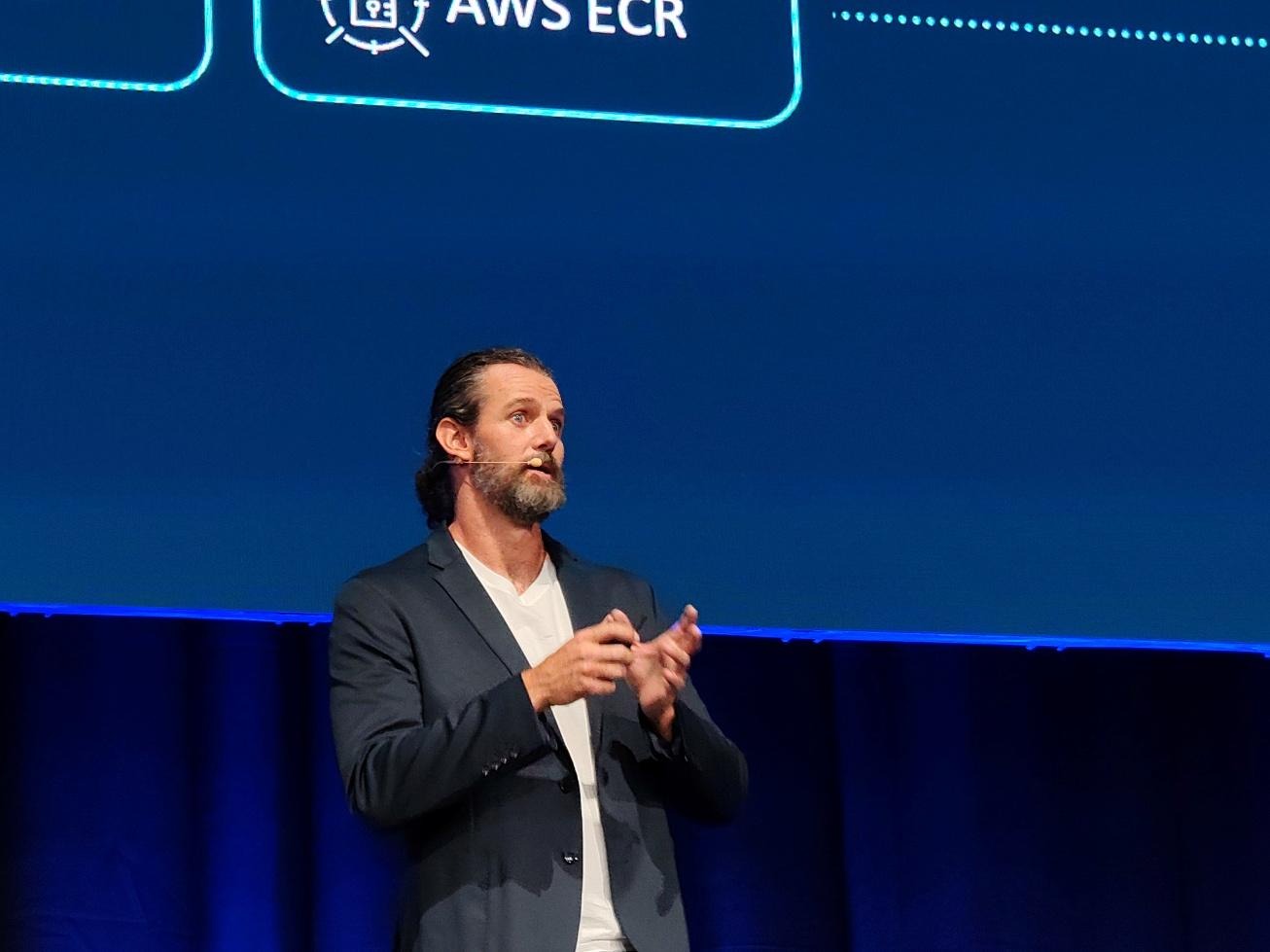
Juan Diego Gomez, Founder and CEO, Nauphlis.io
Gomez notes that Nauphlis.io was created around the idea that technology could help organizations evaluate people based on how they may respond to different circumstances rather than relying exclusively on historical documentation.
The company has applied its models to areas including credit, recruitment, scholarships, financial inclusion and fraud prevention. Gomez says the company has helped more than one million people over the past decade and that its work with AWS became increasingly important as its customers expanded into regulated industries.
“AWS infrastructure allowed Nauphlis.io to serve large organizations that require security, reliability and the capacity to process large volumes of transactions,” says Gomez.
The company also uses AWS services to train its models and has moved toward making its technology available through the AWS Marketplace, which Gomez says can shorten the process of onboarding enterprise customers.
The Public Sector as an AI Catalyst
The study also identifies government adoption as a potential multiplier for private-sector investment. Fifty-three percent of private companies surveyed say they would increase their own AI investment if the public sector accelerated its adoption. At the citizen level, 58% say they would view AI more positively if governments used the technology more extensively.
This positions public-sector adoption as more than a technology modernization issue. It could influence investment decisions, public confidence, and the development of AI capabilities across the wider economy.