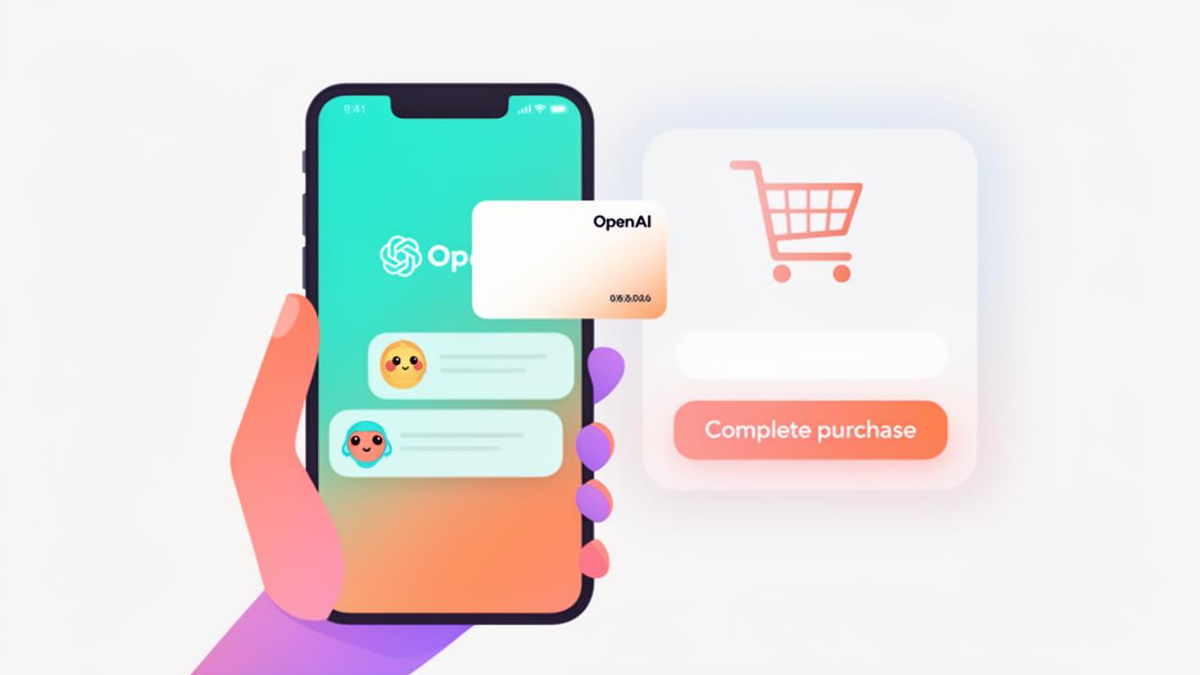
Synchrony Financial, the largest issuer of private label credit cards in the United States, is partnering with OpenAI to enable consumers to complete purchases directly within ChatGPT using their store-branded cards, marking one of the first attempts by a major American consumer lender to embed financing, payments and rewards inside an AI chatbot.
The collaboration, announced Monday, positions Synchrony to capture transaction volume as AI-powered shopping assistants move from product discovery to actual checkout. Synchrony issues store cards for major retailers including Amazon (AMZN), Walmart (WMT) and Lowe’s (LOW), giving the Stamford, Connecticut-based lender a direct stake in how commerce evolves inside conversational AI platforms.
“AI is creating an opportunity to reimagine the entire commerce experience, from how customers discover products to how they pay, earn rewards, and build loyalty,” said Kaylin Voss, vice president of Americas and Industries at OpenAI, in a press release. “Synchrony is approaching that opportunity from both sides: bringing OpenAI into the experiences it creates for customers and partners, while deploying our most advanced models and tools across its own enterprise.”
The deal has two distinct components. Synchrony is deploying OpenAI’s models internally to accelerate product development, while simultaneously launching a ChatGPT plugin that lets consumers browse marketplace deals, promotional financing options and partner offers from Synchrony’s retail network. The broader ambition, however, is to eventually make Synchrony cards a native payment option when users ask ChatGPT to research and buy products.
The bottleneck in agentic commerce
The partnership addresses a structural gap in what the industry calls “agentic commerce” — the idea that AI agents will autonomously research, compare and purchase goods on behalf of consumers. Today, when users discover a product through an AI assistant, they are typically redirected to a retailer’s website to complete the transaction, a handoff that breaks the experience and gives the AI platform no role in the payment.
“What happens today is the transaction doesn’t cleanly happen yet at the provider like OpenAI,” said Maran Nalluswami, Synchrony’s chief strategy officer, in an interview. “We want to ensure that if a transaction’s going to happen in that ecosystem, our cards are loaded up in the right spots to ensure that that transaction finishes.”
OpenAI has been working to close that loop. The company has already signed agreements with payment networks including Visa and Stripe to build in-chat purchase capabilities, part of a broader push to turn ChatGPT into a commercial platform ahead of a potential initial public offering. Synchrony’s involvement adds a critical piece: the branded credit products that carry retailer-specific rewards and promotional financing offers.
Timeline and hurdles
Nalluswami cautioned that seamless agentic commerce remains months away. Integrating general purpose credit cards into ChatGPT could take six to 12 months, he said. Private label store cards — which only work at specific retailers and require coordination with each brand — may take even longer.
Consumer trust represents another significant barrier. Many users remain reluctant to hand credit card information to AI systems or to authorize an AI agent to complete a purchase on their behalf. Security concerns, fraud liability and the lack of established dispute resolution mechanisms in AI-mediated transactions all contribute to hesitation.
Then there is the question of economics. When a purchase is completed inside ChatGPT, it is unclear how interchange fees, marketing costs and other transaction economics would be divided among the retailer, the card issuer and the AI platform. Nalluswami said those commercial terms will need to be negotiated among Synchrony, OpenAI and the underlying retail brands.
A multi-platform strategy
Synchrony is not betting exclusively on OpenAI. Nalluswami said the company is also in discussions with competing AI platforms, including Anthropic’s Claude and Google’s Gemini, about embedding Synchrony cards within those chatbots as well.
That multi-platform approach mirrors the strategy Synchrony has long pursued in physical retail, where it partners with a broad range of merchants rather than tying its fate to any single distribution channel. As AI assistants proliferate, the card issuer appears intent on ensuring its products are available wherever consumers choose to shop.
The partnership arrives at a pivotal moment for OpenAI, which is reportedly preparing for a massive IPO. Demonstrating that ChatGPT can function as a genuine commerce platform — not just a research tool — would significantly strengthen the company’s revenue narrative for public market investors. For Synchrony, the stakes are equally high: if AI agents become the primary interface for online shopping, card issuers that fail to integrate risk being disintermediated from the transaction flow entirely.
The competitive landscape is shifting rapidly. Payment giants, fintech startups and technology platforms are all jockeying for position in the emerging agentic commerce stack. Synchrony’s move signals that incumbent lenders are not content to wait and see how the ecosystem develops, but are actively working to secure their role in it.