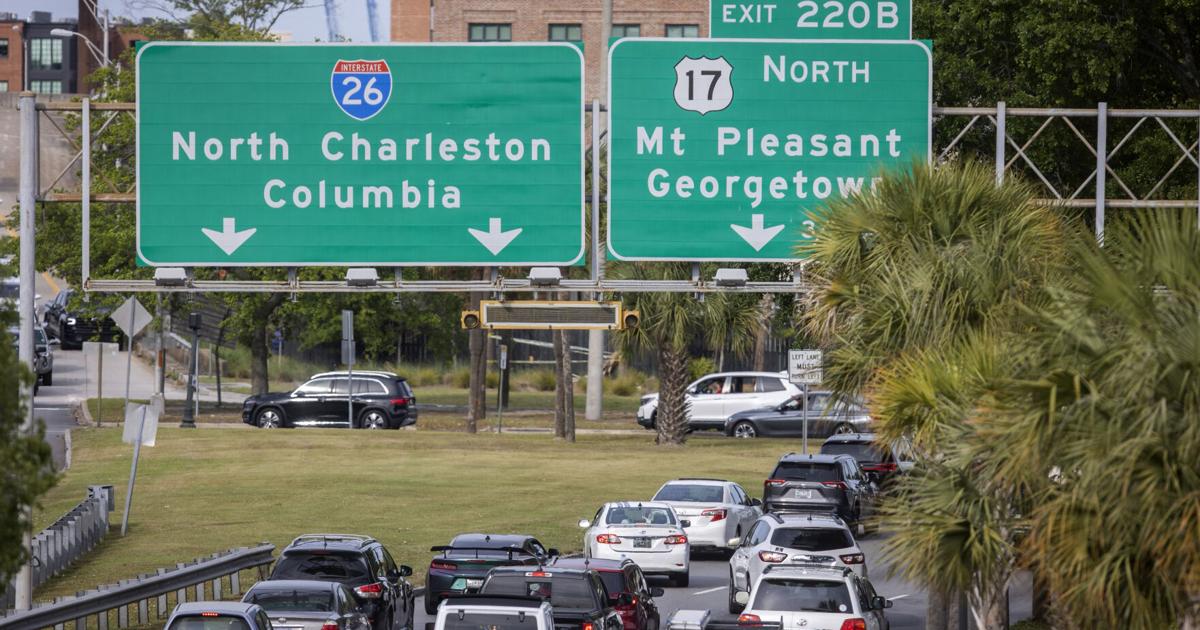
CHARLESTON — The city wants to expand its use of artificial intelligence from Calhoun Street to two other major thoroughfares.
Staff applied for another U.S. Department of Transportation grant that would build on the nearly $1 million awarded in March 2024 to install cameras at nine intersections on Calhoun Street.
The grant pays for cameras that use artificial intelligence to monitor vehicles, pedestrians and cyclists, learn patterns and adjust the timing of lights in real time to improve traffic flow and safety at collision-prone roads, Mayor William Cogswell said in February.
City Council is expected to give after-the-fact approval on Aug. 18 for an application the traffic and transportation department submitted to the USDOT. It seeks more than $2.25 million in federal funding to expand the technology to eight intersections on the Septima P. Clark Parkway and 11 intersections on Folly Road.
If the application is approved, the grant would scale the Calhoun Street effort to create “a fully integrated” and “regional smart network across Charleston’s roadways,” according to a summary of the application provided by city spokesperson Bay Sheehan.

File image of S.C. 171. The city has applied for a federal grant that would bring artificial intelligence to Folly Road as part of an effort to improve traffic flow and safety.
File/Staff
She declined to provide a copy of the complete application, which has not yet been approved.
The performance period for the Calhoun Street grant concluded at the end of July. The city has until the end of November to complete an analysis of what impacts it may have had.
The hope was that it would reduce collisions with pedestrians and cyclists by half, the newspaper previously reported. It’s not yet clear if that goal was achieved.
Even so, research generally shows that using real-time information to alter traffic signals creates more-efficient roads than when signals are solely pre-timed, Sheehan said.
“Applying this technology is expected to produce similar improvements,” Sheehan said. “This application continues the City’s data-driven approach to traffic safety, targeting two corridors already identified as strong candidates for traffic responsive signal technology.”
The city’s vendor would provide a match of more than $450,000. No city money would be used, Sheehan said.
Work to bring artificial intelligence to the Crosstown and Folly Road would begin as soon as a grant is approved, she added. The cameras are not used for law enforcement purposes or surveillance, the city has said.