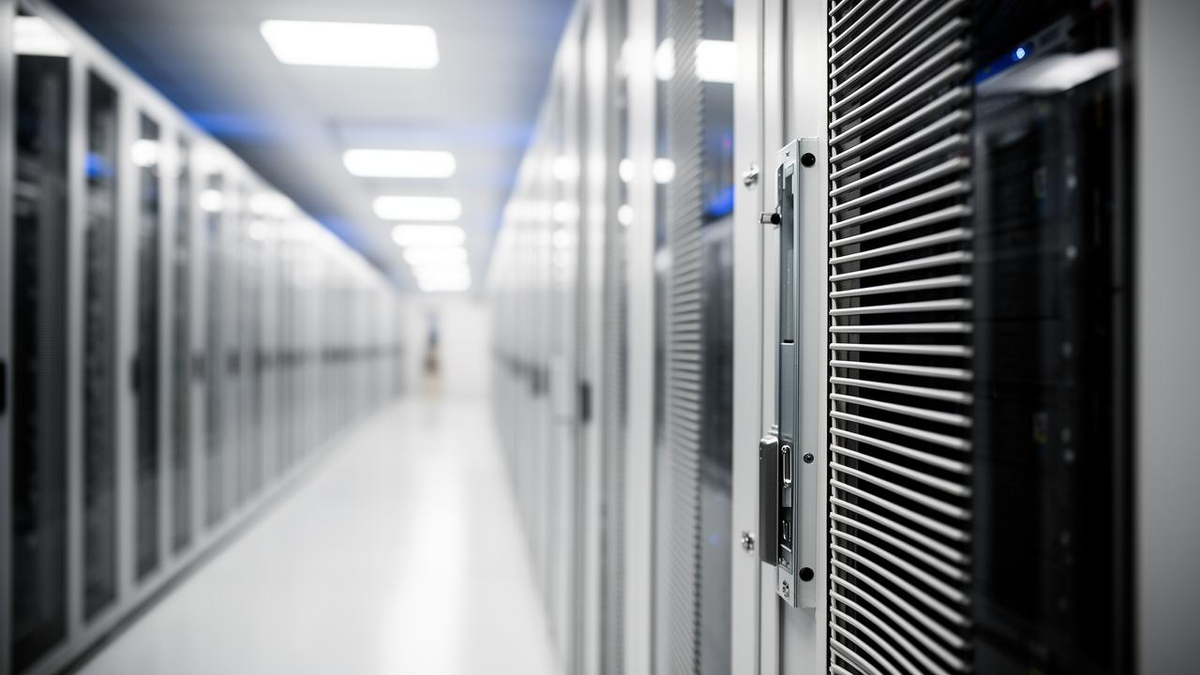
Nvidia’s first production units of its next-generation AI computing platform “Vera Rubin” have arrived at Microsoft (MS) data centers. Simultaneously, Nvidia has reportedly notified major customers of a more than 15% price increase on AI chip systems, signaling rising costs for AI infrastructure buildouts.
According to industry sources on the 23rd, Satya Nadella, CEO of Microsoft, posted on his social media account the previous day: “Today is delivery day for the first production Vera Rubin systems arriving at Microsoft data centers. Grateful to Nvidia and our Azure hardware and data center teams for making this important milestone possible.” Nvidia also announced via its official social media channels that “Vera Rubin has entered full-scale production ramp-up.”
The flagship configuration of Vera Rubin is the “Vera Rubin NVL72,” which combines 36 “Vera” CPUs (central processing units) with 72 “Rubin” GPUs (graphics processing units) in a single system. Compared to the previous Blackwell platform, it delivers up to 10 times higher AI inference throughput per watt while reducing cost per token to roughly one-tenth.
Price Increase Notification
Separate from the first delivery to Microsoft, Nvidia has recently notified major customers of AI chip system price increases. Bloomberg reported, citing sources, that Nvidia has informed Microsoft, Google, Oracle, and others that prices will rise by more than 15% starting with systems shipped early next year. Systems equipped with Vera Rubin and Grace Blackwell are also reportedly included in the price adjustment. The magnitude of the increase varies by product depending on the Nvidia chip generation and memory configuration.
The price hike is rooted in a severe memory semiconductor shortage driven by surging AI demand. As demand for high-performance memory such as HBM (High Bandwidth Memory)—essential for AI accelerators—has skyrocketed, component costs have risen sharply. While Samsung Electronics (005930.KS), SK Hynix (000660.KS), and Micron collectively dominate the global DRAM market and have been expanding production, demand growth driven by AI adoption has outpaced supply.
To address the HBM supply crunch, Nvidia is reportedly even considering reducing the memory capacity of “Rubin Ultra,” the high-performance successor AI platform to Vera Rubin, from its original design specifications.
South Korea Supply Timeline Remains Unclear
Attention is also focused on when Vera Rubin will arrive in South Korea. Deputy Prime Minister and Minister of Science and ICT Bae Sang-hoon stated after meeting with Nvidia CEO Jensen Huang on June 8 that “South Korea has been prioritized to receive Vera Rubin supply first.”
However, the specific timing and volume of Vera Rubin deliveries to South Korea have not yet been disclosed. The South Korean government and Nvidia agreed last year to supply 260,000 GPUs to South Korea, but the Vera Rubin allocation was not separately announced. Deputy Prime Minister Bae said at the time that additional GPUs needed for future projects would also be “supplied without issue.”
Memory Industry Gains Leverage
Bloomberg assessed that Nvidia’s planned price increase demonstrates the strengthened bargaining power of memory semiconductor makers such as Samsung Electronics, SK Hynix, and Micron. Nvidia’s AI accelerators are configured with DRAM including HBM, which rapidly supplies the data required for AI chip computations.
Microsoft, Google, Amazon, and Meta are developing their own AI chips, but building large-scale AI data centers still requires Nvidia chips because Nvidia has established data center-optimized AI chips and an accompanying ecosystem. At the same time, securing memory semiconductors produced by Samsung Electronics, SK Hynix, and Micron is also critical for these companies seeking to reduce their dependence on Nvidia.
With major AI data center projects already facing delays, labor shortages, deteriorating capital market conditions, and community opposition, Nvidia’s AI chip price increase could further complicate large-scale infrastructure investment plans, according to industry observers.