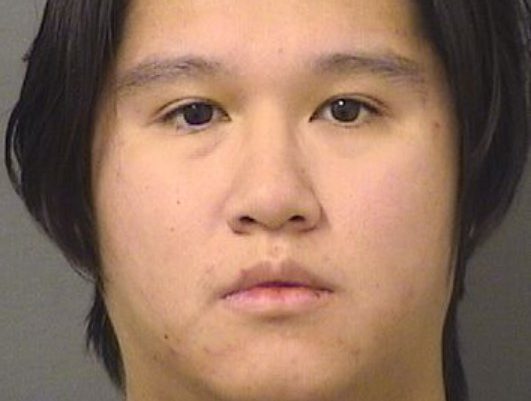
I read the story about Darren Zhou twice.
The first time, I focused on the woman.
That is hard not to do. Zhou, a West Palm Beach Goldman Sachs analyst, would not leave his former girlfriend alone after their breakup. She blocked him. He found other ways to contact her. The messages became threatening and frightening. At one point, she received a message that contained nothing except the name of the West Palm Beach gym where she was working out.
Then I read the story again, this time as a lawyer.
And one detail kept bothering me.
Zhou was talking to ChatGPT.
 Matthew T. Christ is a partner at Rafferty Domnick Cunningham & Yaffa. (courtesy, Matthew T. Christ)
Not just asking it questions. According to investigators, he was telling it what he was thinking about doing. He discussed his former girlfriend, where she went, his jealousy and, eventually, horrifying plans involving rape, murder and suicide.
OpenAI reported the conversations to the FBI. The FBI later turned over two months of chat logs to the Palm Beach County Sheriff’s Office.
Think about that for a minute.
We have spent a lot of time debating what artificial intelligence might do to us. This case raises a different question: What are we telling artificial intelligence about ourselves?
I don’t think most people have really considered that yet.
ChatGPT feels strangely private. You are usually alone when you use it. There is no other person sitting across from you. Nobody reacts when you type something embarrassing. Nobody raises an eyebrow. You can close the window whenever you want.
That can create an intimacy that isn’t really there.
The Zhou case is an extreme example, obviously. Most people aren’t typing threats into ChatGPT. But the legal lesson doesn’t require an extreme example.
The lesson is that the conversation exists. For lawyers, this is going to become a much bigger issue than I think the public realizes.
Thirty years ago, a lawyer investigating a case might have looked for letters, business records and witnesses. Then came email. Then text messages. Then Facebook, Instagram and other social media. Phones added location histories, photographs and enormous amounts of other information.
Every time our lives moved further online, litigation followed. AI chats are next.
Suppose someone is involved in a serious car accident and goes home that night and tells an AI program exactly what happened.
Suppose a supervisor is considering firing an employee and asks AI how to do it without getting sued.
Suppose someone who knows a lawsuit is coming starts asking questions about which records need to be kept.
Or forget the hypotheticals. Think about how many people already paste entire email chains, contracts, workplace disputes and personal conversations into AI systems and ask, “What do you think?”
As a lawyer, my immediate reaction is: Be careful.
I am not saying every AI conversation is discoverable. I am not saying every company keeps every conversation forever. Those questions depend on the platform, its policies, the facts and the law.
I am saying something much simpler: ChatGPT is not your attorney.
Attorney-client privilege is not some general concept of privacy. It is a specific legal protection attached to communications made under particular circumstances for the purpose of obtaining legal advice.
That distinction is easy to understand when we say it out loud. I’m not convinced it feels nearly as obvious when someone is sitting at home at 11:30 at night typing into a screen.
Based on the news story, I am glad somebody intervened in the Zhou case. The alleged threats were terrifying. This woman reportedly had already been receiving unwanted and threatening messages, and investigators concluded that Zhou’s AI conversations showed something more than a momentary angry outburst.
If reporting those conversations helped protect her, good.
But once we accept that an AI company can possess information serious enough to warrant contacting law enforcement, we also have to confront the harder questions that follow.
Where is that line? What happens with conduct that is disturbing but less clear? What information is retained? When can the government get it? What happens when lawyers seek AI conversations during a civil lawsuit?
Courts are going to wrestle with these issues. Legislatures probably will too.
Meanwhile, people are using these systems every day.
The terrible facts reported in Palm Beach County are unusual. The habit the story exposes is not.
We are getting very comfortable talking to machines. Before we tell them everything, we ought to understand who — or what — we’re really talking to.
Matthew T. Christ is a partner at Rafferty Domnick Cunningham & Yaffa, a leading Florida law firm dedicated to advocating for victims of mass torts, medical malpractice and corporate negligence. The firm has offices in Palm Beach Gardens, West Palm Beach, Pensacola and Jacksonville.