LEXINGTON, Ky. — University of Kentucky students will begin classes next week with an enhanced focus on artificial intelligence literacy and ethics.
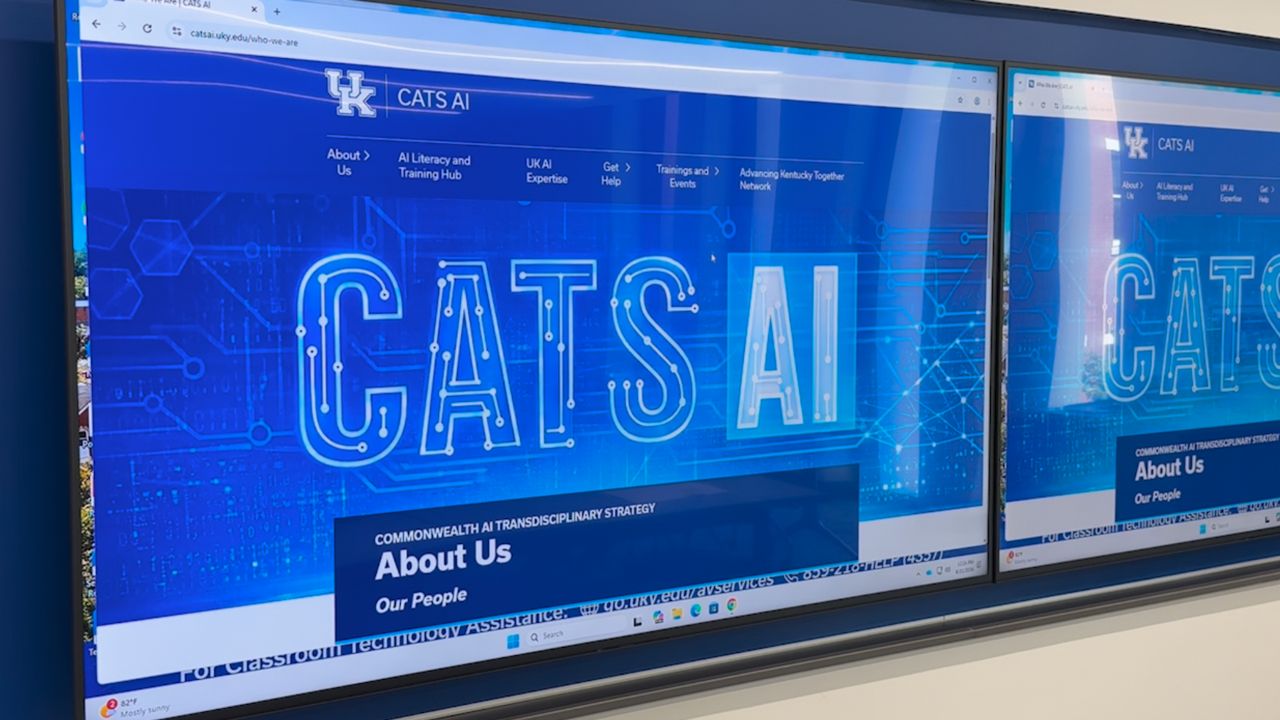
The university is expanding its work through the Commonwealth AI Transdisciplinary Strategy, known as CATS AI. The initiative is designed to give students and faculty resources and guidance for navigating a world where AI is becoming more common in classrooms and workplaces.
“At the University of Kentucky, we take very seriously the promise and the challenges that the rapid and uneven development of AI represents,” said Trey Conaster, director of UK’s Center for the Enhancement of Learning and Teaching.
UK announced a partnership with Microsoft earlier this year, as well as a bachelor’s degree in artificial intelligence. More than 30 students have enrolled in the program this fall. A university spokesperson said the school is encouraged by this number, saying it “achieved before the college had the benefit of a full undergraduate recruiting cycle, which gives us a lot of optimism about the program’s future growth.”
Conaster said the university’s broader AI efforts are focused on helping students and faculty have clear conversations about how AI should be used.
“They crave open conversations and clear guidance from their instructors and that’s what we’re working on doing here,” Conaster said.
The push comes as large studies from Gallup and the University of California show a majority of students use generative AI. A small percentage of students, about 9%, in the California study admitted to using AI to cheat.
UK professors are encouraged to include an AI policy in each syllabus. If AI is allowed, faculty can use a scale that explains which parts of an assignment may permit AI use at certain levels.
California researchers have cautioned that a blanket ban on AI would not stop cheating and could harm students’ job prospects if AI proficiency becomes expected in the workplace.
Conaster said the university is trying to balance academic integrity with the possibility that employers may ask for AI-related skills.
“Students are looking forward to jobs and they want to make sure they’re competitive and they develop the skills they need and they’re not shortchanging themselves,” Conaster said.
AI use at work is also becoming more common. This month, the U.S. Census Bureau said 55% of workers surveyed use AI on the job, and about one-third said it saved them one to two hours of work.
New data from the Pew Research Center released this week shows 55% of Americans under 30 are wary of AI, while 71% fear AI-related job loss.