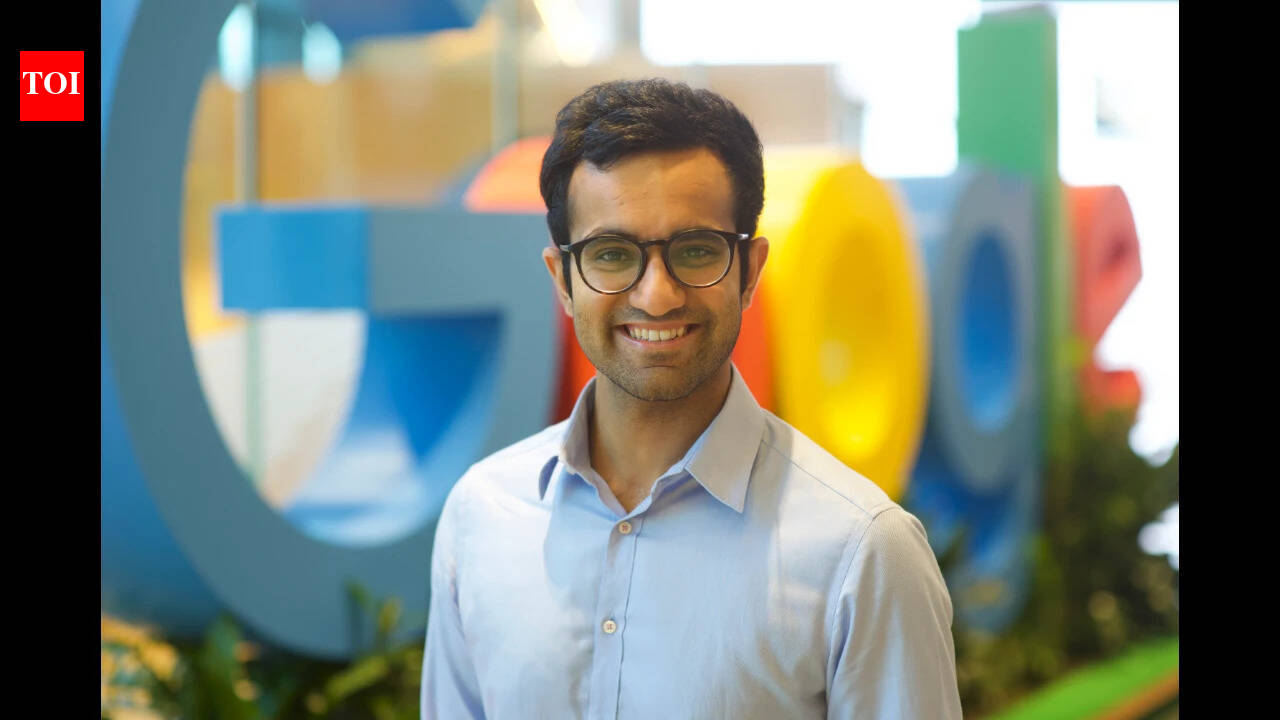
Rajroshan Sawhney leads Frontier and Applied AI Partnerships in APAC for Google Research, Labs and DeepMind Rajroshan Sawhney leads Frontier and Applied AI Partnerships in APAC for Google Research, Labs and DeepMind, and serves as the Global Initiative Lead for Health AI Developer Foundations (HAI-DEF). He specializes in graduating research into real-world impact by building partnerships across the full lifecycle: From foundational research to population-scale deployment of AI. In healthcare, these partnerships are said to be enabling over 10 million AI-powered screenings for critical diseases like cancer and tuberculosis, and reaching over 50 million people through digital health platforms. As the global lead for HAI-DEF, he was instrumental in MedGemma’s successful launch and ecosystem adoption. Prior to Google, Raj was the Head of Strategic Partnerships and Corporate Development at a leading Computer Vision startup based out of San Francisco and Singapore. He holds a Computer Science BE (Hons) degree from BITS-Pilani, is a member of Mensa International and the India Young Leaders Forum. In an interview with Times of India, Rajroshan Sawhney shared how Google is bringing the advantages of AI to India’s health and healthcare ecosystem.Q. Google has deployed AI across diabetic retinopathy, TB, breast cancer and maternal health programmes in India. Which of these deployments has delivered the biggest measurable impact so far, and what metrics do you use to judge success?At Google, our focus is on bringing the benefits of frontier AI technology directly to the last mile of healthcare delivery, and we aim to do this in two ways: First, by augmenting clinicians and caregivers with the latest tools and technologies that enable them to help more patients and engage with them more meaningfully. Second, by collaborating with communities and governments on the foundational infrastructure and digital building blocks that support population-scale impact, and transform health systems from reactive and episodic to proactive and preventive.We have been incredibly encouraged by the progress and impact our AI capabilities have enabled across India, especially in three respects. First, in scaling access and early detection, with partners like Apollo Radiology International and Khushi Baby deploying our imaging and diagnostic models for free screenings for TB and cancer. Second, in safeguarding maternal healthcare, with the predictive AI model we built. And third, in reducing administrative burden.We have also been validated in another core belief: AI that solves for India can solve for the world. A prime example is our diabetic retinopathy model, which after being tested with Indian partners such as Aravind Eye Hospital, has supported over 600,000 screenings globally, and is now enabling millions of AI-assisted screenings across India and Thailand at no cost to patients.Q. Healthcare AI often struggles to move from pilot projects to nationwide adoption. What are the biggest bottlenecks you face in India—regulation, data quality, infrastructure or clinician acceptance—and how is Google addressing them?Moving healthcare AI from ‘code to clinic’ at a country-wide scale requires collaboration across healthcare providers, policymakers, technology companies, academia and research to establish synergies across models, infrastructure, tools, and workflow. We actively support such synergies. We work directly with the ecosystem to build solutions that seamlessly integrate into existing systems and address practical workflow challenges, such as to cut nursing shift handoffs.These solutions support the multimodal and multilingual nature of health experiences. AIIMS’ use of our MedGemma models to develop India’s Health Foundation Models demonstrate how AI-assisted solutions can support India’s linguistic and cultural diversity; handle multiple data types, like text, voice and image; and, operate safely and securely without needing expensive clinical hardware.We also support solutions that ensure patients’ health journeys are digitized, while providing patients access and control over their unified health records. India’s National Health Authority (NHA)’s use of our open sourced Medical Data Toolkit to standardize health data provides a critical standardization layer for such digital health journeys. Along with helping patients better understand their medical information, this foundational shift also helps strengthen data-driven policy decisions for India’s public healthcare strategy.Q. Google is working with the National Health Authority to convert millions of unstructured medical records into the FHIR standard. How transformative could this be for India’s digital health ecosystem, and what challenges remain around interoperability and privacy?I am happy to share that the transformative impact is already underway, and scaling across India’s digital public infrastructure for healthcare, starting with the Aarogya Setu 2.0 app launched by the National Health Authority just a few weeks ago. The app uses FHIR standardization, which is enabled by our open sourced Medical Data Toolkit powered by our latest Gemma 4 open models, to help provide comprehensive individual health profiles.Data privacy is crucial at every step of the way. The Medical Data Toolkit uses a set of defined rules to structure the extracted information, and all health records and health information are controlled by the user within the Aarogya Setu 2.0 app.For us, what’s exciting is that these capabilities unlock potential at two levels: the individual, in enabling people to better understand and interact with their health information, and so own more of their individual healthcare journeys. And, the national: in helping India build a truly resilient, future-ready health system. And the transformative impact at both levels is really exciting.Q. Indian institutions such as AIIMS and Ajna Lens are using MedGemma to build India-specific foundation models. How important is it for India to have healthcare AI models tailored to local languages, diseases and clinical workflows rather than relying on global models?Health is deeply personal, and healthcare is fundamentally local, shaped by local language, cultural context, and clinical realities. As AI becomes increasingly embedded in healthcare delivery, it is important that global foundation models be adapted to the specific needs of the populations they serve.We are already seeing this approach come to life in India. IndusDerma, the localized model for dermatology that AIIMS and Ajna Lens are developing with Google’s MedGemma and MedSigLIP, aims to improve the accuracy and helpfulness of AI models for Indian skin tones. This also helps directly address biases in global datasets, which are historically skewed toward Western populations, and perform up to 30% to 40% worse on darker skin tones.At the same time, MedGemma also offers support in non-English Indian languages and retains instruction-following capabilities. This supports Aarogyam, AIIMS’ intelligent assistant for converting natural-language patient conversations into structured clinical summaries. AIIMS is contributing the models it develops with MedGemma to India’s Digital Public Infrastructure, making outcomes available to the ecosystem. Essentially, this synergy between leveraging global frontier model capabilities and local population dynamics and clinical realities will create a genuinely inclusive, future-ready health system for India.Q. From ASHA workers using HealthVaani to researchers using AlphaFold and AlphaGenome, Google is supporting AI across the healthcare value chain. Looking ahead, which area do you believe could see the biggest breakthrough in the next three to five years—diagnostics, drug discovery, preventive care or healthcare delivery—and why?AI is a profound and transformational technology with the potential to bring us closer to a future where everyone everywhere can live longer, healthier lives. We have already started seeing momentum in the adoption of AI for supporting early screening, diagnostic assistance and streamlined clinical workflows. The next significant unlock will be in bringing these capabilities closer to local communities. Organizations like Wadhwani AI have already started on this, with the Gemini-assisted solution HealthVaani providing frontline ASHA and Anganwadi workers multilingual, AI-powered access to trusted health information.Beyond healthcare delivery, AI is fundamentally accelerating the timeline for biomedical breakthroughs. India has already become the fourth-largest adopter of AlphaFold globally, with more than 180,000 researchers using it to help tackle long-standing issues facing humanity. The next few years will see AI scale to meet the sheer diversity of India’s healthcare needs, safely and equitably turning promising technological research into population-scale public goods. And, at Google, we’ll keep working to unlock this potential by bringing our bold and responsible approach to foster deep collaborations with India’s ecosystem.Q. AI promises to improve healthcare access, but concerns around accuracy, bias and patient privacy remain. How does Google ensure these models are clinically reliable and trusted enough to be used at scale in a country as diverse as India?Patient privacy is best addressed at the application level by partners and developers. Partners using Google AI independently manage their application’s access and use of patient data using rigorous organizational privacy and security controls and governance.For our part, we recognize that health moves at the speed of trust, and we work hard to maintain that trust every day, with an approach that is robust from the start. Our models undergo extensive training on de-identified, diverse medical data to help the ecosystem build privacy-preserving healthcare tools.Our models can also be run on proprietary hardware in the developer’s preferred environment, including on Google Cloud Platform or locally, enabling privacy-preserving and institutionally compliant application development. Models can be downloaded with fixed parameters, enabling reproducibility which is crucial for medical applications. For instance, the applications and data being built by AIIMS Delhi remain entirely with AIIMS, managed under their own strict organizational privacy controls and security governance.