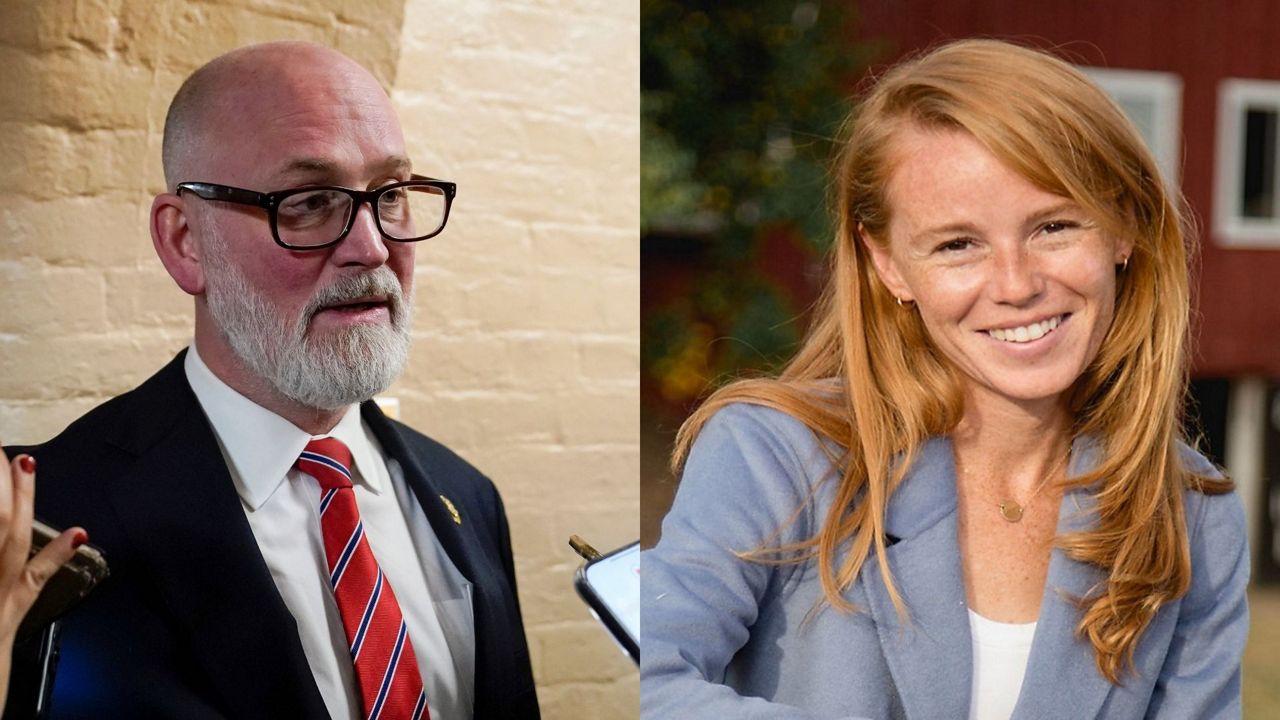
WASHINGTON — In the days leading up to and immediately following the Wisconsin primary election, Republican Congressman Derrick Van Orden, R-Prairie du Chien, posted deepfake videos of Rebecca Cooke, the Democrat he will face in the November election. Both are vying for the seat to represent western and central Wisconsin.
The AI-generated videos make it look like Democrat Rebecca Cooke said things she didn’t.
Michael Zimmer, the director of the Center for Data Ethics at Marquette University, said while photos and videos have been manipulated for decades, something is different about how realistic AI-generated videos can be and how quickly and easily they can be made.
“The power of these tools to influence people is enormous,” Zimmer said. “Especially when it’s used for something like an election, that can really have a global impact in terms of people’s lives, and it’s so easy to be misled. That’s one of the reasons why Wisconsin passed a law about this very issue. But obviously, that seems like that’s not enough right now.”
Wisconsin regulates the use of AI-generated materials in political campaigns. The law prohibits a campaign from spending campaign contributions to pay for AI-generated material unless there’s a disclaimer. Although the words “Made with Grok Imagine” appear in Van Orden’s posts on X, the videos themselves do not contain a disclaimer. Van Orden does not pay for his social media accounts with campaign money, per a Spectrum News review of his campaign’s operating expenses.
“Clearly, the spirit of the law is being violated here… Depicting someone as if they said something or as if they were in a situation is problematic ethically. You’re impacting that person’s dignity and autonomy,” Zimmer said. “To me it’s really hard to find a way to argue for creating a fabricated depiction of a real person, and especially a public figure, in that kind of way.”
Bruce Boyden, an associate professor of law at the Marquette University Law School, said it’s unlikely that Van Orden actually violated the law.
“I think there’s probably a good argument that the law only covers when you pay for particular advertisements using campaign contributions, not pay for some sort of general communication service, and then use that in order to come up with AI-generated material,” Boyden said. “It would be a little tricky to draft a statute that covered that situation because once you get out of campaign finance legislation, where the rules are pretty clear and have existed for a long time, you’re starting to talk about just political speech, and there you might run into First Amendment problems.”
The First Amendment protects all speech from being censored or penalized by the government.
Zimmer said Congress could pass a bill with a strong disclosure requirement.
“That would satisfy First Amendment concerns that you’re just disclosing how we created this video and that it’s not authentic,” Zimmer said. “There might be legitimate reasons to use an AI-generated video of an opponent. That’s conceivable. But it just needs to be labeled, and I don’t think that’s too hard for Congress to get done if they really wanted to.”
Boyden said Cooke has the right of counters-peech, pointing out that her opponent is making things up about her. She could also sue Van Orden for creating or saying something that puts her in a false light or defames her, but Boyden said those torts are “hard to win, especially for political candidates.”
“Frankly, there was a time not that long ago where that would be a pretty devastating charge that somebody had essentially made up a video showing their opponent saying something that they didn’t actually say, and then broadcasting that all over the place. I think, due to heightened partisanship now, that might not have the impact it once had, but I think a lot of voters would be turned off by that. So she’s got that,” Boyden said.
Van Orden, it appears, has taken a break from generating new AI content of Cooke on X, but the sprint to the November election is just getting started.
Follow Charlotte Scott on X.