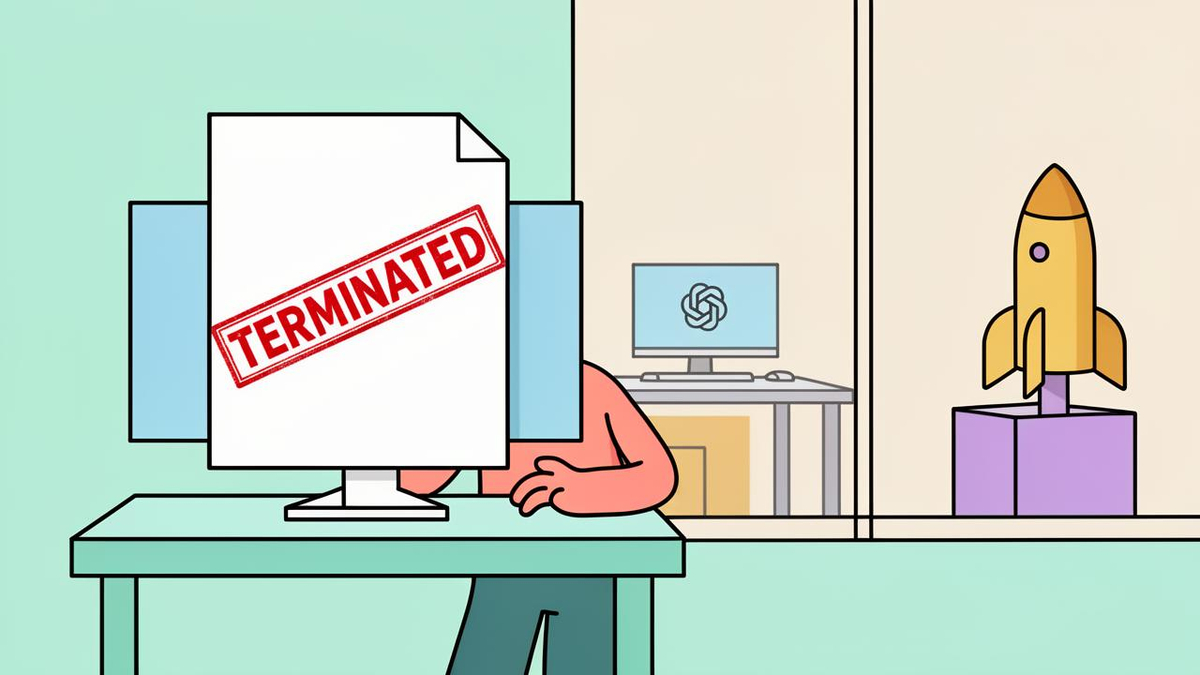
OpenAI announced Friday that it will terminate its model supply agreement with AI coding tool Cursor and has notified SpaceX of its plan to shut down access to OpenAI models through Cursor on November 12, 2026. OpenAI stated bluntly that, based on Elon Musk’s companies’ repeated history of contract violations, it cannot be confident that SpaceX will strictly adhere to its terms of service in using the technology.
Cursor parent company Anysphere reached a $60 billion (approximately NT$1.9 trillion) all-stock acquisition agreement with SpaceX in June, and the deal was officially completed on August 14, making Cursor part of Musk’s AI portfolio. This change in ownership transformed what had been an independent tool capable of integrating multiple AI models into a component within the SpaceX ecosystem, directly triggering OpenAI’s decision to terminate the partnership.
OpenAI issued a statement simultaneously on X and its official website: “We made this decision because, based on past experiences of contract violations in our work with Elon Musk’s companies, we cannot be confident that SpaceX will strictly adhere to our terms of service in using the technology.”
History of Contract Violations a Key Factor
OpenAI specifically enumerated the breach records of Musk’s companies in its statement. The company said that after Musk acquired Twitter, the social media platform violated contract terms signed with OpenAI, and Twitter has since become part of SpaceX.
Additionally, OpenAI pointed out that Musk admitted during sworn testimony this year that xAI, the AI company he founded, had violated OpenAI’s terms of service, and xAI has now also been merged into SpaceX. OpenAI particularly emphasized that the terms xAI violated bear similarities to xAI’s own terms of service.
OpenAI explained that partnerships with large collaborators typically rely on custom contracts to ensure compliance and scaled safety, and the custom agreement signed with Cursor includes a change-of-control clause. Once a change of control occurs at Cursor, OpenAI has only a limited window of time to exercise its option to cancel the contract.
Astra Model Accountability Requirements a Catalyst
As AI model capabilities continue to advance, OpenAI said it has stricter accountability requirements for its upcoming next-generation Astra model. The company decided to initiate the termination process at the latest point permitted by the contract, rather than the earliest, to maximize the time developers can continue using existing models through Cursor.
OpenAI made clear that it will not provide future new models to Cursor. This means that even though existing models remain usable until November 12, next-generation models like Astra will not be added to Cursor’s supply lineup.
The company emphasized that this decision is not directed at the Cursor team itself. The two parties have collaborated for nearly four years, and OpenAI expressed respect for the Cursor team, its product, and its contributions to the developer community, and is prepared to provide support to affected developers during the transition period.
Acquisition Reshapes AI Competitive Landscape
SpaceX’s acquisition of Cursor is a key step in Musk’s expansion of his AI footprint. The $60 billion deal is not only one of the largest acquisitions in SpaceX’s history, but also gives the company a mature AI coding product and associated talent, further challenging the developer tools market dominated by OpenAI and Anthropic.
SpaceX initially announced a partnership with Cursor in April, with plans to jointly develop a next-generation “coding and knowledge work AI,” while SpaceX secured an option to acquire Cursor for $60 billion at a later date. Cursor officially announced the completion of the acquisition on August 14.
Nvidia (NVDA) CFO Colette Kress revealed during the latest earnings call that Cursor, acquired by SpaceX, has reached $1 billion in annual recurring revenue (ARR) (approximately NT$32 billion). She also mentioned that Nvidia has begun shipping its next-generation data center CPU “Vera” to key partners including SpaceX AI, a product focused on improving AI agent workloads.
Kress also listed SpaceX’s AI model Grok alongside OpenAI, Anthropic, Meta, and Gemini as leading closed-source models supported by Nvidia. SpaceX’s AI revenue in 2025 was $3.2 billion (approximately NT$100 billion), and Wall Street estimates this figure could exceed $60 billion by 2027.
Security Concerns and Industry Trends
This partnership breakdown also comes at a time when the AI industry is paying greater attention to model safety, usage standards, and AI agent risks. According to Reuters, Russian-speaking hackers earlier this year used Cursor to breach at least seven companies, exploiting techniques such as inducing AI agents to execute malicious tasks to accelerate credential theft and vulnerability exploitation. The incident highlighted new risks facing AI coding tools in terms of security and access permissions.
More than 100 technology and financial companies, including OpenAI, Microsoft (MSFT), Alphabet (GOOGL), Amazon (AMZN), and IBM (IBM), recently jointly called on governments and businesses to strengthen defenses against AI-driven cyberattacks and advocated for establishing stricter trusted AI model access mechanisms.
For OpenAI, terminating the Cursor partnership also reflects the changing relationship between AI model providers and application-layer companies. In the past, AI application companies could simultaneously integrate products from multiple model providers, but when application tools are acquired by large technology companies, model providers and platform owners may shift from partners to direct competitors.
Cursor’s positioning within SpaceX has already begun to shift. Observers are watching whether it will gradually move toward deeper integration with Musk’s AI ecosystem, including combining with Grok and SpaceX’s AI computing resources. OpenAI has not yet announced specific execution arrangements following the termination of the agreement, and SpaceX has not publicly responded.
With Cursor now formally part of the SpaceX system, this change in the model supply relationship may serve as the latest signal of intensifying competition between OpenAI and Musk’s AI empire.