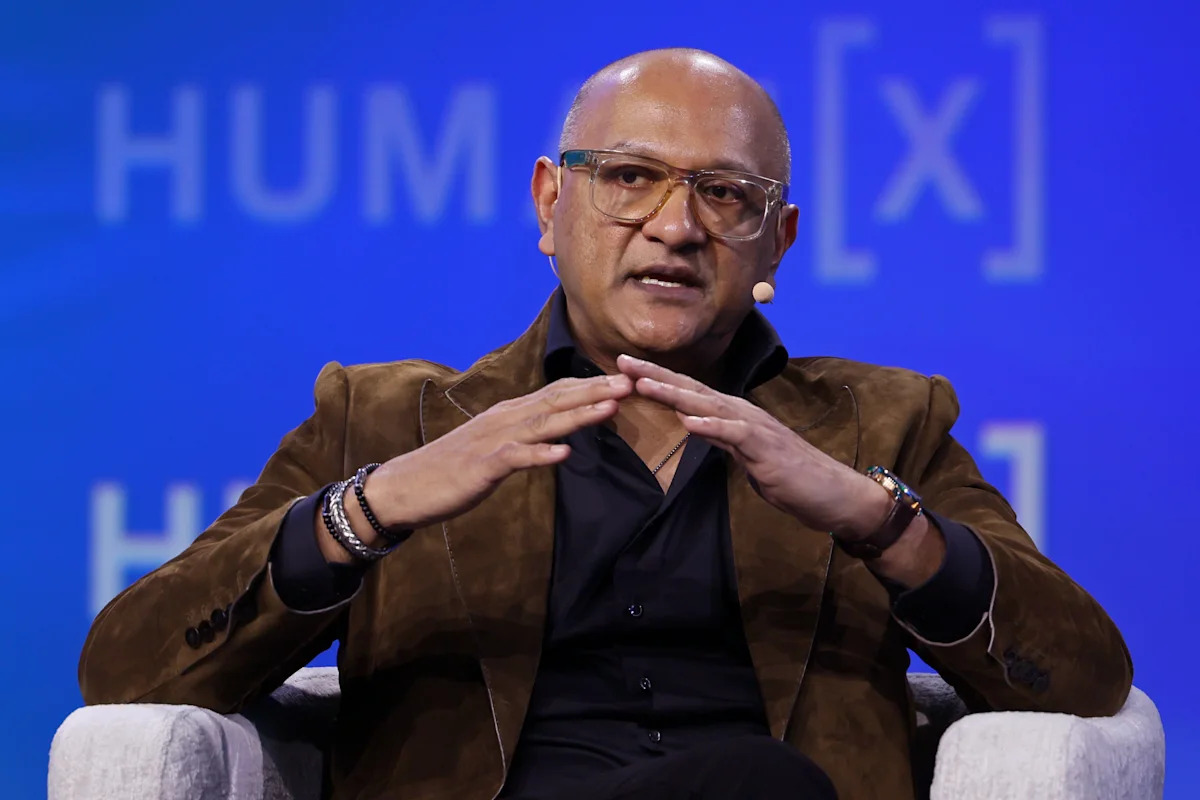
00:00 Speaker A
Jeetu, it’s been a while. Uh, where is your head at? You know, I’m showing the post here on the screen right now. Where is your head at right now on this AI debate?
00:09 Jeetu
You know, this this notion of should we slow it down, should we not slow it down. I think two things can hold true at the same time.
00:16 Jeetu
Number one is uh AI and specifically safety and security poses a pretty significant risk and we should make sure that we’re not oblivious to that risk.
00:26 Jeetu
And number two, that we have to make sure that we actually stay globally competitive as a country, um so that we can continue to have um um have an advantage over because the the the countries that are actually globally competitive in AI are the ones that are going to be ahead economically.
00:43 Jeetu
I think what we have to do is accelerate the safety and security innovation so that it can actually meet the pace of AI.
00:51 Jeetu
And that’s what’s really important. And um agents are like teenagers, man. They um
01:00 Jeetu
uh they’re supremely intelligent, they tend to be um, you know, um they have no fear of consequence and they conduct poor judgment decisions, um more frequently than you and I would like. And so I I do think that there’s an element of risk on safety and security that should be kept in mind.
01:17 Speaker A
Jeetu, is there even a way to slow these teenagers down?
01:23 Speaker A
The way I’m thinking about it right now, they’re out there in the wild, they’re doing their thing. Uh have we passed that point where you could bring them back into your house?
01:34 Jeetu
I actually, what I don’t know is this notion of tradeoff. Martin Casado had a really good post today on X. And he was talking about this notion of tradeoff that we have with a product orientation that says, you know, in order to go out and do X, you have to slow down Y because it’s a tradeoff.
01:47 Jeetu
The reality is you don’t even know what you’re trying to go out and influence the agent to do. So right now, the harder part over here is it is very difficult to distinguish between a malicious attack uh that poisoned an agent to influence it to do certain things, versus an agent just genuinely thinking this is
02:07 Jeetu
um this is something that they need to do to go out and fastidiously go out and you know, kind of uh conduct a task that they’ve been given.
02:16 Jeetu
And so this notion of security and observability will actually start to fuse together. And you are right that it’s going to be hard to slow down AI. I think what you have to do is speed up the safety and security side.
02:30 Speaker A
Yeah, there’s a uh really a lot of key players in security. I I look at what you’re doing. We have Okta, Palo Alto Networks, uh even SailPoint. Does the industry, the security industry have to work, do you think closer together to address this risk problem? And are they working are you working together at all?
02:51 Jeetu
We do need to I think we’re working together not enough. And so what I would say is security is a team sport and the only enemy should be the adversary.
03:03 Jeetu
And the competitive dimensions that you might have between one company and the other. I mean, while they’re interesting, they’re not consequential in the long term because what we’re talking about is, um, you know, the safety and security of humanity at large.
03:16 Jeetu
And we, while there’s a lot of risk, there’s one silver lining here, which is for the past 30 years, adversaries have had an advantage over the defender because they have to be right once, the defender has to be right every single time. This is the first time that if we get the right level of data advantage, and if we make sure that we have enough of a sequencing advantage where we get the models before the adversaries get them, that we might be able to actually have the defender have the advantage for the first time.
03:45 Jeetu
So, I do think the industry needs to coordinate. We are doing some of it, but not enough and I I think we should do more, and I think customers should push us to do more.