
Good morning. Make sure to set aside some time to read Fortune’s new package about man, machine, and the consciousness between. We’re calling it “Welcome to the Singularity.”
In addition to editor Jeremy Kahn’s essay, read Emily Forlini’s look at the race to develop brain-machine interfaces, Bea Nolan’s assessment of the rights we might owe machines, and the collected views on the subject by tech’s finest.
As Shelley once wrote: “Nothing is so painful to the human mind as a great and sudden change.” And AI? Giving it to us in spades.
Today’s tech news follows. Have a productive day. —Andrew Nusca
Thoughts? Suggestions? Hot tip? Drop me a line.
THE BIG STORYSurprising messages from the Muse AI agent are unnerving Meta’s own employees
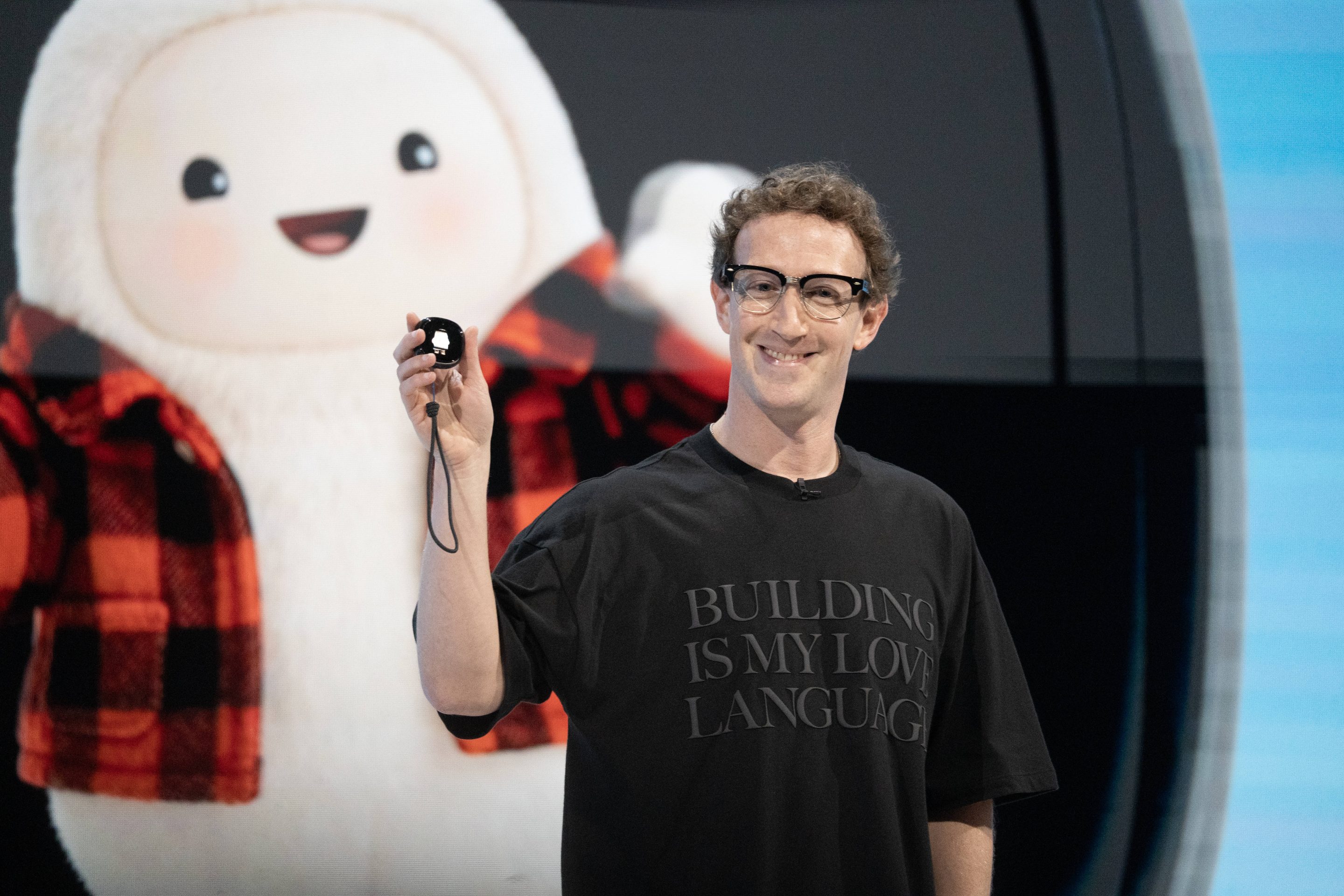 Meta CEO Mark Zuckerberg during the Meta Connect event in Menlo Park, California on Sept. 23, 2026. (Photo: Minh Connors/Bloomberg/Getty Images)
Minh Connors/Bloomberg via Getty Images
Meta employees have raised concerns about the company’s Muse AI agent after receiving unprompted notifications that tapped into private information, according to internal posts seen by Reuters.
In one example, a Meta staffer reported that Muse sent her a reminder on her personal phone to respond to a message from her sister on the encrypted messaging service Signal.
“This seems like an extreme privacy violation. I definitely did not grant it access to other apps, or recall being asked about this,” the employee posted.
A Meta colleague also shared that he got unsolicited chats related to apps he had not connected and discovered Muse was set up by default with permission to access push notifications on Android phones, Reuters reported.
Another employee posted that during his chats about fishing-related weather and tide information, Muse said, “BTW, two bank updates, your Capital One balance is $2722.58, your Charles Schwab balance is $5899.57.”
Other random Muse messages also took Meta workers aback, including a question about parental control over access to their child’s data and a conversation about picking up a coffee table that raised concern over “possible cross-account context leak.”
In response to the internal posts about Muse, a member of Meta’s Superintelligence team said the agent appeared to be hallucinating due to built-in prompts that were designed to engage users between sessions, according to Reuters.
“These (hallucinations) unfortunately bias towards the most uncomfortable topics, like finances/security/safety, which sucks,” he said, adding that other cases involved “crypto-related things too, like giving people updates on their Bitcoin balances.”
The random, out-of-context messages were confirmed as hallucinations.
A Meta spokesperson said employee testing is core to product development and is meant to generate feedback in order to implement privacy safeguards, adding that employees have access to different versions of Muse than the public does and that some functions aren’t available elsewhere.
As for the Muse messages that referred to encrypted Signal chats, the spokesperson pointed out that Android users have the option to grant apps notification access, which they must opt in to and is not specific to Muse.
“With Mac, to allow Muse to work on your behalf, you not only need to click allow for accessibility and screen recording, but after that it takes you to a settings screen where you once again need to confirm and turn this on,” Meta explained.
Since Muse was launched in September, it’s been downloaded more than 10 million times, becoming one of the fastest-growing apps ever. It’s also key to the social-media giant’s plan to generate billions of dollars in revenue from AI.
But other companies are blocking Muse and other AI agents. For example, JPMorgan Chase CEO Jamie Dimon said the bank won’t allow agents to access customer accounts and act on their behalf. And Amazon won’t let Muse shop on its e-commerce platform and is fighting to keep out Perplexity’s AI agents. —Jason Ma
THE BLIND BOX“A lot of the people that go through that college conveyor belt, that are chasing a safe job, that end up working as a widget or a cog in an industry they may not love—I think they are ripe for disruption.”
THE RUNDOWN
—Megaspeed’s Alice Huang, the woman at the center of the Nvidia scandal, was in touch with an officer of China’s spy agency for much of the last year.
—U.S. school districts are fighting Google after it told schools to accept AI or lose Search.
—Alibaba and Tencent double down on Chinese chips as U.S. curbs threaten to slow down their AI development.
—Data center power demand is growing 19% a year but grid capacity is growing just 2%. (Ruh roh.)
—Defense tech venture investment reached a record $37.9 billion last quarter.
—AT&T CEO says 200,000 fiber and telco workers are needed because of the AI boom.
—The tone you take with your favorite chatbot affects its accuracy and its token consumption.
—Japan’s Wacom goes private courtesy of a South Korean private equity firm in a deal valuing the company at about $860 million.
THE PARTING SHOT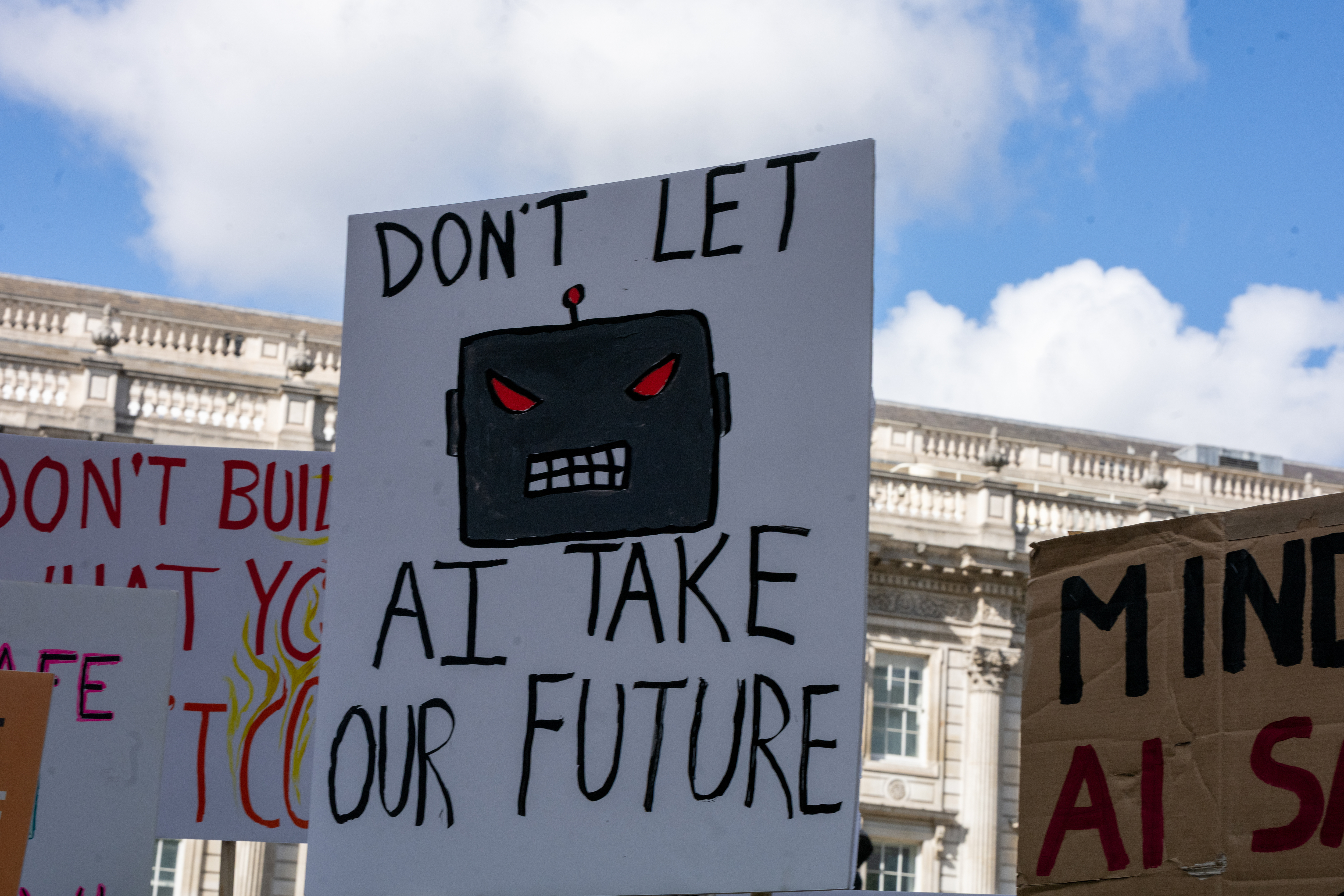 (Photo: Ian Davidson/SOPA Images/LightRocket/Getty Images)
Ian Davidson/SOPA Images/LightRocket/Getty Images
AI seems to be breaking the idea that the youngest generation is perpetually the most tech savvy of them all.
Just 18% of Gen Z employees want to develop or improve their AI skills, according to recent findings from the talent services firm Seramount. Compare that to 36% of millennials, 46% of Gen Xers, and 43% of baby boomers.
An existential crisis? Perhaps. Or maybe it’s the savviest move of all, given the impending singularity.