
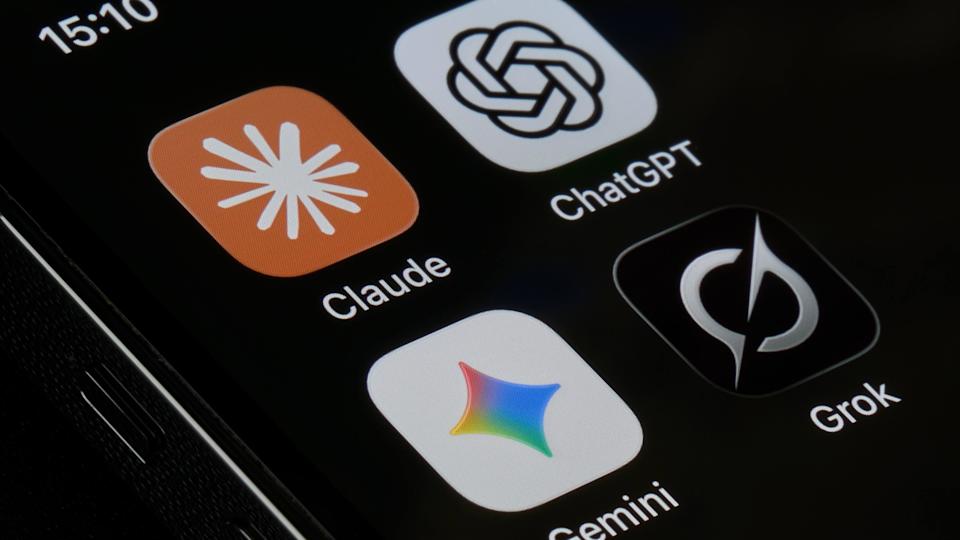
 ai apps on a phone screen – Credit: Matteo Della Torre/NurPhoto via Getty Images
ChatGPT still dominates the AI chatbot space, but its market share dipped below 50% for the first time in March amid growing competition from Google’s Gemini and Anthropic’s Claude, as well as OpenAI’s willingness to work with the Pentagon, according to research from SensorTower.
As of last month, ChatGPT had 46% of the worldwide market, followed by Gemini at 28% and Claude at 10%. A year ago, Claude was just below 3%, but its refusal to remove AI safeguards amid government pressure earlier this year helped propel it to double digits in May 2026, SensorTower says. In the US alone, it hit 14%.
“In the United States, ChatGPT uninstalls surged following OpenAI’s agreement with the Department of War, peaking at roughly 200% above the app’s average during the week of March 9-15,” SensorTower observed.
It adds: “Many users who uninstalled ChatGPT appeared to switch to Claude, following Anthropic’s decision to decline a partnership with the Pentagon. Claude recorded more daily downloads than ChatGPT from March 1–5. ChatGPT has led on each day since, though the gap remains much narrower than it was before March.”
Researchers note that ChatGPT rebounded “slightly” in May, but point out that its decline also coincided with the introduction of ads on ChatGPT, another unpopular turn of events.
In the US, meanwhile, “demand for coding and deep research capabilities attracted more users” to Claude, SensorTower says. It has also seen fewer users jump ship in the months that followed, “bringing it closer to ChatGPT’s market-leading retention levels.”
AI: A Turnoff, Not a Feature
Naturally, businesses are hungry to capitalize on the AI boom. Since 2022, the number of apps mentioning terms such as “AI,” “machine learning,” or “LLM” has surged and “is on track to approach an all-time high in H1 2026,” SensorTower says, particularly in the categories of health and wellness, utilities, jobs and education, and financial services. Downloads of these apps across all genres are up 25% year over year.
Not everyone is happy about it, however. A survey from WordPress VIP finds that 60% of respondents say having AI in a brand’s messaging is a turnoff, not a feature. “Brands have spent the past year funding AI strategy, but consumers can’t point to a single company they think is getting it right,” WordPress notes.
Of course, WordPress would argue you should try its enterprise services to solve that problem, but its report highlights consumers’ growing discomfort with AI overload.
“Your audience can sense when a machine is talking to them,” WordPress says. “Most are checking out before they’ve decided whether they care. Bot fatigue sets in when the internet stops feeling honest. The small moments that used to make the web worth visiting are disappearing.”