
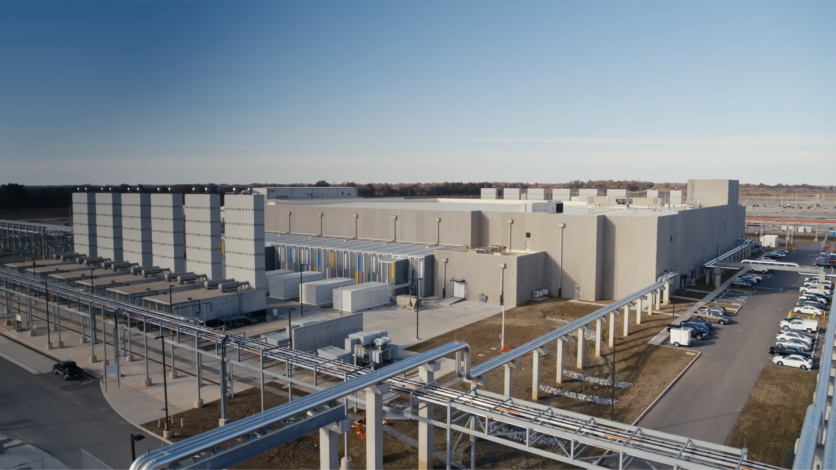
Google has placed limits on how much of its Gemini AI capacity Meta is allowed to buy, after Meta sought more computing power than Google could supply — a restriction the Financial Times reported on June 28, 2026, and that Reuters, Bloomberg, and CNBC have since relayed, citing the original FT reporting. The episode, which forced Meta to tell employees to economize on AI “tokens,” lands the same week Meta has been racing to lock down its own electricity supply in Texas, signing a new solar power-purchase agreement that adds another 220 megawatts of clean generation to a buildout that now tops a gigawatt in the state. Together, the two stories answer the same question for anyone trying to understand where the AI industry actually stands in mid-2026: even the best-funded companies on Earth can no longer simply buy their way out of a shortage, because the thing in short supply is not money, chips, or ambition — it is energized, grid-connected electricity.
Google Caps Meta’s Gemini Access as Its Own Backlog Balloons
Google told Meta around March 2026 that it could not provide the full amount of Gemini capacity Meta wanted to purchase, according to the Financial Times. The restriction followed Meta seeking more computing capacity than Google could supply, and while several other Google Cloud customers were affected by similar limits, Meta was hit hardest, according to people familiar with the matter cited in the reporting. The fallout reached into Meta’s own operations: the company encouraged staff to use AI tokens — the units that measure model usage — more efficiently, and some internal AI projects were delayed as a result.
The relationship between the two companies makes the restriction notable. Google is simultaneously one of Meta’s biggest rivals in consumer AI and one of its compute suppliers. Meta had used Gemini for content moderation, scam detection, and coding workflows, reportedly finding it more capable than its own Llama models for some of that work. Meta has increasingly shifted that workload to Muse Spark, the proprietary model built inside its Superintelligence Labs division, partly to reduce its dependence on an outside provider that is also a competitor.
Google’s own numbers show why it had to ration capacity in the first place. Google Cloud’s quarterly revenue topped $20 billion for the first time in the quarter ended March 2026, up roughly 63 percent year over year, while the unit’s backlog of signed but undelivered contracts roughly doubled to approximately $460 billion. To bridge the gap between contracted demand and available capacity, Google itself agreed in June 2026 to pay SpaceX $920 million a month — about $30 billion over the life of the deal — for access to roughly 110,000 Nvidia GPUs housed in SpaceX’s Colossus data centers, a contract SpaceX disclosed in a regulatory filing tied to its IPO. Google has described the arrangement as short-term “bridge capacity” for surging demand on its Gemini Enterprise platform, separate and smaller than the roughly $1.25 billion-per-month deal Anthropic separately signed with SpaceX in May 2026 for the full output of a different Colossus facility.
Meta Adds More Texas Solar as Its Buildout Accelerates
Against that backdrop, Meta has signed a long-term power-purchase agreement with Sabanci Renewables, the U.S. renewables arm of the Turkish conglomerate Sabanci Holding, covering the full output of two Texas solar projects with a combined capacity of 220 megawatts AC, or 286 megawatts DC. The agreement covers the Lucky 7 Solar project in Hopkins County and the Pepper Solar project in McLennan County near Waco, both expected to begin commercial operations in the second half of 2027. Sabanci’s strategic investments president, Tolga Kaan Doğancıoğlu, and Meta’s head of clean and renewable energy, Amanda Yang, both framed the deal in standard partnership language, with Yang calling it the kind of agreement that brings “meaningful new energy resources online.”
The deal is the latest in a string of Texas power agreements Meta has signed this year. Earlier in June 2026, Meta struck a separate PPA with RWE for output from the 298-megawatt Rabbit’s Foot Solar project in northeast Texas, adding to earlier agreements with RWE and Engie that together push Meta’s renewable commitments in the state past a gigawatt. Meta currently operates data center campuses in Fort Worth and Temple, Texas, and is building a third in El Paso, expected to begin operations around 2028.
That El Paso project complicates the clean-energy narrative the Texas solar deals are meant to project. Despite earlier public statements that the facility would run on solar power, El Paso Electric is instead seeking state approval for a $551.8 million, 366-megawatt natural gas plant to power the data center for its first five years, before it connects to the broader grid. The City of El Paso has formally opposed the application, citing affordability and transparency concerns for existing ratepayers, and the Sembrando Esperanza Coalition, a local economic and environmental justice group, has pushed the city, county, and utility to cut ties with the project altogether. The contrast is not a contradiction — solar PPAs and a behind-the-meter gas plant are different projects serving different sites — but it shows that even Meta’s own buildout in Texas does not run on solar power alone.
What a Solar Contract Does Not Buy Meta
The detail missing from most coverage of these deals is what a power-purchase agreement actually is. A PPA is a long-term contract, typically five to twenty years, in which a buyer agrees to a pre-negotiated price for a generator’s output. For corporate clean-energy deals like Meta’s, what changes hands is usually the environmental attributes of the power — the renewable energy credits — rather than a guarantee that those specific electrons reach a specific data center. The buyer typically still draws ordinary power from the grid at its facility; the PPA is a financial and sustainability instrument, not a physical delivery pipe.
That distinction matters because the actual physical constraint on Texas’s AI buildout is not contract signatures — it is grid interconnection. The Electric Reliability Council of Texas, which operates the state’s isolated grid and serves roughly 90 percent of its electric load, has watched its interconnection queue for large new power users swell to roughly 226 gigawatts of requests as of November 2025, up from 63 gigawatts barely a year earlier. The backlog became so unmanageable that ERCOT’s board voted on June 2, 2026 to begin evaluating data centers in batches rather than one at a time, a process it calls “Batch Zero,” which the Public Utility Commission of Texas formally approved on June 18, 2026. Signing a PPA secures revenue for a solar developer and a sustainability claim for Meta; it does not, by itself, secure the grid capacity needed to actually run a data center at full power.
Why Power, Not Chips, Is Now the Binding Constraint
The Google-Meta episode and Meta’s Texas buildout are both symptoms of the same shift industry analysts say happened sometime in early 2026: AI infrastructure moved from being capital- and chip-constrained to being power- and equipment-constrained. “Silicon is the binding short-term constraint. Power is the binding long-term constraint,” Stephen Sopko, a semiconductor and deep-tech analyst at HyperFrame Research, told Data Center Knowledge.
The Goldman Sachs Global Institute has pointed to this same dynamic, describing power-interconnection queues, permitting delays, and long lead times for the high-voltage transformers, switchgear, and turbines that any new data center needs as a source of “elongation” — a widening gap between capital committed and compute capacity actually coming online. Industry analysts tracking the equipment market put numbers on that gap: lead times of 18 to 48 months for transformers and switchgear, on equipment that represents under 10 percent of a data center’s total construction cost but, increasingly, effectively all of the delay. Unlike GPU shortages, which can ease as chip fabrication capacity expands over 18 to 24 months, utility-scale grid expansion and heavy-equipment manufacturing run on the same multi-year timelines as other large industrial infrastructure. That is the specific, checkable reason that a $1.4 trillion company with effectively unlimited cash can still be told by its own AI supplier that there isn’t enough capacity to sell it.
A Common Thread Across an Industry Racing to Catch Up
Together, the two stories point to the same dynamic reshaping the AI industry: model capability is increasingly secondary to whether a company can secure the power and the physical equipment to run that capability at scale. Meta’s Texas solar contracts are a bet on owning more of the physical foundation directly, and the company’s roughly 8,000-position cut and reassignment of 7,000 employees toward AI work earlier this year underscore how central infrastructure has become to its strategy. The Google-Gemini rationing shows what happens when a company instead depends on a rival’s infrastructure that is itself running short of room.
For Meta, which raised its full-year 2026 capital-expenditure guidance to between $125 billion and $145 billion at its April 2026 earnings call — up from an earlier $115 billion-to-$135 billion range, and nearly double what it spent in all of 2025 — the message from both episodes is the same: securing megawatts and GPU-hours years ahead of need has become as strategically important as the models those resources will eventually run.
The regulatory backdrop has already shifted in response. Texas lawmakers passed, and Gov. Greg Abbott signed into law in 2025, Senate Bill 6, which gives state grid regulators a “kill switch” to cut data centers’ grid connections during shortages and requires the Public Utility Commission of Texas to shift transmission costs onto large-load customers so they are not passed on to ordinary ratepayers; the commission’s rulemaking on implementing those provisions continues into 2026. At the federal level, Sen. Sheldon Whitehouse has previously pressed Meta directly over the gap between its net-zero claims and its reliance on new natural gas generation for AI buildout.
Frequently Asked Questions
Why is Google limiting Meta’s access to Gemini?
Google told Meta around March 2026 that it could not supply the full amount of Gemini computing capacity Meta wanted to buy, according to Financial Times reporting. Google’s cloud division is itself operating with a backlog of roughly $460 billion in signed but undelivered contracts, and several of its other customers have faced similar, smaller restrictions.
Does signing a solar power-purchase agreement guarantee a data center gets that electricity?
Not directly. A corporate PPA typically conveys the environmental attributes of a renewable project’s output — effectively a sustainability and financial hedge — rather than a guarantee that specific electrons are delivered to a specific facility. The data center still depends on its local grid operator approving and building the physical interconnection capacity to deliver power when needed, which is a separate and often slower process.
Is the AI industry running out of chips or running out of power?
As of mid-2026, analysts describe power and physical electrical equipment — not chip supply — as the binding long-term constraint on AI infrastructure. Grid interconnection approval and high-voltage transformer and switchgear procurement now take many months to years longer than chip production timelines, timelines that capital spending alone cannot shorten.
What is Meta doing to reduce its dependence on Google’s Gemini?
Meta has been shifting workloads such as content moderation toward Muse Spark, a proprietary model developed within its Superintelligence Labs division, in part to reduce its reliance on a competitor’s infrastructure for tasks it considers critical.