
Labor’s sweeping new internet regime contains an extraordinary power allowing Australia’s internet watchdog to operate fake accounts and generate material using artificial intelligence.
Buried in the government’s Digital Duty of Care exposure draft are provisions authorising the eSafety Commissioner to assume “sock puppet” identities.
The bill defines a sock puppet as a “false or fictitious identity” assumed by someone while using or carrying out activities involving an online service.
Under section 205J, the Commissioner “may assume a sock puppet identity” to perform eSafety functions or exercise powers under the Online Safety Act.
The provision would overrule any federal, state or territory law preventing fake online accounts.
The powers extend to creating and using accounts to access services, downloading material, engaging with platforms and testing platform features.
In limited circumstances, the commissioner could interact with other users, although the bill says this could only occur in order to prevent the account being shut down.
Section 205K(2) also authorises the Commissioner to “generate material using an online service (including by means of artificial intelligence)” using sock puppets.
The provision would apply provided the “production, dissemination or possession” of that material is not an offence under federal, state or territory law.
Approved online-safety researchers would also be authorised to assume sock-puppet identities, although the AI provision only applies to the Commissioner.
The eye-catching powers are contained in Labor’s proposed Digital Duty of Care regime, which would expand the obligations imposed on online services.
The laws also give the eSafety Commissioner responsibility for compliance and enforcement.
Research fellow at free-market think tank, theInstitute of Public Affairs, Margaret Chambers said the sock puppet provision raised concerns about “information warfare”.
“The sock puppet identity provision, particularly the limitless authorisation for the Commissioner to generate material using AI, should be understood as an effort by the government and eSafety Commissioner to engage in information warfare,” Ms Chambers said.
“The bill provides that the sock puppet provision can be used to further any of the eSafety Commission’s functions, which include ‘promoting online safety’ and monitoring compliance with the digital duty of care.
“The Commissioner has shown that her version of ‘online safety’ is ideological and extends to censoring political debate.
“It is hardly surprising that an aggressive and unaccountable regulator would seek to co-opt artificial intelligence to promote its ideologically sanitised vision for the internet.”
The government says the broader regime is designed to impose basic safety standards on digital platforms and give Australians greater control over algorithmic feeds.
The revelation comes amid an escalating political fight over whether Labor’s internet laws could ultimately extend to misinformation, disinformation and political speech.
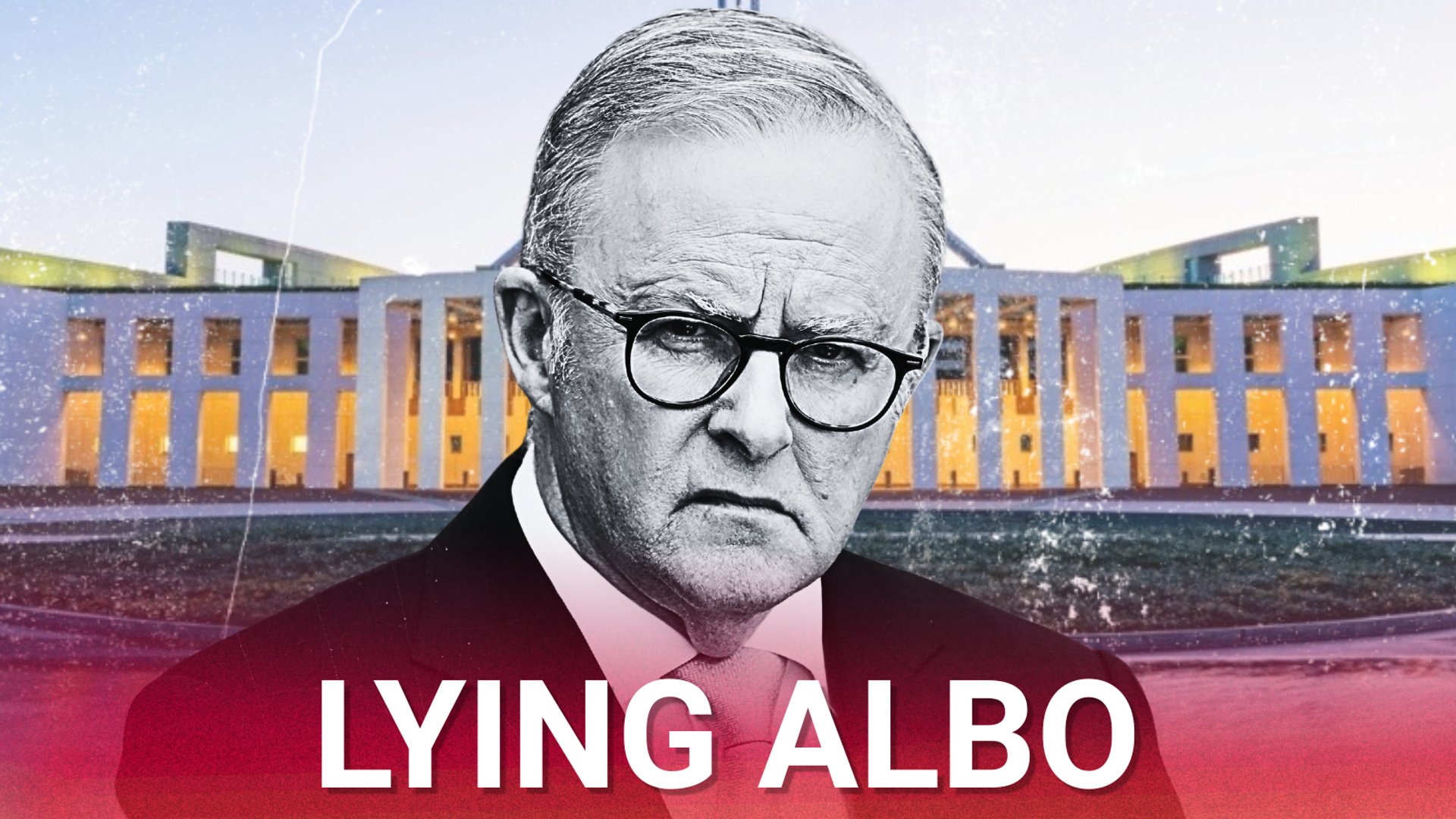
Prime Minister Anthony Albanese recently denied linking misinformation to Labor’s internet regime despite explicitly raising both at the United Nations.
Confronted in New York last Thursday over his off-script remarks, Mr Albanese insisted the Digital Duty of Care had nothing to do with misinformation or disinformation.
“Well, it’s nonsense,” Mr Albanese said when asked about concerns the laws could ultimately limit political speech.
“This isn’t about government control at all. It’s not about misinformation or disinformation.
“What this is about is giving people control, giving you, when you’ve got that device in your hand, control over what algorithms you want to receive.”
Asked directly why he had linked the two issues during his UN appearance, the Prime Minister denied he had done so.
“I didn’t link the two yesterday. I didn’t link the two,” Mr Albanese told reporters at the press conference.
“I spoke about the technological challenges which are facing the world. And one of the issues that is facing the world is increased polarisation.”
Mr Albanese argued that discussing polarisation and the role of social media was “a very different question” from controlling what Australians could see online.
The remarks came after Mr Albanese told an audience in New York that the effects of algorithms extended well beyond children.
“Today, we’re concentrating on the impact on children,” Mr Albanese said in his speech.
“The truth is this is having an impact on our entire society and how it functions with misinformation, disinformation.”

Mr Albanese said there was “increased polarisation” in the political system with people “moving away from the centre and more and more to the extremes”.
“And that is why we think that this is a very positive move that’s being put forward,” he said.
Adding to the controversy, Mr Albanese’s remarks about misinformation and disinformation do not appear anywhere in the official version of his speech.
The speech, titled “Shape the digital world or it will shape us”, was published on the PM’s official website after his address but left out his “misinformation” remarks.
The speech was marked “check against delivery” and the comments may have been improvised or inserted shortly before delivery.
The extraordinary comments put Communications Minister Anika Wells under renewed pressure to explain exactly where Labor intends to take its internet regulation agenda.
Ms Wells has since failed to rule out reviving the misinformation and disinformation legislation at some point in the future.
The Communications Minister was confronted over the Prime Minister’s comments at a press conference on Thursday.
“The Prime Minister said in New York it will target mis and disinformation, despite you saying clearly a few weeks ago that wasn’t the aim, which is it?” she was asked.
Ms Wells sought to separate Mr Albanese’s comments from the scope of the legislation, saying: “The Prime Minister was speaking to the broader online environment.”
“You know that I’ve made those same remarks about the experience that parliamentarians are facing when we navigate online discourse,” she said.
Ms Wells previously blamed the algorithm for the fact constituents did not believe her when she spoke to them face to face.
She explained that the Digital Duty of Care legislation was “not a bill designed to cure all frailties of the internet”.
“This is a bill to implement basic safety standards, making online services identify where there is risk of harm on their service and mitigate against those harms,” she said.
But Ms Wells stopped short on Thursday of giving a categorical guarantee that the government would never revisit regulating misinformation or disinformation.
Asked to provide a guarantee, she said: “I’ve said on a number of occasions it is not part of my delivery agenda for this term.”
“The Minister for Communications, at the time that the bill was withdrawn from the Senate, said that we would not seek to reintroduce it,” she said.
Her answer ruled the policy out of her delivery agenda for the current term but did not provide a guarantee about future attempts to regulate misinformation or disinformation.