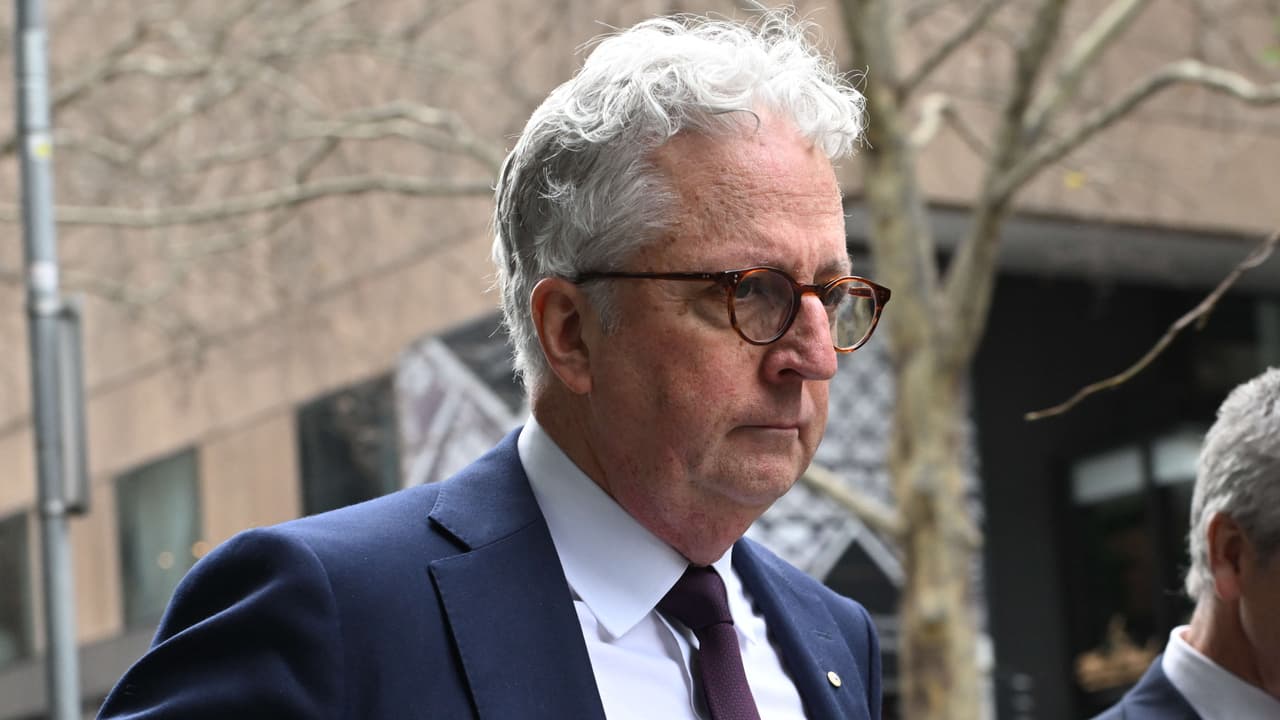
The University of Sydney will order three independent reviews into campus security, student representative group funding and conduct rules in response to a political student group that ran for election under the incendiary slogan “globalise the intifada”.
Vice-chancellor Mark Scott and chancellor David Thodey released a statement on Tuesday confirming the university would commission reviews following revelations last week the “intifada” group was allowed on the election ticket despite significant outrage from Jewish staff, students and community organisations.
“We unequivocally oppose hate speech and the use of any terms or slogans that could be readily construed as inciting violence – and will remove signs or symbols when or if this occurs,” the statement reads.
The university confirmed it will issue “formal notices of serious and material concern under our existing disciplinary policies, as and if required – action will be taken against students or staff who are found to have breached our policies”, and noted several actions were already under way.
A spokesperson for the university said the institution is “in discussion with a number of potential appointments” to run the reviews, but it is unclear if they will be run jointly or separately.
It builds on a distinct internal review the university commissioned in June into the Student Services Amenity Fee allocated to the Students’ Representative Council, which makes up the entirety of its funding. That review was unrelated to the student election.
“The review set out to strengthen clarity around roles and responsibilities, ensure that funds are used for the benefit of students, and consider whether there are opportunities to improve governance, oversight, consultation and funding processes to better support student outcomes,” the spokesperson said. “This pre-existing work is now being brought forward and will be independently reviewed.”
The new reviews will examine campus security to ensure measures are in place to protect students and staff, with the university vowing to “also seek further contact with police and federal intelligence and counter-terrorism agencies”.
It will also probe funding and affiliation arrangements for student representative groups to ensure they comply with legal, regulatory and psychosocial safety rules, and examine staff and student codes of conduct.
Professor Scott initially said he had sought advice from crown solicitors and the NSW Electoral Commission in response.
Student newspaper Honi Soit on Monday reported USyd management had discussed changing policy to intervene in student elections after the SRC controversy, citing an unnamed source “privy to proceedings of the university senate”.
“The source told Honi Soit that vice-chancellor Mark Scott raised the possibility of the university taking over responsibility for SRC elections,” it reported.
“According to the source, Scott allegedly suggested that in the event of funding cuts rendering the SRC unable to administer elections, the university would take over this responsibility.”
It suggested Professor Scott had been under direct pressure from Anthony Albanese, NSW Premier Chris Minns, Education Minister Jason Clare and crossbench MP Allegra Spender to intervene.
“These ‘concerns’ are being manufactured and weaponised to justify the vilification, defunding and removal of the independence of the SRC once and for all. It is just one more example of the university silencing progressive voices in the community through draconian policies and investigations,” the SRC said in a statement.
“The term ‘globalise the intifada’ is not discriminatory … There is no room for doubt in understanding this phrase and campaign as one calling for justice, and an end to violence.
“We demand that the university respects the independence of the SRC, stop all plans to interfere with the SRC’s electoral processes, and commit to not running the SRC’s elections itself.”
SRC returning officer Kieran Latty – who facilitated last week’s student election – told The Australian the “intifada” ticket “was assessed against all relevant articles of the SRC constitution and regulations and found to be a valid nomination”.
“There were no challenges to this decision, which could have occurred by other candidates who had an opportunity to inspect the ballot draw and draft ballot,” he said. “It is my assessment that if such a challenge occurred, the probability of a successful challenge would be minuscule.
“During the course of the election campaign there were no complaints sent to me regarding this ticket, either due to the name, or their conduct. They were always cooperative and well-behaved. In contrast, there were multiple complaints against other tickets for various instances of impermissible conduct.”
Mr Latty said he suggested the group “adopt an informal name; for example ‘Globalise the Resistance’ ” after university staff removed campaign material from around campus.
“They chose not to adopt this approach,” he said.
Professor Scott last week said the SRC had “exploited the existing arrangements for student elections on campus”.
Executive Council of Australian Jewry co-chief executive Peter Wertheim said the reviews were “a step in the right direction”.
“We want to see concrete evidence that the chronic intellectual confusion, moral paralysis and blinkered legalism which has bedevilled the university’s approach to these issues is at last coming to an end,” he said.