21 hours ago.
Updated 19 hours ago
It is the paradox of Western world modernity. Political leaders are trapped between the public demand for spending on an ever-expanding agenda, and the economic fallout in terms of punishing prices, weak productivity and diminished living standards. It is a vicious loop.
Much of the public, however, doesn’t get it. And too many politicians are frightened to speak the truth in an age where populism is rampant. Here’s the paradox – the richer and older nations get, the more they demand of government. The political bidding is largely one-way: politicians promising more and never admitting the downside of spending more.
Australia is now a case study in the costs. This week’s figures show government spending now at 26.9 per cent of GDP, the highest figure for 40 years outside the pandemic, with spending having steadily increased over 4½ years under Labor. This has three negatives – it drives higher taxes, fuels inflation and comes with a degree of culpability for higher interest rates.

The Reserve Bank board decision to lift the cash rate to 4.6 per cent – the highest since 2011 – with the distinct warning that rates are expected to rise even higher, puts greater hardship on to mortgage holders when housing prices are falling. It comes with guaranteed electoral damage to Labor and plays even more disastrously into the arms of Pauline Hanson’s One Nation.
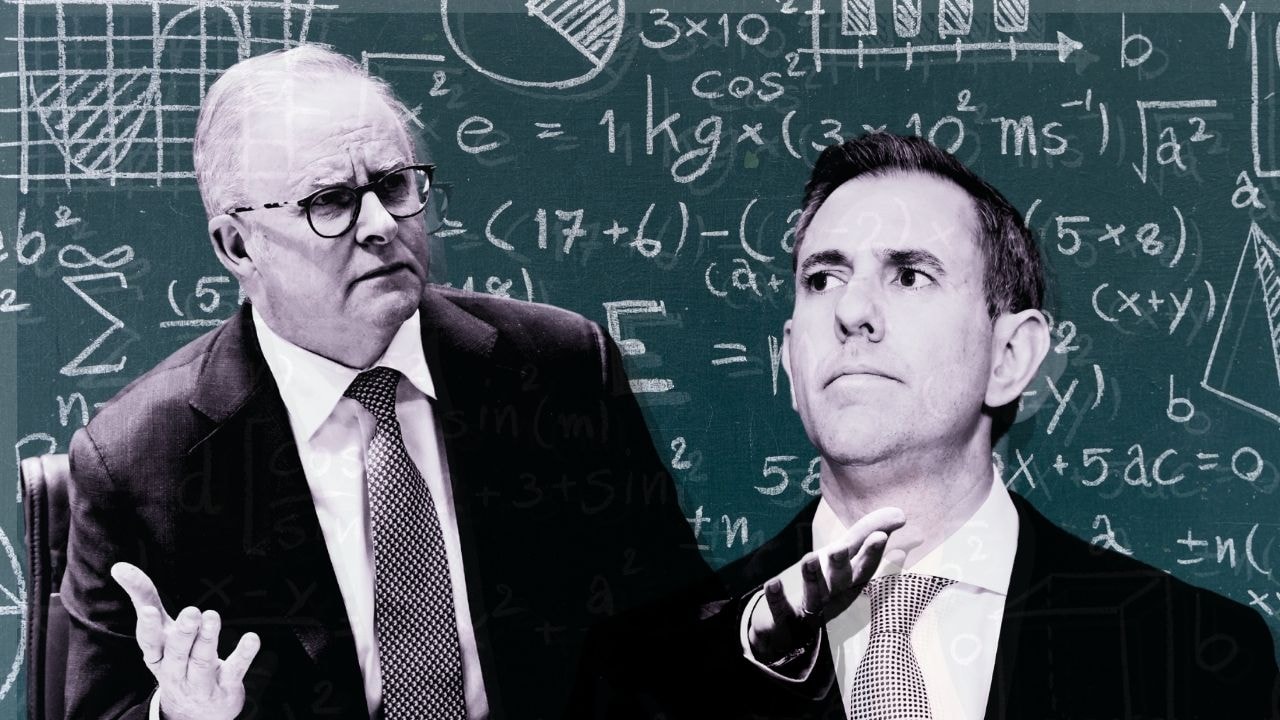
Labor cannot walk away from this responsibility: it has badly misjudged economic policy, it has been caught out and the timing is particularly unfortunate. Prime Minister Anthony Albanese and Treasurer Jim Chalmers now enter a far more difficult phase in economic and political terms. The mood in the country is unpredictable, with extended hardship and borderline hysteria. With more interest rate rises expected, at least to 4.85 per cent, the political climate will get more ugly.
RBA governor Michele Bullock on Tuesday said the bank will do whatever is necessary to beat inflation. That’s essential and belated. The bank, of course, carries the major responsibility for earlier miscalculations during the upward rate cycle, when its dovish disposition didn’t finish the job. And Labor was on board with that misjudgment.
In comments on Tuesday, Bullock made clear higher rates were now needed given “domestic capacity pressures” and that the war in the Middle East was “not the only reason for the decision today”.
Chalmers will push blame-shifting to the limit, but Labor must live with the consequences of its economic framework – it has driven spending too hard in relation to supply, and over 4½ years it has failed to rekindle productivity. A frustrated Bullock burst out on Tuesday, saying “the bottom line is that productivity is doing nothing”. Decoded, that’s not her job.
Australia is a classic in the story of modernity, with spending driven by hospitals, Medicare, aged care, childcare, the NDIS, defence and the energy transition. It’s structural, demographic and political. And it goes largely to middle-class Australians.
The last time a serious effort was made to reverse the trend was the 2014 budget when prime minister Tony Abbott and treasurer Joe Hockey, fuelled by excessive ambition, attacked spending levels, with Hockey having paraded his manifesto: The End of the Age of Entitlement. It belongs to a lost age.
Recall Hockey’s words: “The fiscal impact of popular programs must be brought to account no matter what the political values of the government are or how popular a spending program may be. Let me put it to you this way: The age of entitlement is over.” Unless spending was curbed it would undermine “democracy, fair representation and economic sustainability for future generations”. When introducing his budget, Hockey said: “The days of borrow and spend must come to an end.” Yet gross debt has now passed the $1 trillion mark.
That Abbott/Hockey budget was a turning point – while more savings were achieved than recognised, the turning point was not ending entitlement but ending any concerted campaign against entitlement. It was a reverse-engineered outcome. As politicians, neither Abbott nor Hockey survived their venture.
When Albanese won office in 2022 he had a different message. In outsmarting Scott Morrison, Albanese pledged to be a “caring” PM who believed the economy must “work for people”. It was a popular idea at the time. Labor felt too much of the economic debate was about fiscal consolidation and pro-market policy, when economics had to be about delivering for people. It was a kinder economics.
The Labor program, devised in conjunction with Chalmers, had an overarching unity – a faith in government intervention and revived state power. It prioritised the climate change challenge spearheaded by renewable energy, an expanded care sector around health, childcare and aged care, a trade union-shaped IR blueprint, a revamped “making things in Australia” industry policy, government-created investment funds, tapping into technological transformations, boosting gender pay equity and women’s workforce participation.
This was Labor’s governing agenda. It implicitly assumed that economics must be tied into rising social transformations and the climate revolution, positioning Labor as the party of modern Australia. Recall that in his campaign Albanese promised “cheaper electricity, cheaper childcare, cheaper mortgages”.
Four years later Labor has largely stuck by its political vision, but it has misjudged the economic fundamentals – spending, inflation and productivity – while operating in a much more ruthless world. Labor has failed to prioritise economic growth and per capita income growth – and looks trapped in substandard economic outcomes running towards the 2028 election. This is not just a function of bad luck or external events, but primarily the result of Labor’s entrenched policy and political framework.

Embedded spending usually has two consequences – higher taxes and budget deficits for longer. Australia now has both. Taxes run at 24.1 per cent of GDP, the highest outside the 24.2 per cent during the China boom in the Howard era. This exceeds the 23.9 per cent tax ceiling of the former Coalition government, with Chalmers having dismissed the need for any such ceiling. Last week’s Intergenerational Report projected budget deficits for the next 40 years and higher income tax as a proportion of GDP – devastating outcomes.
Former Treasury secretary Ken Henry in May said that at this stage of the economic cycle, with strong employment and high fossil-fuel prices, “this budget should be in surplus”. Westpac’s Pat Bustamante said that “without spending pressures the government would be running significant surpluses”. Labor is a world away from such outcomes.
Meanwhile, inflation in the non-tradeable sector is higher than in the tradeable sector, pointing to the bulk of inflation being a domestic-driven issue despite the impact of the Iran war. Given our debt, rising interest rates mean interest payments on debt will soon overtake Medicare spending, a reminder of the real costs of debt; another being that bigger government crowds the private sector and weakens productivity overall.
The new 4.6 per cent cash rate comes with another humiliation: Australia is now stuck with the second-highest interest rates in the industrial world. Chalmers is right to say this story comes with Australia’s stronger employment performance – but that depends upon the rise in our unemployment level needed to bring inflation back under control, the point Bullock keeps making.
At stake is not just a growing electoral backlash against Labor. The bigger issue is avoiding the risks of institutional failure. That means showing that Labor has the political skill and governing ability during the coming turbulence. If not, who is the beneficiary: the Coalition or One Nation?
 Paul KellyEditor-At-Large