
One Nation leader Pauline Hanson has been embroiled in a heated exchange with an ABC journalist over what it means to be multicultural.
Ms Hanson has sparked intense debate over her use of the term “monoculture” after she rejected multiculturalism in her recent National Press Club address.
The One Nation leader has clarified that she supports freedom of religion and does not oppose immigrants from other countries if they subscribed to Australian values.
An ABC reporter asked Ms Hanson on Thursday if she needed to define what “monoculture” she wanted for the nation.
“Do you need to define what the monoculture is that you want for Australia? People are wondering exactly what that means. Can you describe it for us?” Ms Hanson was asked.
“We’ve always had multiculturalism rammed down us right from back in 1996 when I opposed it then,” Ms Hanson told reporters at the press conference.
“Since then we’ve had other countries around the world (which) said it hasn’t worked. We should be proud of our national identity, who we are.
“If we go into the Olympics or the Commonwealth Games we fly the Australian flag because we’re all Australians.”
The ABC journalist responded: “That’s what multiculturalism is… like in your monoculture can people speak a different language at home?”
“Can they practice a different religion? Can they eat different foods? That is multiculturalism isn’t it?”
Before Ms Hanson had a chance to answer, a One Nation representative asked if the journalist worked for the SBS.
The ABC reporter said they worked for the public broadcaster and wanted to understand Ms Hanson’s vision for the country.
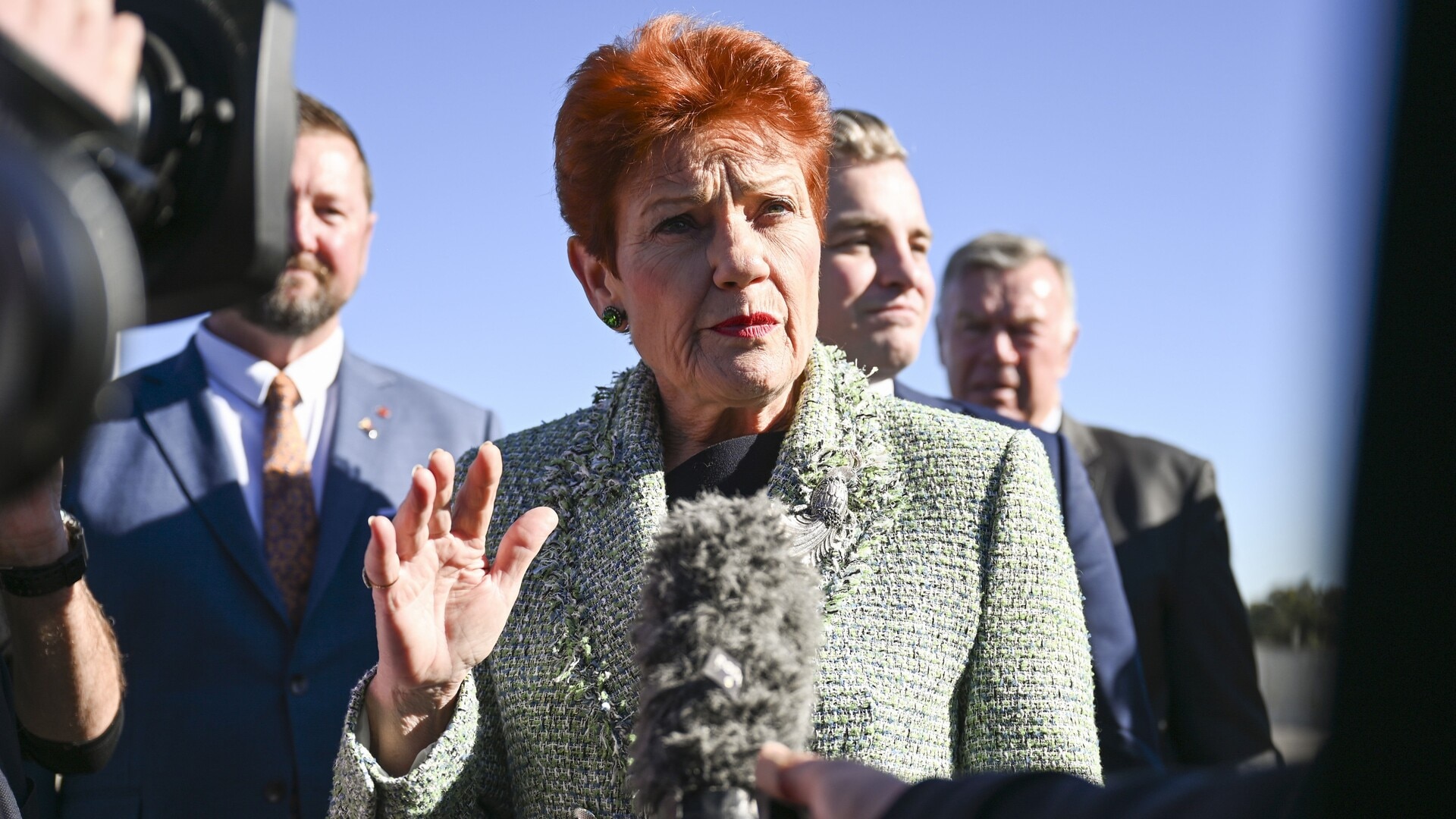
“(Former prime ministers) John Howard and Tony Abbott and other leaders around the world have said multiculturalism doesn’t work,” Ms Hanson said.
“Go and research that, understand what’s happening out there…. We are one nation. We are one nation and (we) should (have) one language.”
Ms Hanson has long had a combative relationship with sections of the media, particularly the taxpayer-funded ABC.
One Nation has blocked ABC journalists from attending some press events following disputes over the broadcaster’s coverage of One Nation.
“They’ve been very biased towards me for many years, even back in 1996 when I was first elected,” Ms Hanson recently told Sky News.
The exchange comes after Ms Hanson doubled down on her calls for monoculture, saying critics were deliberately misinterpreting her comments.
“In the past week, the far-left have naturally taken my comments into the realm of utter fantasy,” she told the upper house on Tuesday.
“I was going to ban foreign food, and the Socceroos wouldn’t have beaten Turkey under my policy. What rubbish—predictable and pathetic.
“The Socceroos, in fact, represent my vision of a monocultural Australia—people from different backgrounds and cultures and nations all wearing green and gold.”

Asked about Ms Hanson’s remarks at a press conference on Tuesday, Mr Albanese dismissed the idea as inconsistent with modern Australia.
“Modern Australia is not a monoculture and it never has been,” Mr Albanese told reporters.
“Indeed, under pre-1770 and then 1788, there were many First Nations in this country. And since then, I think our diversity as a nation is a strength.”
He also referred to the national soccer team, claiming that it was an example of multiculturalism rather than monoculturalism.
“We have had a rich culture and when we look at the Socceroos, we see examples of that rich culture, people who are proud of their ethnicity,” he said.
“It’s who we are, so it’s really a nonsense argument to go back to something that was actually never there.”
It comes as support for cultural diversity appears to be declining, according to the 2026 Lowy Institute Poll.
In the poll, 73 per cent of Australians said cultural diversity was either “entirely positive” or “mostly positive”, down from 90 per cent in 2024.
The proportion who viewed cultural diversity negatively rose from 10 per cent to 26 per cent over the same period.
Twenty per cent of people said cultural diversity was “mostly negative” and six per cent described it as “entirely negative”.