There are concerns Australia may not be equipped to contain the spread of H5 avian influenza, after a bird reported to the disease hotline was left dying on a beach overnight.
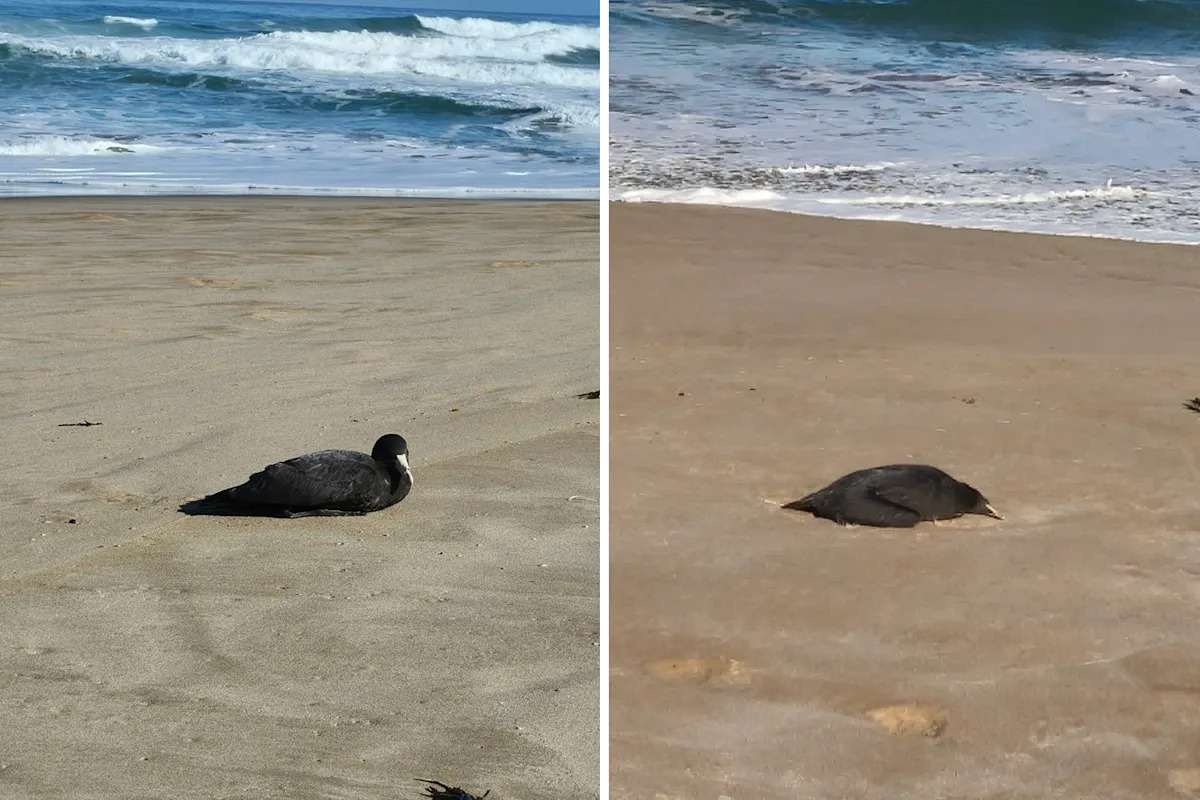
A giant petrel — the same migratory seabird species that tested positive for the deadly virus in Western Australia and South Australia — was filmed dying at Johanna Beach on Victoria’s southwest coast on Saturday.
The symptoms beachgoer Susan McMeekin witnessed were clear grounds for a report, the bird’s head was on the side, and its weak body was being pummelled by waves along the sand.
“It tried to fly, and it just fell down, and it was really sad,” she told Yahoo News.
The bird was reported to the state environment department (DEECA) through the Emergency Animal Disease Hotline just after 1pm by her friend, Helen Erskine-Behr.
Wildlife Victoria submitted a separate report, as it was unable to send its volunteers to the scene due to the disease risk. Members of the public are also advised never to touch birds suspected of carrying the virus.
Because of the potential biosecurity threat, Helen expected DEECA would remove the bird quickly.
“They’ve known about this disease for years, and they should have somebody there in an hour, with all the equipment they need to get it off the beach”, she told Yahoo News.
But when her friend Susan returned the following morning at 11.30am, the bird was still there.
Video taken that day shows its body lying on the sand.
“It’s dead now,” a woman can be heard saying from behind the camera, more than 22 hours after she first found it.
Why removing dead birds is important
Experts have warned that removing carcasses quickly from beaches is critical, as H5 can infect scavengers, which then spread it inland.
Overseas, the strain has mutated beyond birds, spreading to around 100 mammal species.
There have been around 1,000 human cases reported, and close to half of those infected have died.

The petrel was very sick and unable to fly on Saturday.
(McMeekin)DEECA silent as avian influenza response questioned
It’s unclear whether the bird was tested before or after she returned, as DEECA did not respond to questions from Yahoo News by deadline.
On Monday, a DEECA spokesperson told ABC radio that he was unsure whether the petrel was alive when it was found or had been removed from the beach.
But he confirmed it was tested at some point on Sunday, and that responders had struggled to find it.
Speaking later with Yahoo News, Helen said she couldn’t understand why DEECA couldn’t locate the bird, or why they didn’t call her for assistance in locating it.
“When I reported it, I gave specifics of exactly what it was, dropped a Google pin, said where to park, and then where to walk,” she said.
Response to dying bird described as “shambolic’
Concerns about Victoria’s response to avian influenza were raised after the state government and its South Australian counterpart were criticised for allowing bird shooting seasons to continue over the weekend.
Although millions of dollars have been invested in preventing avian influenza, she was critical of the actual response she received.
“It was more than lucklustre, it was shambolic,” she said.
“It just basically shows that the government’s not ready for this horrific disease, which is coming to our shores.”
RELATED
Her friend, Susan, is unnerved that the bird was reported on Saturday, but not tested on Sunday.
“I was worried because there were dogs around,” she said.
“I feel the response was really poor to be honest.”
Do you have a story? Contact newsroomau@yahoonews.com
You can also follow us on Facebook, Instagram, TikTok, X and YouTube.