
“The state, county and city declare a fentanyl state of emergency. It is a drug that compels users to redose every 45 minutes. People in the throes of a fentanyl addiction can hardly walk into a clinic without having to use again.”
Those were the words of Tina Kotek, the Governor of the US state of Oregon, home to snow-capped mountains, the rugged Pacific coastline and a drug problem that has made it a target for critics, including President Donald Trump.
The extraordinary 90-day state of emergency was declared on January 30, 2024, exactly two years, 11 months and 29 days after an experimental drug policy took effect.
It was February 1, 2021 when the Oregon Ballot Measure 110 went into effect, decriminalising the personal possession of hard drugs including fentanyl, heroin and methamphetamine.
It was a monumental failure that attracted no shortage of reflective commentary from politicians, members of the public and one Dr Phil McGraw.
“Portland, Oregon has been described in the past as ‘a major city with small town charm’,” he said in 2024.
“It was a vibrant city known for the arts, bicycling, music, diverse cuisine and social activism. These are the streets of Portland today,” he told his audience as images of rampant drug use flashed across screens.
“What some call a ‘nightmare dystopia’. Now Oregon is admitting decriminalising drugs has failed and is making a huge U-turn, voting to recriminalise drugs in an attempt to save the city.”
In an interview with CGTN America in May, a drug user said 13 bodies were found in one location after a mass overdose.
“It’s bad, man. People are dropping like flies,” the man said.
Why does any of this matter to Australians? Well, because there’s a push right now to have politicians in Australia’s second most populated state follow Portland down the drug free-for-all path.
This week, the Victorian Alcohol and Drug Association — the peak body representing alcohol and drug services in Victoria — published its priorities for Melbourne for 2030 in an election statement.
The headline proposal in a pitch for more than $120 million of funding per year — made to both the incumbent Labor Government and the Victorian Opposition ahead of November’s tightly-contested state election — was to “decriminalise possession of small quantities of illicit drugs in Victoria for personal use”.
VAADA was light on detail, but in a chat with Melbourne radio station 3AW and broadcaster Tom Elliot, the organisation’s CEO Chris Christoforou said the status quo had not worked.
“The criminalisation of drugs is a massive policy failure,” he said, before suggesting drug users did not seek help because they were ashamed.
“We have people that are punished for a health issue that clog up our courts, the work of police and because of the shame and stigma they’re reluctant to seek help early and things end up in crisis.”
Elliot slammed the proposal.
“San Francisco, Vancouver, Portland all did that and it got seriously worse,” he said.
“There are no-go areas with zombie-like people all day and they’re winding back because the experience has been so awful.
“I spoke with the mayor of Portland who said ‘Do not go down this path’.”
Mr Christoforou said under his plan, a person caught with a small amount of illicit drugs would not go to jail.
“I think there’s an opportunity to refer the person to appropriate health support. If they don’t want that, there’s an option to fine them,” he said.
“At the moment, we’ve got almost 30,000 Victorians in the court system every year for drug related matters and 80 per cent of them are possession related.”
Elliot said it is easy to forecast a future Melbourne under a plan that includes decriminalising hard drugs.
“If you increase the demand for drugs, criminal gangs will step in and fill the gap. If you decriminalise the usage, that means there are more profits available. It’s a certainty,” he said.
“More demand equals more supply.”
News.com.au reached out to the Victorian Government and Victoria Police for comment.
A Victorian Government spokesperson said there are currently “no plans to decriminalise drug use or possession” and that Labor is “backing evidence-based approaches that save lives”, including investing $3 billion to expand drug treatment, support and harm minimisation services for those who need it.
A spokesperson for Victoria Police said they “don’t provide comment on matters proposed to political parties”.
Melbourne is already in the grip of a drug crisis.
VAADA says rates of illicit substance use “continue to grow year on year” and “rates of fatal overdose are also at record levels with the wide availability of illicit substances contributing to an unacceptable number of deaths”.
In 2024, 584 Victorians fatally overdosed. Over the past decade, there have been 5268 fatal overdoses in Victoria, despite the good work of the North Richmond supervised injecting facility.
VAADA is calling for an expansion of that program to include multiple supervised injecting rooms in “other hotspot locations across Victoria”.
The current injecting room has proven divisive. News.com.au has visited the area on a number of occasions and spoken to drug users, residents and parents from the primary school next door to the facility.
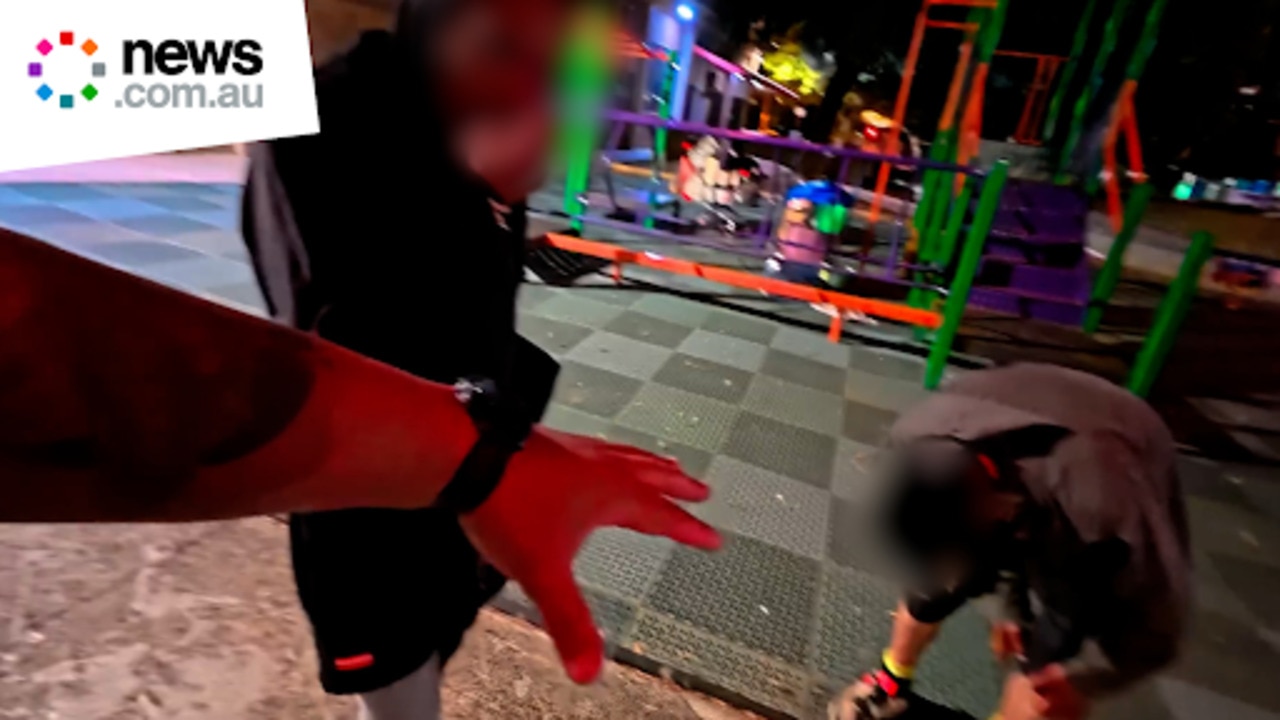
A video published from the area last year showed a man overdose after being injected with “pure heroin”.
“He just had a whack of pure heroin, I shouldn’t have given it to him, f***. Any Narcan?” a woman in the video asks in reference to the antidote to opioid drugs.
It was a shocking first-hand look at the effect of drugs in Richmond, the epicentre for Melbourne’s heroin epidemic.
Fentanyl, the drug sweeping across the US and Canada, is relatively rare on the illicit market in Australia for now, though there are fears the drug could flood the market in coming years.
Hundreds of videos out of the US show drug users in a zombie-like trance state. The drug responsible is xylazine, frequently called “tranq” and used to sedate large animals. It is almost always taken with fentanyl.
Flinders University researchers last year reported on a cluster of multi-drug intoxications involving xylazine in South Australia.
They are certainly in use in another global city that previously decriminalised drugs — Vancouver.
The major coastal seaport city in Canada’s west, within the province of British Columbia, decriminalised drugs in 2023 on a pilot program.
In 2024, the impact was already being felt.
Destination Vancouver CEO Royce Schwinn, speaking at a conference, shared comments from tourists to the region.
“Street upon street of homeless people who were clearly under the influence,” one person said.
“Really glad to leave this place and will not be going back,” said another.
“It is living off its past reputation. Save your money,” another said.
In January this year, BC dumped the program — one which had allowed adults to possess 2.5 grams of heroin, fentanyl, cocaine or methamphetamine without being arrested, charged or having the drugs seized.
Opioid-related deaths increased by 5.8 per cent in one year in British Columbia, according to public health data published by the BBC.
Would it have the same impact in Victoria? Experts are mixed in their views.
Professor Dan Lubman AM from Monash University and Turning Point, an addiction treatment and research centre, said there are examples of decriminalisation working.
“Portugal decriminalised the personal possession and use of drugs two decades ago,” he said in a 2022 position statement.
“Despite widespread concern that it would encourage drug use and create chaos, this hasn’t happened.
“In stark contrast, drug use has not increased. Related crime has fallen. Health outcomes are better. Fewer people are dying. Order has been restored.”
But a few years later, there’s real concern.
Researchers from UNSW noted that drug use has become far more frequent in public and drug overdoses in the capital Lisbon doubled between 2019 and 2023.
The Victorian Government invested $94 million in this year’s Budget to support harm reduction related to drugs. That includes the continuation of its pill testing service and a doubling of the number of rehabilitation beds across the state.
Read related topics:Donald TrumpMelbourne