
Australia and the United States continue proclaiming support for the AUKUS nuclear submarine deal, even though neither country appears to think it’s still a good idea.
Why are they doing that?
The answer is “path dependency”, which perpetuates old decisions that make little sense today. It is time to jettison this outdated plan before wasting any more time and money, which must instead be laser-focused on optimising national security in an increasingly dangerous world.
When the submarine plan was fleshed out initially from 2021 to 2023, it sounded logical for both countries.
The US and Australian navies would bind themselves together to deter China more credibly. Although Australian skeptics warned about loss of sovereignty, the deal promised that Australia could buy at least three US nuclear attack submarines by the 2030s, including a brand new one, and construct the first of its own, SSN-AUKUS, by the early 2040s.
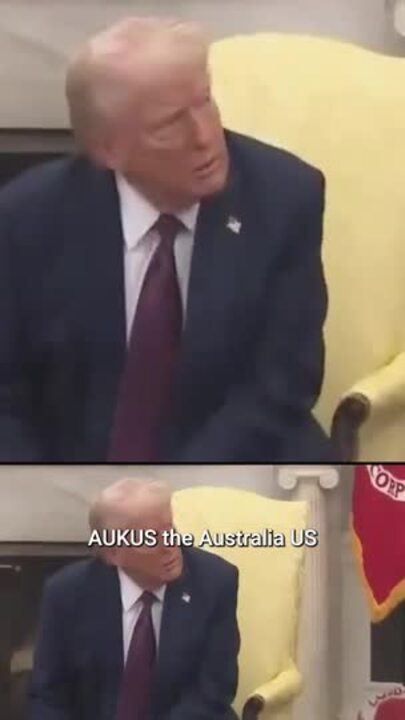
Those premises, however, have crumbled.
Most fundamentally, the credibility of the two countries joining forces to deter China has declined sharply.
In 2023, Australia declared that its submarines would not necessarily join a US effort to defend Taiwan.
In 2025, Donald Trump began threatening not to defend allies, even in NATO, which has stronger security guarantees than ANZUS.
The US government also has retreated on selling Australia submarines.
In 2024, an addendum to AUKUS clarified that the United States would comply only if doing so did “not degrade” its own nuclear fleet, and it could withdraw with “one year’s written notice”.
This year, the US reneged on its promise to sell Australia a newly built submarine, instead offering only used ones with shorter lifespans.
That’s because the US navy is so backlogged on building and repairing submarines that it cannot meet its own national security requirements.
American hawks oppose selling any submarines, especially state-of-the-art ones, to a country that won’t pledge to use them in allied operations.
Nor can Australia build its own nuclear submarines anytime soon, because that must be done jointly with the UK’s Royal navy, which faces even bigger backlogs of construction and repair.
A British investigation last month revealed that none of the UK’s six attack submarines could deploy – a recurring problem.
Before the UK even could focus on SSN-AUKUS, it would need to complete construction of its final Astute-class attack submarine, which required 13 years for the last one.
The UK also must give higher priority to constructing its four new Dreadnought-class ballistic missile submarines, which are essential for maintaining its nuclear deterrent.
That means Australia’s first SSN-AUKUS is unlikely to be produced before 2050, if ever.
The latest evidence against the AUKUS submarine logic comes from Canada, which announced this month that it is buying a fleet of conventional submarines, despite previously obtaining a US pledge of assistance on nuclear ones.
Compared to Australia, Canada has larger land mass, coastline, population and GDP – and it faces a more proximate adversary.
Despite this, Canada opted for European non-nuclear submarines, because they can be obtained in much larger numbers and sooner for the same price, without relying on an undependable ally.
For similar reasons, former senior officials of the US navy, Royal navy and Australian government have recently urged the AUKUS submarine plan to be abandoned.
Yet US and Australian political leaders are sticking with the AUKUS submarine plan, for apparently ulterior motives.
Prime Minister Anthony Albanese never liked the plan – especially its nuclear weapons-grade uranium fuel that violates global nonproliferation norms – but he embraced it during the 2022 election campaign to appear tough on defence, and now fears accusations of flip-flopping. President Trump also dislikes the plan, because – as his Pentagon official Elbridge Colby once asked – “Why are we giving away this crown jewel asset when we most need it?”
However, the “art of the deal” tells Mr Trump to retain the submarine plan for leverage to extract Australian concessions on other issues like trade.
Thus, the AUKUS submarine plan is an anachronism undercutting the national interests of both countries.
Australia not only imperils its naval defence but increases its vulnerability to Mr Trump’s coercion, while the United States reduces its military capability to confront a rising China.
Will no one kill this zombie?
Alan J Kuperman is associate professor at the University of Texas at Austin, where he teaches military strategy and coordinates the Nuclear Proliferation Prevention Project