
Victoria’s Independent Broad-based Anti-corruption Commission has spent eight years and some $8m discovering what Peter Marshall, the secretary of the United Firefighters Union, knew all along but repeatedly denied: that in April 2016, over four days of clandestine meetings in rented rooms and a hotel, he had struck a secret deal with the Andrews government from which the government’s own emergency services minister was deliberately excluded.
Bugged phone calls and text messages released with the Operation Richmond report this week capture the mood. Once the terms were settled, champagne was raised for celebratory photographs; participants were told to keep the talks confidential but Marshall later boasted that the deal had been sealed “in a backroom” with special minister of state Gavin Jennings and endorsed by premier Daniel Andrews and cabinet.
Jane Garrett, the minister cut out of her own portfolio, refused to endorse the deal and resigned from cabinet. She died in 2022; this week, her family said they remained proud of the stand she took. IBAC’s report fully vindicates her. It found that Andrews, Jennings and senior public servant Tony Bates conducted the negotiations without regard for normal process or government policy, deliberately excluding Garrett and the Country Fire Authority.
Nor did the favours Marshall secured end with the 2016 agreement. IBAC found that when Lisa Neville later became emergency services minister, she gave Marshall privileged access and an opportunity to influence the choice of Fire Rescue Victoria’s commissioner. It also found that Greg Sword, a Labor and union figure on the Metropolitan Fire Brigade’s board, improperly passed him confidential information.
None of that, IBAC concludes, meets Victoria’s narrow legal threshold for “corrupt conduct”, which requires behaviour capable of constituting a criminal offence. But a legal conclusion is not a moral exoneration.
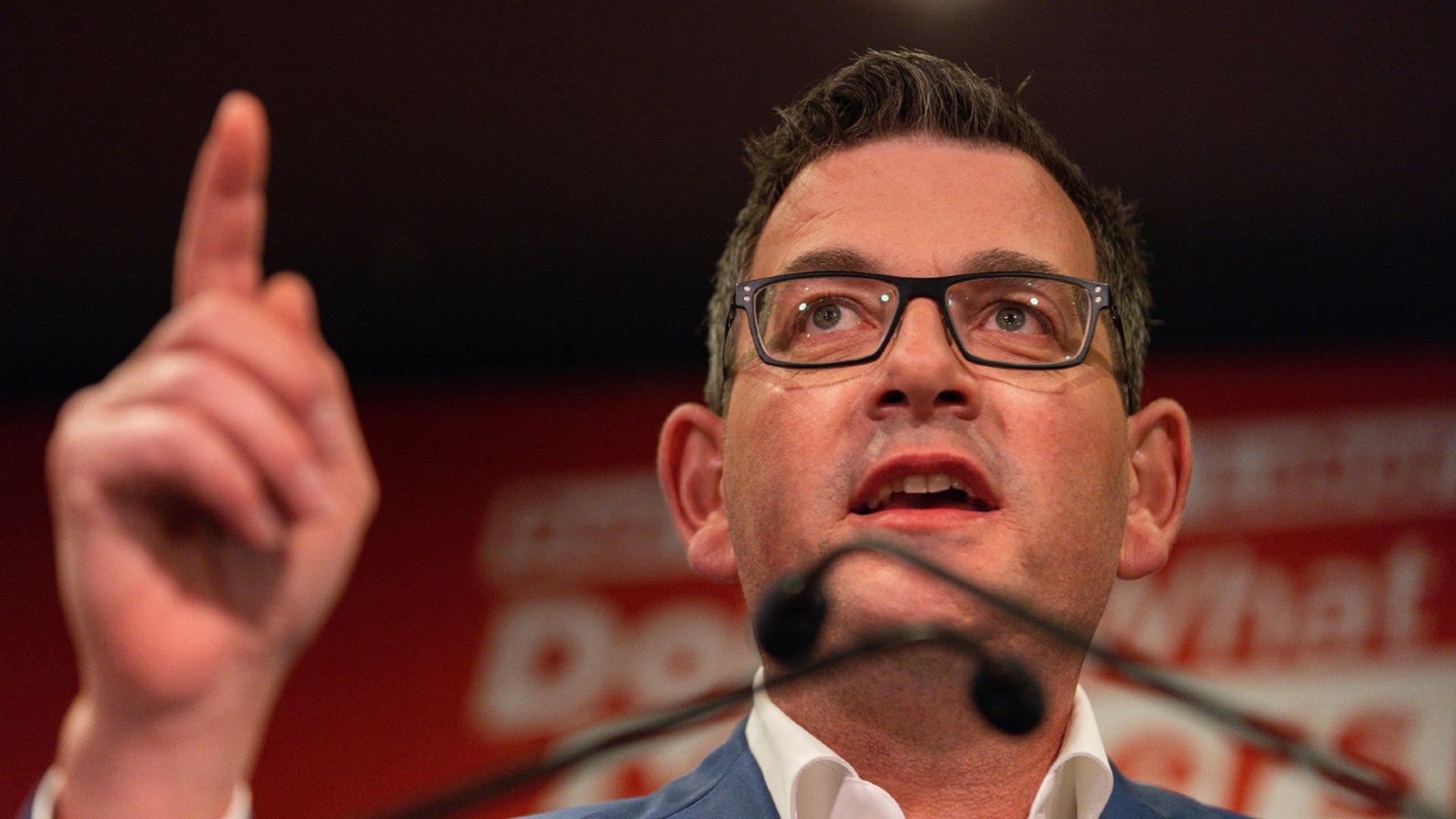
The reactions since have been as revealing as the report itself. New Victorian Premier Ben Carroll, barely a fortnight into the job and little more than 100 days from an election, called the conduct “intolerable” and pledged to adopt every one of IBAC’s recommendations. Bates, now secretary of the Education Department, immediately took leave.
Marshall, however, dismissed eight years of findings as “creative writing”, complained about the $8m spent investigating him and demanded that IBAC itself be investigated.
That has been the union’s reaction from the start. Its accounts record more than $4m in litigation costs over the two years to June 2025 as it fought repeatedly to prevent IBAC’s findings from ever being published. Money collected from firefighters’ pay packets has been spent defending the secrecy that allowed their secretary to wield outsized power.
Far from protecting firefighters, protecting Marshall and entrenching his position has become the union’s real purpose.
Spread of the rot
As for Andrews’ successor as premier, Jacinta Allan, she showed no interest, as the scandal emerged, in protecting taxpayers and every interest in protecting herself.
The rot that secret deal epitomises spreads well beyond Marshall and the UFU. The CFMEU’s alleged infiltration of Victoria’s Big Build has cost taxpayers as much as $15bn, according to Geoffrey Watson SC: privileged, unaccountable access to public contracts, enforced by those most willing to use intimidation and standover tactics.
Those crimes against taxpayers are symptoms of Victoria’s desperate malaise – a malaise born of a government that stays in power today by ruining Victoria’s tomorrow. As the size and cost of the public sector spirals, the state’s balance sheet has gone from bad to worse.
Since the election of the Andrews government in November 2014, Victoria’s non-financial public sector has accumulated $192bn in fiscal deficits, with a further $50bn forecast in the government’s own budget papers by 2030. The result is that non-financial public sector net debt already has exceeded 30 per cent of gross state product – the highest debt burden of any Australian jurisdiction.
Debt can be good when it finances productive investment. However, Victoria’s Labor government has developed a penchant for megaprojects that spectacularly fail any proper cost-benefit test but that provide endless opportunities for secret deals with unions.
Exemplary is the monstrous Suburban Rail Loop, whose costs measure in the hundreds of billions and stretch far into the future. As I showed when it was first proposed, the project makes no sense. To proceed with it while ensuring vast numbers of employees work from home is madness.

With capital being wasted hand over fist and cosy arrangements with unions roiling management’s ability to manage, Victoria’s productivity performance has tanked.
Its multifactor productivity now compares unfavourably even with Tasmania and South Australia and, more remarkably still, productivity levels have actually gone backwards since the Andrews government took office. And there are no prizes for guessing which jurisdiction has the highest unemployment rate in the land; at 5.1 per cent, Victoria’s unemployment rate is more than 20 per cent higher than that of NSW at 4 per cent.
However, that is not to say the problems are Victoria’s alone. Labour productivity for Australia is barely above its pre-Covid average level over the period 2015-19, heavily weighed down by the collapse in non-market sector productivity this decade.
More recently, labour productivity fell by 0.6 per cent in the March quarter and has barely increased over the past year. In fact, gross value added per hour worked is lower today than at the beginning of this decade – an extraordinary event by historic standards. We are a long way from the glory days of the 1990s when labour productivity grew by almost one-quarter in a single decade.
Industrial relations is not the whole story but it is a significant part. During the reform era, the economic costs of our IR system were disguised by the stimulus to productivity the reforms brought.
Union lawlessness
That stimulus has now run out, while many reforms have been reversed – and, as the numbers show, the chickens have come home to roost.
The point is that the UFU deal is no anomaly. For more than 40 years, Labor – federally and in the states – has fostered and protected union lawlessness under a bargain that could scarcely be simpler: Labor grants unions privileges that reward crooks and cronies; the unions use members’ funds and organisational power to keep Labor in office.
The Fraser government’s Industrial Relations Bureau was created after the 1974-76 Sweeney royal commission exposed “inexcusable” payments extorted by the maritime unions. The Hawke government abolished it within months, putting nothing in its place.
The conduct uncovered by the Costigan and Winneke royal commissions of the early 1980s was even more egregious. The Ship Painters and Dockers had become little more than a criminal syndicate, escaping deregistration only because its worst crimes – murder, malicious wounding – breached laws the industrial courts had no power to enforce.
Norm Gallagher’s Builders Labourers Federation held its grip on Melbourne building sites by breaking into workplaces, cancelling concrete pours moments before they were due and assaulting foremen, guards and “scabs”; its “vigilante” squads warned developers that prosecuting the culprits would bring savage retaliation.
Each commission proposed reforms to clean up union governance. Instead, in a move exemplifying its response, Labor struck a “good behaviour” agreement with the BLF so toothless the Federal Court called it “meaningless, unenforceable and unacceptable”. Only once Gallagher became too embarrassing to ignore did Labor act – deregistering his union alone, leaving untouched the lax rules that had made his conduct so profitable.
Little wonder the lawlessness resurfaced. The 1992 Gyles royal commission found practices “ranging from physical violence and a threat of physical violence at one end to petty pilfering at the other”, producing “a culture of the law of the jungle, with survival the object and short-term expediency the means”. Union boss Tom McDonald dismissed the inquiry as “a mere witch-hunt”; Labor did nothing, and John Setka and the BLF’s other hard men returned to power.
The Cole royal commission then found the same “disregard by unions for the truth” and “for industrial laws” in an industry where figures such as Bruce Wilson and Ralph Blewitt flourished unchecked. ACTU secretary Greg Combet again called it a “witch-hunt”; Labor’s IR spokesman dismissed the watchdog it produced as “not a watchdog but an attack dog”, “programmed” to “inflame disputes”.
Unions’ ‘privileged position’
By the time Dyson Heydon’s royal commission reported in 2015, the pattern was undeniable. Industrial relations, which Justice Henry Bournes Higgins once called “a new province for law and order”, had become, in Heydon’s words, the province of “louts, thugs, bullies, thieves, perjurers, those who threaten violence, errant fiduciaries and organisers of boycotts”.
The system, Heydon found, granted unions “a privileged position” without “proper legislative measures to safeguard the interests of those affected by those privileges and the general public interest”. Heydon himself was ruthlessly smeared and Labor blocked reform.
Each time, Labor’s script has been the same: deny there is anything to see; denounce the inquiry as a witch-hunt; then, once pressure becomes unbearable, sacrifice whichever individual has grown too toxic to defend – while doing nothing to change the system that guarantees the illegality recurs.
The Marshall affair follows precisely that playbook. He remained UFU secretary throughout the eight years IBAC investigated him, despite the gravity of the suspected conduct. When the wider scandal could no longer be concealed, Allan flatly refused to call a royal commission; Carroll, who had vehemently opposed one, now says he will establish it – cutting Marshall loose to hang in the wind.
Yet Carroll shows no sign of accelerating the legislation needed to give IBAC power to follow public money into Big Build subcontractors, where the dollars are far greater. The Allan government he served postponed that legislation until late 2027 – more than a year after voters go to the polls.
All this degrades our public life into a rich-world parody of a tin-pot autocracy, leaving us mired in patronage and corruption that saps Australia’s growth potential. The scandals change, the inquiries recur, individuals are sacrificed when necessary.
But while the Andrews, Allans and Carrolls of this world remain in power, the backroom deals survive – and the rot with them.
