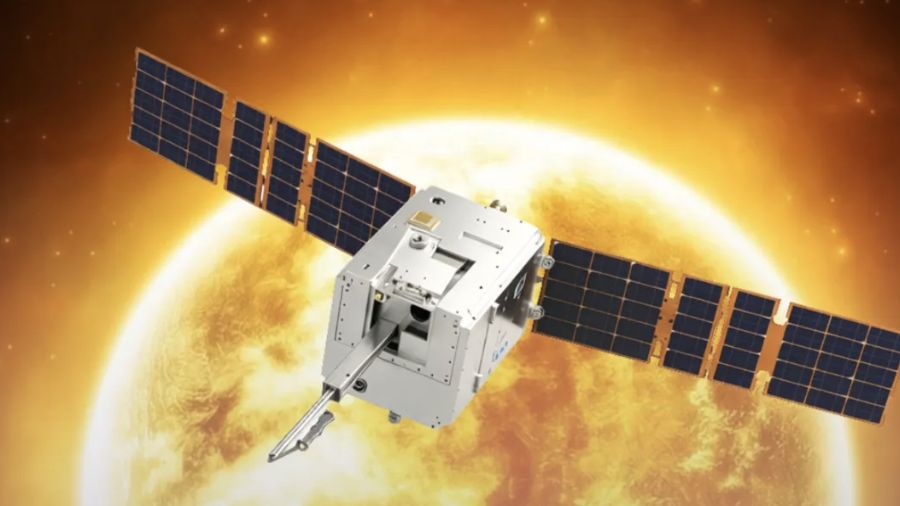
MELBOURNE, Fla. — A Space Coast-based company is building a small spacecraft in Melbourne to help NASA study solar storms that can disrupt satellites, GPS and other communications systems.
Argotec is designing and building MiniCOR, a CubeSat about the size of a large microwave.
Rob Mertes, Argotec’s head of engineering, says the spacecraft is intended to test technology used in larger telescope satellites that observe the sun and help predict space weather.
Space weather can affect communications in Earth orbit and on the ground. Solar flares can disrupt satellites such as GPS, affecting aviation and the space industry.
A storm in 2022 knocked 40 Starlink satellites out of orbit, and a major storm in 2024 disrupted satellite links and rerouted polar flights.
“We are trying to learn as much as we can to help predict those challenges that we face with that weather,” said Mertes.
Dale Ketcham, a space industry expert, said the need to understand space weather grows as more activity moves beyond Earth.
“The more we expand the human enterprise out into space, whether it’s communications, national security or manufacturing, the more we expose ourselves to all the interesting stuff that’s out there,” Ketcham said.
MiniCOR is designed as a less expensive way to observe the sun and its large eruptions of radiation, with flares lasting from a few minutes to several hours.
If the mission succeeds, several of the spacecraft could eventually be sent to observation points around the sun.
“To show that we don’t have to spend hundreds of millions of dollars on spacecraft that can collect the science, we can do it in a smaller, more cost-effective way,” Mertes said.
MiniCOR will be Argotec’s first spacecraft built entirely at its Melbourne facility. The company is also working on HEO, or Hawk for Earth Observation, an Italian spacecraft expected to join a European satellite constellation next year.
Building MiniCOR is expected to take about 18 months from design to completion. After that, Argotec can work with NASA on a launch date for a rideshare mission with other satellites.