Six years ago, I wrote an op-ed warning that Victoria was making major transport decisions one project at a time, without a comprehensive plan.
With Ben Carroll newly installed as Premier and a state election only months away, the future of the Suburban Rail Loop is again being questioned.
Projects of this size must be scrutinised. Governments should test costs, benefits and delivery risks. A mandate is not a blank cheque.
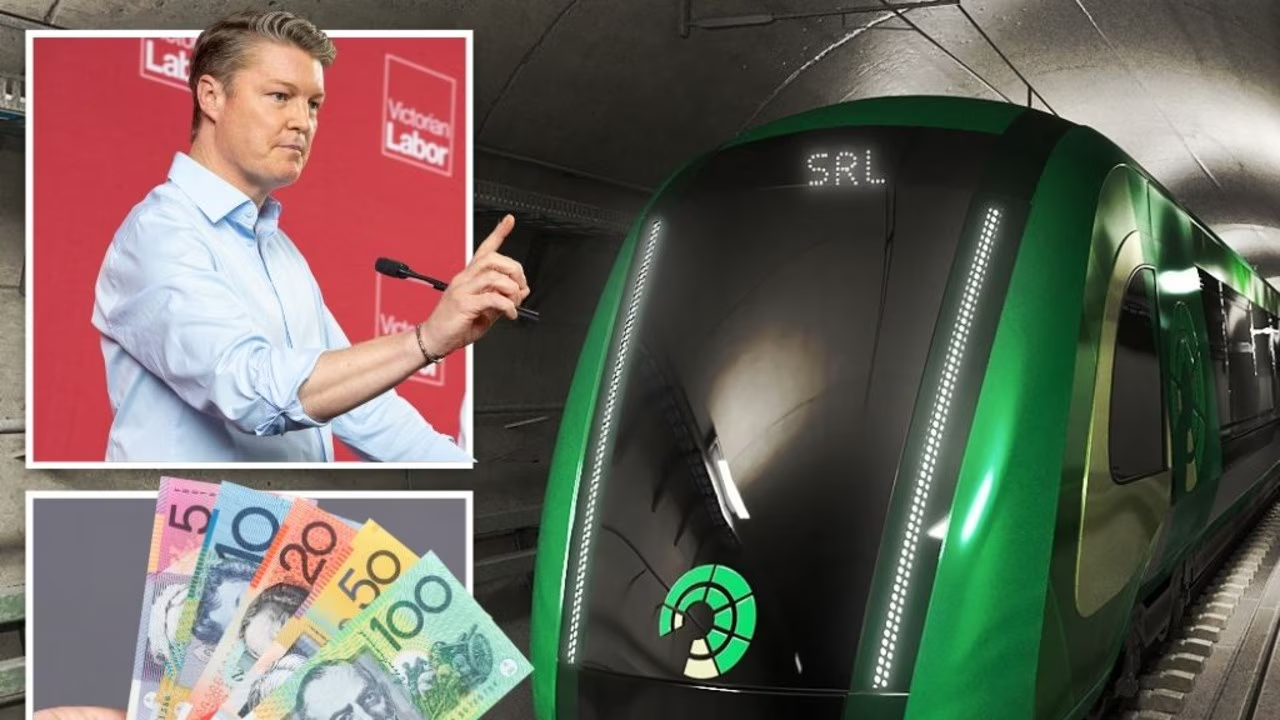
But SRL East is not an idea on a whiteboard. It has been under construction since 2022, contracts are signed and tunnel boring machines are on site, ready to begin tunnelling this year. Yet the government has abolished the stand-alone Suburban Rail Loop portfolio without committing to the project’s future.
The Suburban Rail Loop was taken to the 2018 and 2022 state elections, and Labor was returned with commanding majorities at both. Voters did not approve every contract or dollar, but knew it was a central commitment.
Reconsidering it now makes transport planning look less like long-term city building and more like short-term political repositioning.
Premier Carroll has long championed Melbourne Airport Rail. It is easy to see why. The proposal includes a new station at Keilor East, in his electorate, with benefits for Airport West, Keilor Park and Keilor East.
Those communities deserve better public transport, and Airport Rail should be built.
But Airport Rail is not an alternative to the Suburban Rail Loop. It is part of the same orbital vision, a 90km line connecting the Frankston and Werribee lines via Melbourne Airport. Airport Rail is Stage 3.
SRL East has already been endorsed at two elections, contracted and commenced. Its completion should not be up for debate. A comprehensive transport plan should determine what comes next, including the remaining SRL stages and Melbourne’s other transport priorities, rather than allowing one station or corridor to reorder the city’s future.
The cost debate also needs consistency.
SRL East is reportedly estimated at about $34.5bn. That demands intense scrutiny. But North-East Link is funded at $26.21bn and belongs in the same category of generational mega-projects.
North-East Link will provide freight and local amenity benefits, but it also creates road capacity. Its modelling acknowledges induced demand, where new capacity attracts traffic. Like almost every major freeway built or widened in Melbourne, that space will eventually fill.
SRL East does something fundamentally different. It creates a mass-transit corridor connecting major employment, education, health and retail precincts, links six train lines and allows people to travel across Melbourne without going into the CBD and back out again.
One project increases the capacity to move vehicles. The other increases our capacity to move people.
Roads are routinely treated as essential infrastructure, while public transport must justify itself through calculations that struggle to measure how a city will grow over the next century.
Earlier generations understood the importance of building ahead of demand.
Victoria extended its railway network to Frankston and Lilydale in 1882 and Upper Ferntree Gully in 1889. These were distant, undeveloped places, not the suburbs we know today. The railway came first, and development followed.
No one could then have produced a benefit-cost ratio covering the next 140 years. Yet those lines shaped where people lived, businesses invested and Melbourne expanded.
Generational infrastructure must be judged partly by what it will deliver in 50, 100 or 200 years, not only by what fits into a spreadsheet before the next election.
That does not mean every rail proposal should proceed. Airport Rail is not our most pressing investment; I would not place it among my immediate priorities.
Melbourne needs electrification and metropolitan services to Melton and Wyndham Vale, track duplication on the Upfield, Belgrave and Lilydale lines, and planning for extensions of the Frankston, Cranbourne, Upfield and Craigieburn lines. It also needs Melbourne Metro 2, better orbital connections and more frequent buses in suburbs that may never have a train or tram.
Whenever I ask why Melbourne needs Airport Rail, the first response is often that every other major city has one. That is not a reason to spend billions of dollars. Airport Rail would be valuable for airport workers and some travellers, but most Melburnians fly only occasionally, while many frequent business travellers use taxis or rideshare because their employer pays.
People need reliable transport to work, school, university, shops and medical appointments every day.
That is why Melbourne needs an agreed plan comparing these investments, setting their order and explaining their contribution to the future network.
The Transport Integration Act 2010 requires a periodically revised plan covering long-term priorities, integrated transport and land use, and short-term actions. In 2021, the Victorian Auditor-General found the department had not met those requirements, rejected the claim that around 40 separate strategies constituted an integrated plan and warned that investments risked being poorly sequenced.
Sixteen years later, Victorians are still waiting.
Whether absent or hidden, the result is the same. Projects are debated in isolation, usually during elections and through the narrow lens of which party announced them.
A real plan must go beyond trains.
It must integrate trains, trams, buses, roads, cycling, walking, freight, accessibility, housing and land use. It must explain how we will move millions more people as Melbourne grows towards eight million residents by 2051, while remaining liveable and reducing dependence on cars.
It must also survive changes of Premier and government.
The government should not retreat from a generational project because an election is approaching. Equally, the opposition cannot oppose every major project it did not conceive itself.
Neither side owns Melbourne’s transport network. It belongs to those who use it today and the generations who will depend on the decisions we make now.
The government should lock in SRL East, set out the sequence for the remaining sections and identify the other major investments Melbourne will need as its population doubles.
Then it should stop the political bickering, start the tunnel boring machines and get on with building the city Melbourne will need.
Stuart James is the Mayor at the City of Monash. He is a former chair of the Eastern Transport Coalition and sat on the Public Transport Users Association Committee for a decade.