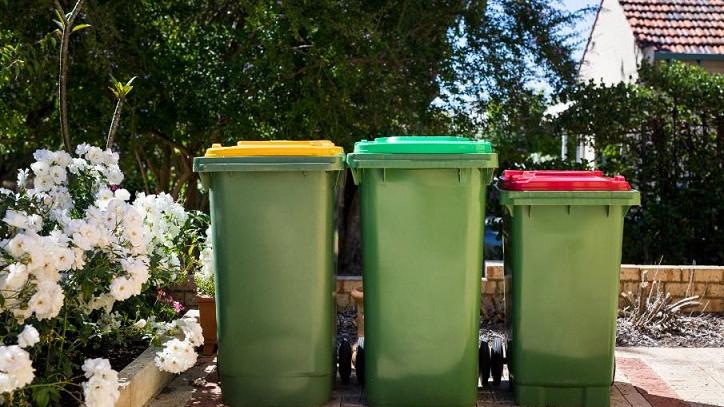
Controversial changes to already confusing rubbish bin rules have further frustrated Perth residents — and households were this week worried that implementing the updates could create a big stink in their bin bays.
The Western Suburbs Weekly reported last week that Perth’s metro councils have started rolling out changes to what people can put in their household bins. The changes officially began with the new financial year.
The updated guidelines, developed by the WA Local Government Association in consultation with industry and State and local government, aim to simplify what can be placed in the green-lidded food organics and garden organic (FOGO) bins and help processors produce cleaner compost.
Two-thirds of metropolitan councils have introduced FOGO bins for organic waste.
Households are now being asked to place only food scraps, garden waste and certified compostable caddy liners displaying the AS 4736 seedling logo in their FOGO bins.
That means previously accepted items, such as tea bags, tissues and paper towels, pet poo and compostable takeaway packaging must go into red-lidded general waste bins, which are generally half the size and emptied only fortnightly.
Frustrated and angry Perth residents flooded social media in the wake of news of the upgrades. Most questioned the value of the FOGO system, warning the changes risked households ignoring waste collection rules and calling for bigger red bins and a return to weekly general waste pick ups.
“Mothers need to be paid funds to re-educate family members please,” one Wembley/West Leederville resident posted on social media.
Another Perth local quipped: “Red bin is all things until it’s full then it can go on the green bin, the yellow bin or the neighbour’s bin… soon enough ppl will just get fed up and ignore the every-changing bin rules.”
Some western suburbs councils have also received direct requests for bigger red bins and a return to weekly red bin collections. That would require councils to review their annual budgets, which are already under increased pressure from cost of living and fuel price rises.
“We get it – weekly pick ups would be immensely helpful (stinky nappies are not our cup of tea either and two weeks worth of pet poo? No thanks),” the Town of Mosman Park posted in response to a Facebook request for more red bin pick ups.
“But like most other councils in Perth, we have to stick to fortnightly red bin pick ups as per WA government guidelines.”
Cambridge deputy mayor Ben Mayes posted on social media that he had concerns about the changes, “as I’m sure many of you do”, adding they were made quietly and without consultation.
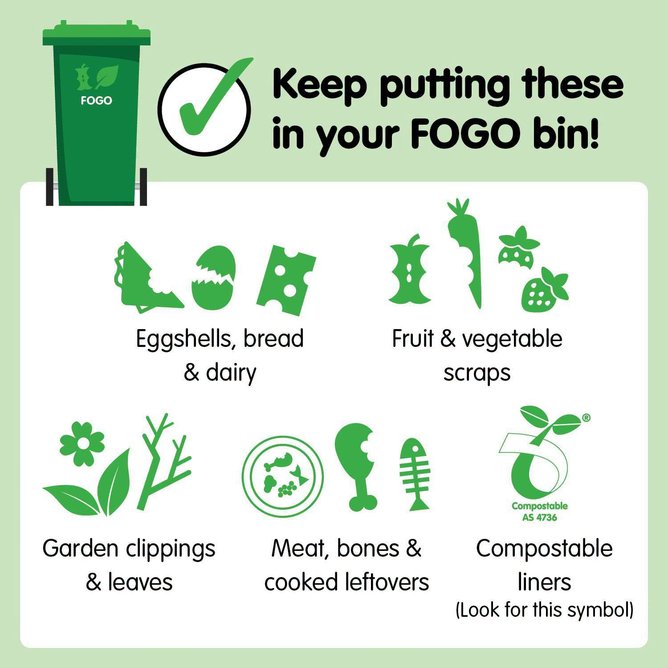 Camera IconFOGO rules have been updated. Credit: Mosman Council
Wembley West Leederville Residents Association responded, saying that the State Government surely had access to other FOGO schemes in Australia or overseas and that pathogens in pet waste should have been be foreseen before the program was rolled out.
“Why repeat the same mistakes and make residents (and local councils) pay the price (literally)?” its post said.
The City of Nedlands said it had received WALGA’s final agreed FOGO inclusions list but was awaiting formal operational directives from its compost facility contractor, Veolia, regarding any potential changes for local residents and businesses.
“From the city’s perspective, it remains business as usual for our residents until we receive official direction from Veolia,” a spokesperson said.
“Any future adjustments to current FOGO arrangements will be carefully coordinated alongside our communications team to roll out an accurate, structured community education program. This ensures we provide consistent guidance to our community in strict alignment with our contractual obligations.”
The City of Subiaco, which received two emails about the updates last week, said it was not considering any changes to its bin services as a result of the new guidelines.
It said it had not promoted pet poo as suitable for FOGO bins for some time, and while tea bags were previously accepted, they were no longer being included due to concerns about staples and other materials, including microplastics, found in some products.
“The City of Subiaco appreciates the rationale for a simple FOGO system focused solely on food and garden organics,” a spokesperson said.
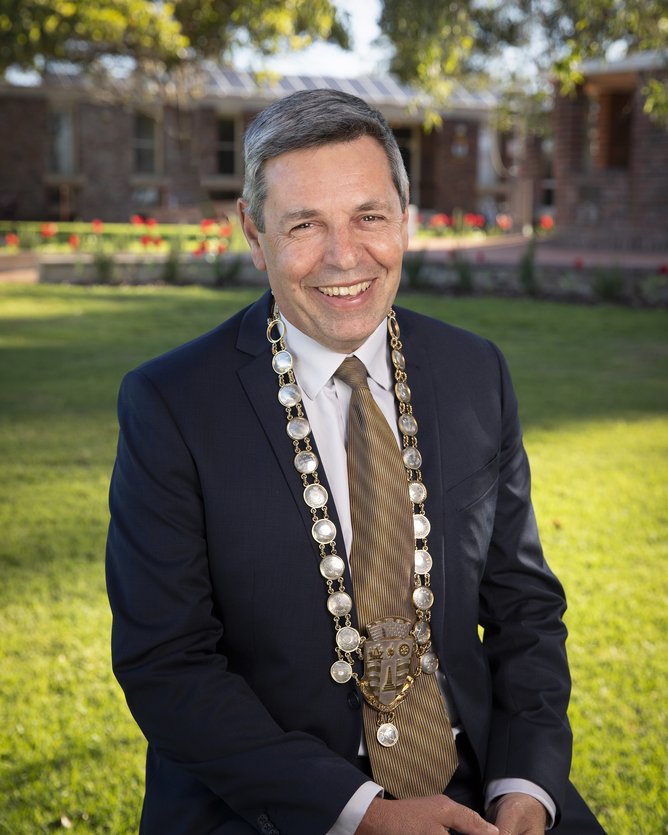 Camera IconTown of Mosman Park mayor Paul Shaw. Credit: SAVARNA NIZICH/RegionalHUB
“This reduces the risk of PFAs and other harmful chemicals entering composting streams, reduces contamination, and improves the quality and value of the resulting compost. A simpler approach may also mean clearer, more consistent guidance for residents about what belongs in each bin.”
Mosman Park council started warning local households about the changes last week and said the shorter list should mean less guesswork at home and help processors producer cleaner, high-quality compost. It was including the updated advice as it continued its program to roll-out green-lidded bins to unit and apartment complexes this year.
The town has a program to waive red bin fees for some eligible households to help with cost of living expenses.
Mayor Paul Shaw said the changes were developed collaboratively through WALGA‘s consistent communications collective and aim to create cleaner compost and improve FOGO’s environmental outcomes.
“We know FOGO is working to divert waste from landfill,” he said.
“Since the introduction of FOGO to Mosman Park households in 2023 our material recovery rate has greatly improved, delivering better waste outcomes for our community.
“Over the coming months, we plan to support our residents by increasing our communications on the updated guidance while ensuring we do our best to reduce contamination in our bins.”
The Town of Claremont, which only supplies a garden organics waste collection service, said it was not affected by the changes.
The update announcement coincides with this week’s special meeting of the Mindarie Regional Council, which includes the cities of Perth and Stirling and the Town of Cambridge among its seven members. The meeting will consider a confidential item related to the MRC’s waste-to-energy procurement process, which would help push forward the closure of the Tamala Park landfill site.
The MRC, now chaired by Cambridge mayor Gary Mack, has been working with member councils to negotiate agreements to transition the disposal of residual municipal waste to the Kwinana waste-to-energy facility. The City of Wanneroo voted at a meeting in June to withdraw its support for the process.
MRC member have used Tamala Park for household waste disposal since the 1990s, and any change in the procurement process will directly flow-on to the councils and their ratepayers.