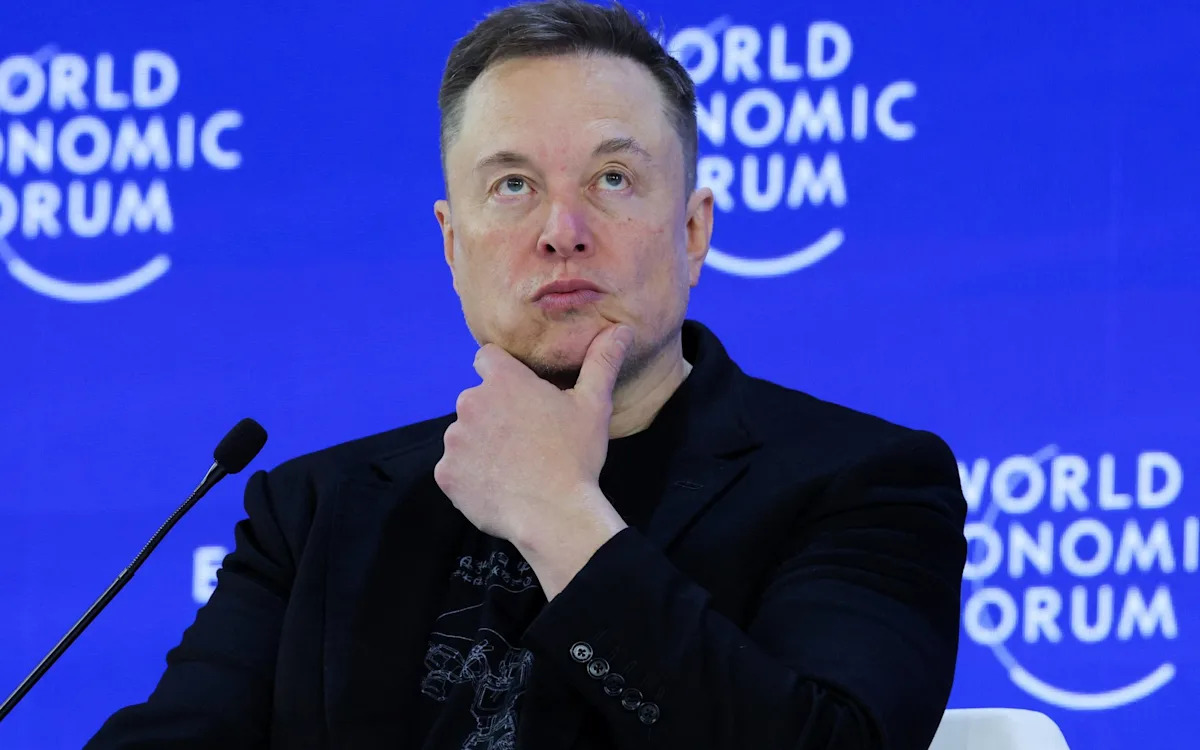
Elon Musk is suing the EU over a landmark €120m (£105m) fine against his social media company X, accusing Brussels officials of bias.
X launched an appeal against December’s fine at the EU General Court earlier this week, in what is the first legal challenge to Europe’s tough digital laws.
The challenge will escalate a row between Mr Musk, Brussels and the White House after the Trump administration claimed EU policies are suppressing free speech.
Five Europeans were banned from visiting the US shortly after X’s fine, with Marco Rubio, US Secretary of State, claiming that Brussels was seeking to “censor” American sites.
X, formerly known as Twitter, filed an appeal at the EU General Court in Luxembourg on Monday, alleging “prosecutorial bias” by EU officials.
The appeal also challenges key aspects of the EU’s Digital Services Act (DSA), which is the law designed to crack down on hate speech and misinformation.
The European Commission fined X in December after ruling it had broken rules on advertising transparency. It also found that the site’s system of charging users for “blue tick” verification was “deceptive”.
X subsequently banned the Commission from advertising on the service, while Mr Musk said the EU should be “abolished”.
The company’s appeal will be a landmark case, as it will challenge how the Commission calculates fines and whether there are adequate checks and balances on officials.
It will also test whether the DSA conflicts with freedom of expression laws in Europe. The laws require “very large online platforms” to take steps to stamp out illegal content or posts that could threaten electoral integrity.
The Trump administration has repeatedly threatened the EU over the laws, which it says unfairly punish American companies that are mostly affected by the regulations.
Adina Portaru, a Brussels-based lawyer for ADF International, which is providing support to X’s challenge, said the EU was threatening free speech.
“This is a crackdown on X by authorities who view a free speech platform as a serious threat to their total control of online narratives,” she said. “By targeting X, they are targeting the free speech of individuals across the world who simply want to share ideas online free from censorship.”
Ms Portaru added: “If the Commission’s concentration of power goes unchallenged, it will further cement a highly problematic standard for speech control across the EU and beyond.”
X is facing a series of investigations in Europe, including in the UK, where Ofcom is investigating the company over sexual images of women and children generated by its Grok AI bot.
A European Commission spokesman said: “We can confirm that X has appealed our decision. The Commission is ready to defend its decision in court.”
X said: “This EU decision resulted from an incomplete and superficial investigation, grave procedural errors, a tortured interpretation of the obligations under the DSA and systematic breaches of rights of defence and basic due process requirements, suggesting prosecutorial bias.
“This landmark case is the first judicial challenge to a DSA fine and could set important precedents for enforcement, penalty calculations and fundamental rights protections under the 2022 regulation. X remains committed to user safety and transparency while defending our users’ access to the only global town square.”