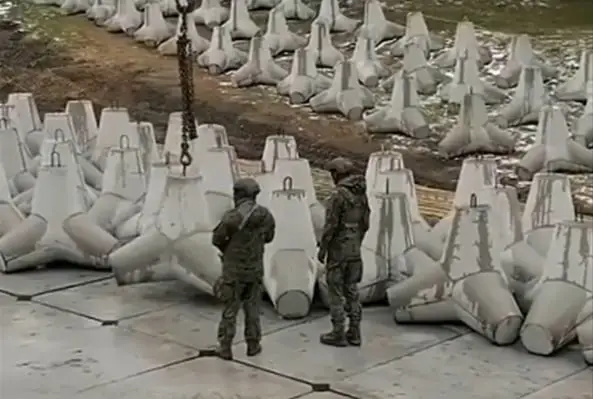
Lithuania is preparing to carve a 20-metre-wide network of anti-mobility trenches along its borders with Russia’s Kaliningrad exclave and Belarus, as NATO’s eastern flank accelerates preparations for a potential conflict.
The Lithuanian cabinet has approved changes to the country’s defence engineering plans, with construction of the new counter-mobility belt scheduled for completion by the end of 2028 at a cost of about €50mn.
In designated military operational zones, defensive strips could extend up to 150 metres into Lithuanian territory. The aim is not to create an impenetrable wall, but to slow an advancing force, channel its movement and buy crucial time for NATO reinforcements.
Lithuania will also increase the number of military engineering parks storing obstacles such as concrete anti-tank barriers, roadblocks and other defensive equipment from 27 to 50 by 2028.
The measures form part of the wider Baltic Defence Line, launched jointly by Lithuania, Latvia and Estonia in 2024 to fortify roughly 950km of their borders with Russia and Belarus.
The strategy reflects a fundamental shift in European defence thinking. The Baltic states, once beneficiaries of the post-Cold War reduction in military infrastructure, are now rebuilding physical barriers designed around the possibility of a Russian attack.
Wetland restoration will form another part of Lithuania’s defensive architecture, with authorities seeking to make border terrain increasingly difficult for heavy military vehicles to traverse.
Lithuania’s concerns extend beyond a conventional invasion. President Gitanas Nausėda has cited intelligence assessments warning of potential Russian attacks against critical infrastructure across the Baltic region and Poland, while governments in the region have raised concerns over sabotage and other hybrid operations.
Poland is pursuing its own East Shield programme along its borders with Belarus and Kaliningrad, while Estonia is constructing bunkers and anti-tank ditches.
JUST IN: 🇱🇹🇱🇻🇪🇪 The Baltics are fortifying for a possible Russian attack
Europe’s eastern frontier is rapidly transforming into a defensive fortress.
🇱🇹 Lithuania plans to spend around €50 million on border defenses, including massive anti-vehicle ditches designed to slow… pic.twitter.com/QVebIXHioJ
— War Radar (@War_Radar2) August 13, 2026
The fortifications cannot prevent a determined invasion. Their purpose is more strategic: to slow Russian forces long enough for NATO’s collective defence machinery to respond.
For Lithuania, the Suwałki Gap remains the critical vulnerability. The narrow corridor linking the Baltic states to the rest of NATO could become a decisive strategic pressure point in any confrontation.
The trenches therefore represent more than a construction programme. They are a physical marker of Europe’s return to deterrence — and of how rapidly Russia’s war in Ukraine has transformed the security landscape along NATO’s eastern frontier.