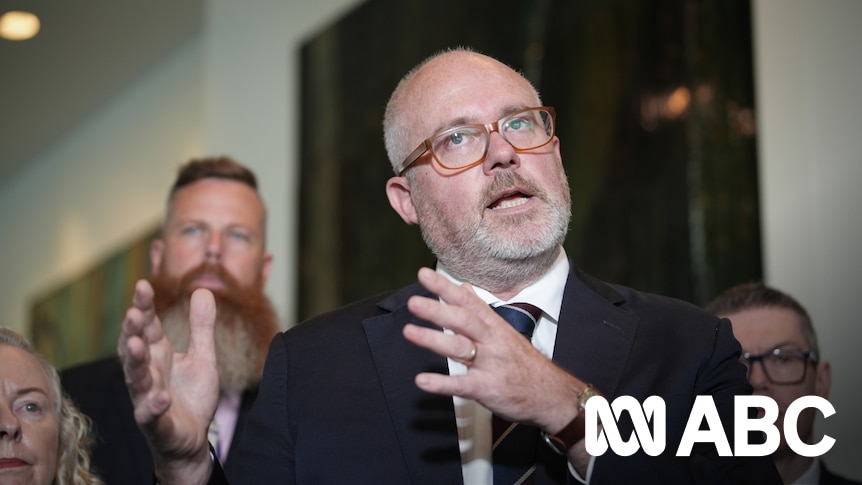
Tim Ayres
The focus today, and it has been for the last few months, is on the power purchasing agreement between Hydro Tas and the owners of the Bell Bay Aluminium facility.
Leon Compton
Isn’t that as simple as the issue was in New South Wales, Minister?
Tim Ayres
No, it’s a very different situation. As the former CEO of Bell Bay Aluminium said, Bell Bay Aluminium sources its electricity from Hydro Tas, Tasmania has a remarkable competitive advantage here. And choices are being made in negotiations between the facility and Hydro Tas, publicly owned facility, and the Tasmanian government about whether or not competitive electricity power purchasing agreement can be struck. I’m encouraging and have been encouraging all the way through those negotiations to reach a conclusion in the interest of Tasmania workers and Tasmanians generally.
Leon Compton
Sure, but the question is, will you intervene? The Tasmanian government say there is, if you like, an existential gap in terms of the future existence of Rio, between what Rio want to pay for power and what Hydro Tasmania, owned by the state, want to get for it. They say it’s $60 million a year over 10 years. And unless somebody, and they’re looking at you, chips in to help cover that gap, the plant will close.
Tim Ayres
Can I just make two points about that set of claims, Leon? Firstly, in my experience, unhelpful to canvas publicly commercial in confidence numbers that are engaged in the process of the negotiation. I mean, I’m not aware, I’ve heard that claim has been made publicly. There are a set of negotiations between, as I say, the government-owned facility, Hydro Tas and Rio Tinto, the owner of the facility. Those negotiations should continue. It’s within the gift of the government and Hydro Tas to determine their negotiating position. They should do that, and they should do that in the interest of Tasmanians. That’s the focus of the discussions here. It’s a negotiation straight out between a publicly-owned facility and Bell Bay Aluminium. These are tough negotiations. I understand why the Tasmanian government has taken the public position that it has. I just say, let’s focus on those negotiations as the source of future competitiveness for the facility.
Leon Compton
Sure, but Tasmanians are asking the question, are you going to stand by on that basis, does that argument hold all the way through to an unsuccessful negotiation not being concluded? And Rio and the 550 direct jobs and the other jobs that go with through the supply chain, does that argument hold right up until the day Rio says, we’re not producing aluminium in Tasmania anymore?
Tim Ayres
Well, we will keep engaging with the Tasmanian government and with the owners, and we are engaging with them.
Leon Compton
At what level Minister, does that involve federal support? Are you prepared to get in here and commit taxpayer money, as you have in New South Wales, to ensure Rio’s jobs stay in northern Tasmania?
Tim Ayres
All I say, Leon, and to your listeners, is that there is a negotiation between the publicly-owned electricity generator, run effectively by the government of Tasmania and Rio Tinto. That is squarely the focus of these discussions. Now, we will keep engaging, we will keep focused, this is an important facility. We will focus and assist where we can. I’ve been to that facility a number of times.
Leon Compton
But what does that mean, Minister, in terms of a commitment to keep Rio Tinto’s operations going? Should Tasmanians prepare if the state, which is in financially straightened times for the most part of its own making, if the state can’t get a deal done with Rio on power, the consequence could be that the facility there closes. Is that a fair appraisal of your view from Canberra?
Tim Ayres
Well, it’s a state-owned facility. It’s a facility that is not in the private market. It’s not a negotiation between two private operators. It’s a negotiation effectively between the government of Tasmania, through its agency, Hydro Tas, and Rio Tinto. That’s the facts of it.
Leon Compton
So it’s not one for the feds?
Tim Ayres
Well, I don’t want to say that either, Leon. There are real issues there for that facility. It’s a small facility by global standards. It’s got unique advantages, it’s got a capacity to innovate. What I want to see is a commercial pathway forward for that facility. Key ingredient in that is getting the electricity contract between the state and the facility right. And we will keep working away, just as we have on a range of other Tasmanian and Australian facilities. We’re taking the same approach with Bell Bay Aluminium that we’ve taken with a range of these facilities, we’ll keep working with Jeremy Rockcliff and the government of Tasmania carefully on these questions. If there’s an answer, it’s about everybody working together and not taking shots at each other, but working together in the interest of Tasmania.