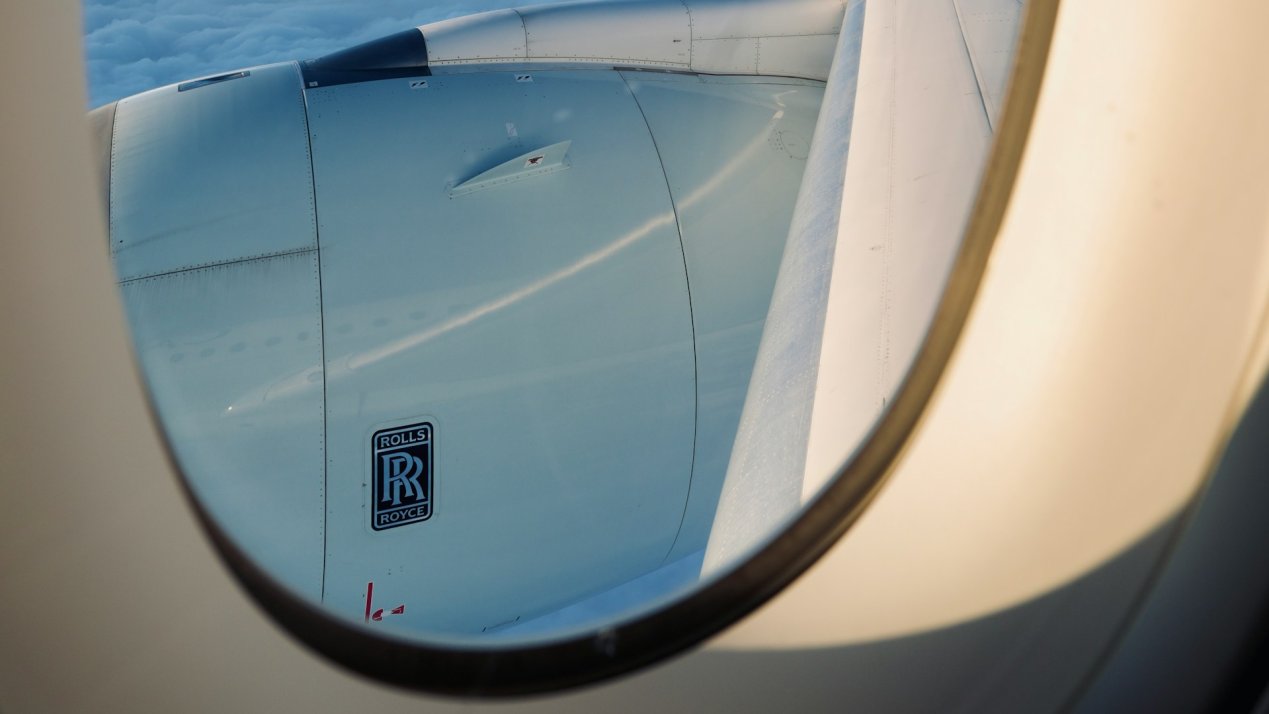
Rolls-Royce and Tata Consultancy Services (TCS) have achieved a milestone in aviation propulsion by successfully operating a modern aero gas turbine across a fully simulated flight cycle using 100% hydrogen.
The benchmark test represents the culmination of a four-year development program designed to evaluate hydrogen’s viability as a future aviation fuel. During the demonstration, the modified engine successfully ran on 100% hydrogen across conditions simulating all primary phases of flight, including takeoff, cruise, and landing.
The successful run validated critical hydrogen propulsion technologies across three primary areas: combustion, fuel systems, and engine controls.
The hydrogen demonstrator program was originally announced by British engine manufacturer Rolls-Royce and European airline easyJet in 2022. Global IT services, consulting, and business solutions provider TCS joined the program in 2024 as an engineering and technology partner to fast-track the development, testing, and delivery of the propulsion system.
Within the collaborative project, TCS provided specialized engineering and digital capabilities. The company supported Rolls-Royce in detailed design, risk management, data analytics, test preparation, and validation. Furthermore, TCS led critical integration efforts involving fuel systems, engine controls, and hydrogen combustion analysis.
“The programme marks an important milestone in our journey towards more sustainable aviation. Through a rigorous and carefully staged testing approach, we have gained valuable insights into how 100% hydrogen behaves in a modern aero gas turbine across a full flight cycle while validating critical combustion, fuel and control system technologies,” said Adam Newman, Chief Engineer of the Hydrogen Demonstrator Programme, Rolls-Royce.
Newman added that TCS served as a trusted partner throughout the initiative. He noted that the technical insights gained from the test program will support future propulsion innovations at Rolls-Royce, including its UltraFan® engine program, while strengthening confidence that gas turbine technology can continue to play an important role in sustainable flight.
The environmental implications of the technology address a critical challenge for commercial aviation. Industry data provided by the companies indicates that aviation currently accounts for approximately 2 percent to 3% of global carbon dioxide (CO₂) emissions. When deployed at scale, hydrogen-powered propulsion technologies have the potential to eliminate in-flight carbon dioxide emissions entirely.
“This milestone reflects what becomes possible when advanced engineering is combined with digital capabilities and deep ecosystem collaboration to move breakthrough innovation closer to real-world. At TCS, we are proud to support Rolls-Royce in accelerating hydrogen propulsion through integrated engineering, systems, and software expertise. This achievement marks a significant step forward—demonstrating not just the viability of hydrogen, but the industry’s readiness to translate ambition into execution,” said Anupam Singhal, President of Manufacturing, Tata Consultancy Services.
Singhal added that the outcome demonstrates both the technical viability of hydrogen fuel and the broader industry’s capacity to develop next-generation propulsion solutions.
The multi-year research initiative brought together technical expertise from across the global aerospace ecosystem. Alongside Rolls-Royce, TCS, and easyJet, the testing program involved contributions from the US National Aeronautics and Space Administration (NASA), the UK Health and Safety Executive (HSE), and additional aerospace industry partners.
The data and operational insights gathered during the four-year program will serve as a foundational bedrock for future low-carbon propulsion developments. Building on the successful engine test, TCS and Rolls-Royce confirmed they will continue their engineering collaboration to further advance hydrogen-powered aviation technologies and support the broader commercial transition toward lower-emission air transport systems.