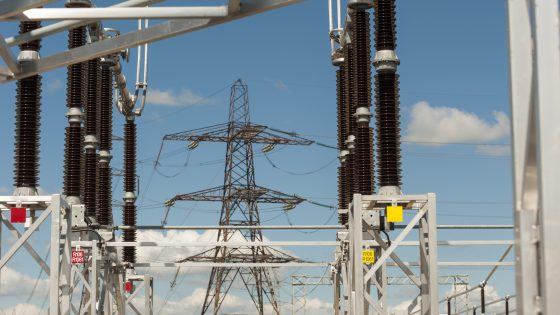
Laing O’Rourke has been appointed by National Grid to upgrade substations at Letchmore Heath, Elstree and St Johns Wood as part of the North West London Upgrade.
The work is intended to strengthen the electricity network across North West London and surrounding areas by improving the resilience of the existing transmission network and increasing its capacity.
The latest scheme will involve modifications to 400kV equipment and the installation and relocation of National Grid assets at both substations.
The upgrades will also support the transmission of increased offshore energy production as part of the government’s Clean Power 2030 action plan, while providing resilient power supplies for London and future data centres in the region.
The design and construction work is part of the Letchmore Heath substation project, which Laing O’Rourke began delivering in March 2025. The contractor was appointed as a construction partner to the Great Grid Upgrade in 2024 and has also been appointed as a construction partner for the Wimbledon Asset Replacement and Margam and Port Talbot substations.
Laing O’Rourke Europe Hub managing director Peter Lyons said: “This work builds on Laing O’Rourke’s partnership with National Grid, having been appointed as construction partner to the Great Grid Upgrade, Wimbledon Asset Replacement, and Margam and Port Talbot substations.
“We will be utilising our digital tools to enable our teams to deliver safely and efficiently on site. These critical upgrades are just part of our ongoing work with National Grid to provide more secure energy for the UK.”
National Grid project director Joe Senior: “The North West London Upgrade is a nationally significant investment that will strengthen the electricity network, unlock new connections, support economic growth across the and help keep long term energy costs down for consumers.
“Working closely with our delivery partners and supply chain, we’re bringing together substations, cables and tunnels, and overhead line reinforcement in a single programme to deliver the infrastructure needed to power future homes, businesses and digital industries and electricity demand rises.”