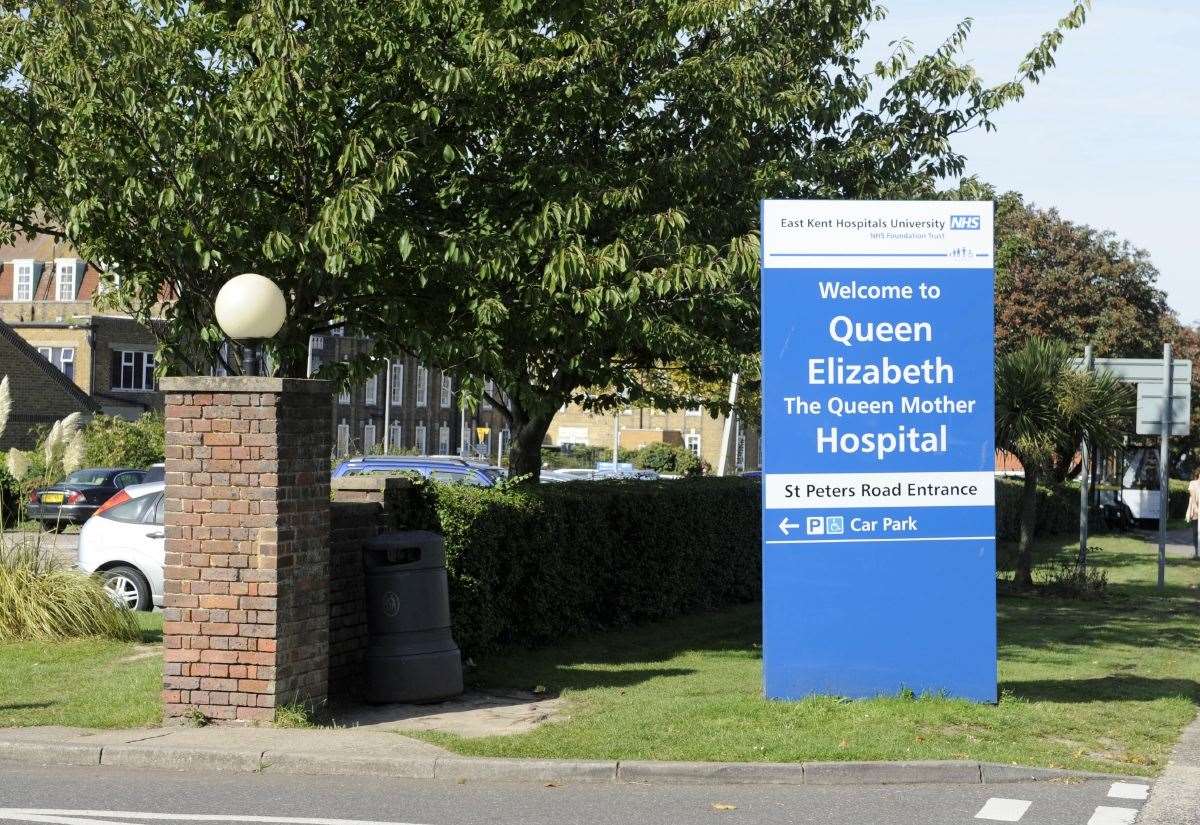
Overcrowding issues at a hospital led to people waiting more than three days for a bed, while police were called to locate a mental health patient who left the department because they could not be safely accommodated.
But health bosses say “significant progress” has been made at QEQM Hospital in Margate since Care Quality Commission (CQC) inspectors visited the site in January.

 The A&E department at the QEQM Hospital in Margate
They added the CQC’s report into the visit eight months ago, which has been published today, “does not fully capture” the improvements made since that inspection, which led to a warning notice being issued to East Kent Hospitals University NHS Foundation Trust (EKHUFT).
The watchdog’s report rated the emergency department inadequate for safety and ordered urgent improvements after finding serious concerns over patient safety.
Inspectors, who visited while the hospital was on critical incident standby in January, found A&E operating under “severe and sustained pressure”.
Staff were found to be “doing their best in really difficult circumstances” but inspectors noted “a disconnect between frontline staff and senior leaders”, said Amanda Williams, CQC deputy director of hospitals, secondary and specialist care for the south east.
Some patients had been waiting more than 72 hours to be admitted to a ward, while at one point nobody was overseeing people in the main waiting room for 40 minutes.
The CQC also raised serious concerns about people experiencing mental health crises, including one patient who walked out and had to be found by police.
 Health bosses say “significant progress” has been made since the CQC visited in January
The person had been brought to hospital by officers but could not be accommodated in the mental health lounge because of safety and capacity concerns.
They were left sitting on a chair near an exit before leaving, prompting police and hospital security to search for them.
The findings mirror problems recently uncovered at the William Harvey Hospital in Ashford, which is run by the same trust and was also ordered to make urgent improvements following a CQC inspection.
They also follow a period of leadership turmoil at EKHUFT, which saw the departure of chief executive Tracey Fletcher in May.
At QEQM, inspectors found 21 patients waiting for admission on the first day of their visit.
The following day, 28 people were being cared for in temporary areas not designed for ongoing treatment while another 50 waited in the main waiting room.

Patients on trolleys in corridors did not have their own emergency call bells or access to piped oxygen.
Staff were also so stretched they did not always have time to help with food, drink, skin care or other basic needs.
One patient said they were hungry and thirsty but needed help to sit up, while another repeatedly asked for pain relief and food, but inspectors found their needs had not been met.
The mental health lounge had just one bed, leaving some patients sleeping on sofas, while one person spent six days there waiting for an inpatient mental health placement.
Ms Williams added: “In urgent and emergency care, the department was under serious and sustained pressure, and the systems meant to keep people safe weren’t holding up under that strain.
“We found overcrowding leading to people being cared for in corridors. Inconsistent monitoring of this corridor care meant some people’s deterioration could be missed, and at one point during our inspection, nobody was overseeing the main waiting room at all.
 Dr Des Holden says today’s report “does not fully capture the significant progress made” since the inspection eight months ago
“We also saw one person who couldn’t be accommodated in the mental health lounge because of capacity and safety concerns who left the department to wait elsewhere and needed to be found by police.”
Inspectors also uncovered failures in the way patients were prioritised.
On the day of their visit, 30% of those checked had been given an incorrect Emergency Severity Index score, used to determine how urgently someone needs treatment.
Trust checks on two subsequent days found half had been scored incorrectly.
In one case, a patient with severe breathing difficulties was not treated as an urgent priority despite observations showing they were at serious risk of suddenly becoming more unwell.
Their priority was corrected after inspectors intervened.
‘There was a disconnect between frontline staff and senior leaders, and this needs to be addressed urgently…’
More than 50 sets of patient notes examined by the CQC also contained an omission or error, including incomplete assessments of skin condition, nutrition, hydration and pain.
The emergency department was already in breach of regulations covering safe care and treatment, dignity and respect and staffing from a previous inspection, but the revisit found all three breaches remained.
Leadership also came under fire, with the CQC reporting a “disconnect” between frontline staff and senior managers.
Ms Williams said: “Staff in the emergency department were doing their best in really difficult circumstances, and many told us they felt part of a supportive team.
“But that commitment on the ground was not being matched by clear leadership and oversight.
“There was a disconnect between frontline staff and senior leaders, and this needs to be addressed urgently to make sure people receive safe and effective care when they arrive at the department.”
 QEQM in Margate saw praise for its medical care and end-of-life work for patients
The CQC carried out a further inspection of urgent and emergency care on May 6 and 7.
EKHUFT says it has since completed 61 of 66 actions identified for improvement, while the CQC has ended weekly reporting requirements.
Dr Des Holden, acting chief executive, said the trust “now rarely” cares for patients in corridors.
“We recognise that the care the CQC saw in the emergency department in early January was unacceptable for both patients and staff, and we have made significant changes to the emergency department since then, which we were able to demonstrate at the CQC’s later inspection in May,” he said.
“The hospital was under unprecedented levels of demand this winter, and since then our teams have worked incredibly hard to make sure it can safely manage significant pressures in the urgent and emergency care service by strengthening safety oversight, improving staffing and training, expanding virtual ward services, introducing digital nursing records and enhancing escalation processes across the hospital.
“While we fully acknowledge the findings from the inspection carried out in January, it is important that patients, staff and the public recognise that today’s report on this inspection does not fully capture the significant progress made at the hospital since then.
‘We have made significant changes to the emergency department since then, which we were able to demonstrate at the CQC’s later inspection in May…’
“We understand, however, that there is more to do. We remain fully committed to building on that progress and providing safe, quality care for our local communities.”
Inspectors found a starkly different picture in medical care across QEQM.
Its rating has improved from requires improvement to good, while caring was upgraded to outstanding.
Inspectors highlighted personalised care for people living with dementia, including a former seamstress who was given towels to fold and another patient who was brought crossword books.
End-of-life care was also praised, with themed rooms, overnight accommodation for relatives and a memory tree for those who had died.
Ms Williams said: “In medical care, good leadership was enabling staff the time to spend with people and treat them as individuals.
“People told us nurses and carers worked incredibly hard, going out of their way for people living with dementia.
“Whether that was finding a former seamstress some towels to fold or getting hold of a crossword for someone who loved puzzles, staff treated people with real warmth.”
There were still concerns, including three patients on St Margaret’s Ward going more than five days without a proper check of their medicines.
Community carers were also not always told about important changes when people were discharged, including medication changes, skin damage suffered in hospital or increased personal care needs.
But medical care was no longer in breach of any regulations.
QEQM’s overall rating remains “requires improvement”.