The M60 has been named among Britain’s motorways where drivers are most likely to be involved in a collision resulting in injury.
New research placed the Greater Manchester orbital motorway joint sixth in the country after 423 injury collisions were recorded over five years.
The 37.8-mile motorway had an average of 2.24 injury collisions per mile per year between 2021 and 2025, according to the study by used car dealership Beck Evans.
The Ford Fiesta was the vehicle most frequently involved in incidents on the M60, appearing in 31 of the recorded collisions.
Its position in the national rankings follows a series of serious incidents which have caused deaths, injuries and lengthy closures on different stretches of the route.
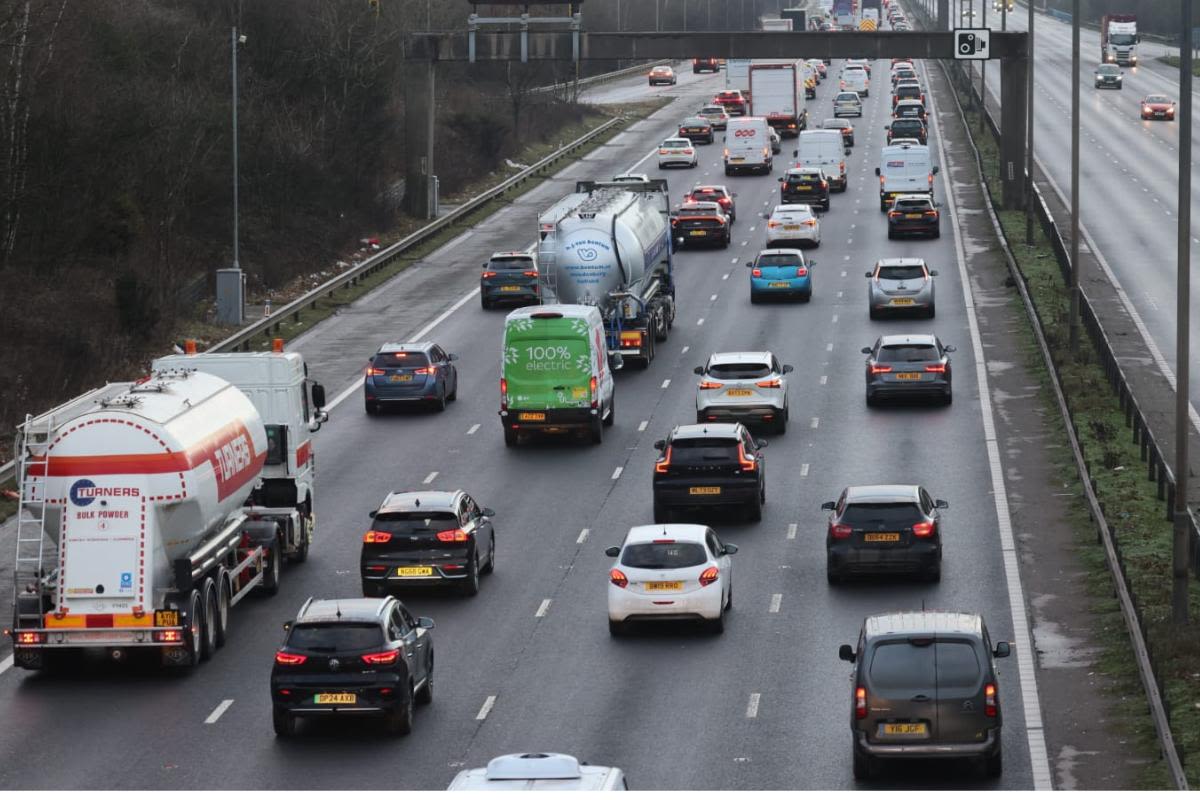
The M60 (Image: Phil Taylor)
In October 2025, a motorcyclist in his 60s died following a collision involving three cars and a motorbike between junction 15 for the M61 and junction 16 at Kearsley.
The crash happened on the clockwise carriageway at around 6.15pm, with two drivers arrested on suspicion of causing death by dangerous driving.
The motorway was closed in both directions while police investigated, with queues reported as far back as Prestwich, Farnworth and Worsley.
A 62-year-old driver was killed in another serious collision between junction eight at Carrington and junction nine for Trafford Park in September 2025.
Police said the man had been driving a gold Renault which entered the motorway at junction eight before crashing into the central reservation.
There have also been a number of major crashes which caused significant disruption despite those involved escaping with less serious injuries.
In July 2025, six vehicles were involved in a collision between junction 25 at Bredbury and junction one at the Pyramid Roundabout.
The crash involved three HGVs, a van and two cars, with one of the lorries crossing the central reservation and hitting several lamp columns.
Another HGV shed a load of beer barrels, while ruptured fuel tanks left diesel across both carriageways.
National Highways said only minor injuries were reported, but the motorway had to remain closed in both directions while damaged infrastructure, fuel, debris and vehicles were cleared.
Three people were injured when a car caught fire following a three-vehicle crash between junction 22 for Oldham and junction 23 at Ashton-under-Lyne in January 2025.
The clockwise carriageway was closed for around three hours as firefighters extinguished the burning vehicle and worked alongside police and ambulance crews.
The new study examined every injury collision recorded on British motorways between 2021 and 2025 before comparing the total with the length of each road.
However, the ranking measures collisions against motorway mileage and does not take account of the volume of traffic using each route.
The M606, a two-and-a-half-mile motorway running into Bradford, topped the table with 4.72 injury collisions per mile per year.
It was followed by the M25 around London, at 3.90, and the M602 into Salford, at 2.93.
Traffic near Simister Island (Image: National Highways)
The M60 shared sixth place with the M2 in Kent, which also recorded 2.24 injury collisions per mile per year.
The M65 in Lancashire followed closely behind, with a rate of 2.23.
At the opposite end of the table, the M9 between Edinburgh and Stirling recorded the lowest rate, at 0.37 injury collisions per mile per year.
Across all of the motorways studied, the Ford Fiesta was the model involved in the largest number of injury collisions.
It appeared in 928 of the 16,615 collision records examined, followed by the Vauxhall Corsa with 869 and the Volkswagen Golf with 811.
Sam Evans, director of Beck Evans, said the figures did not mean the models appearing most often were necessarily more dangerous.
He said: “The models that are involved in the highest numbers of injury collisions, like the Ford Focus and the Vauxhall Corsa, appearing so often does not mean the cars themselves are inherently dangerous.
“They are hugely popular car models in the UK, especially among younger drivers, and if more people are driving them, they are inevitably going to end up in more collisions.”
He said the research showed shorter motorways and urban ring roads tended to feature towards the top of the rankings, while longer and more rural routes generally recorded fewer collisions for every mile.