
Americans spend billions of dollars coloring their hair to cover gray. Unilever Ventures is seizing an opportunity to help them prevent some of those grays in the first place.
The venture capital arm of Unilever has led Arey’s series A round for an undisclosed amount, with participation from existing investors Female Founders Fund and Greycroft. The deal aligns with Unilever’s interest in hair aging and supplementation, including its acquisition of hair growth supplement brand Nutrafol, investment in ElixrBio, a biotechnology company studying the biological mechanisms behind graying and hair loss, and research into the appearance of gray hair.
“We’ve created this new category, and we’re seeing that this new category is really resonating with consumers,” says CEO Allison Conrad, the former president of Blushington who founded Arey with Jay Small, her hairstylist for over a decade. “We’re seeing entrances for us into the category of hair longevity. We started with gray, but the products help with much more than gray. It’s really hair health in general.”
In a statement, Unilever Ventures principal Izzy Hemington says, “Graying hair has long been accepted as an unavoidable part of aging. Arey has challenged that assumption, pioneering a category focused on proactively supporting hair health with solutions combining topicals and supplementation.”
 Arey co-founders Allison Conrad and Jay Small. The gray-hair care brand has secured a series A investment led by Unilever Ventures.
Hemington has joined Arey’s board as part of the investment. She also manages Unilever Ventures’ investments in women’s vitamin brand Perelel, creatine supplement brand Create, scalp care brand Straand and makeup brand Live Tinted. Hung Vanngo Beauty, OneSkin and Trinny London are other beauty brands in Unilever Ventures’ portfolio.
Arey plans to use the funding for research and development, clinical studies, hiring, consumer education, distribution and marketing. The eight-person company is exploring a brand ambassador and larger retail partnerships. Arey is carried by Credo and Erewhon, but retail constitutes a small portion of its business, while online subscriptions account for a significant share.
Priced from $32 to $58, Not Today, Grey supplements, To The Root serum, Wash shampoo, Smooth conditioner and the recently launched Good Night, Grey nighttime serum are among its core products. Arey’s topical products feature its patented Mela-9 Complex, a blend of antioxidants, botanicals and a peptide designed to support hair pigmentation and address oxidative stress. The brand is developing products in different formats and will increase brand-level marketing with the new capital.
“Longevity means healthier hair for longer, and getting on top of it is much easier than trying to fix it after it’s already damaged.”
Arey has completed a six-month, randomized, double-blind, placebo-controlled study of 173 people that tested its Not Today, Grey supplement in combination with To The Root serum. The brand says the study has been accepted for publication in the November issue of the Journal of Drugs in Dermatology. In the study, 88% of participants in the active group experienced less gray-hair growth after six months, with the group recording a 13% decrease in gray hair compared to a 10% increase in the placebo group.
Scientific backing has become an important selling point with consumers and investors. According to a 2025 report from XRC Ventures, 66% of consumers value clinical and scientific studies. The firm’s analysis of Crunchbase data found science-backed or clinically validated brands captured 26% of beauty and personal care venture capital funding in 2024, up from an average of 17% over the prior five years, and science-backed brands traded at revenue multiples of 5X to 6X, roughly 20% higher than their non-science-backed counterparts.
Arey didn’t run a process before securing investment from Unilever Ventures. The brand had a longstanding relationship with Hemington, who discovered it as a customer in 2022. When it came time to raise its series A, Arey, which previously raised a $4 million seed round, turned to Unilever Ventures in part because the firm understood the brand’s measured growth strategy in nascent categories requiring substantial consumer education.
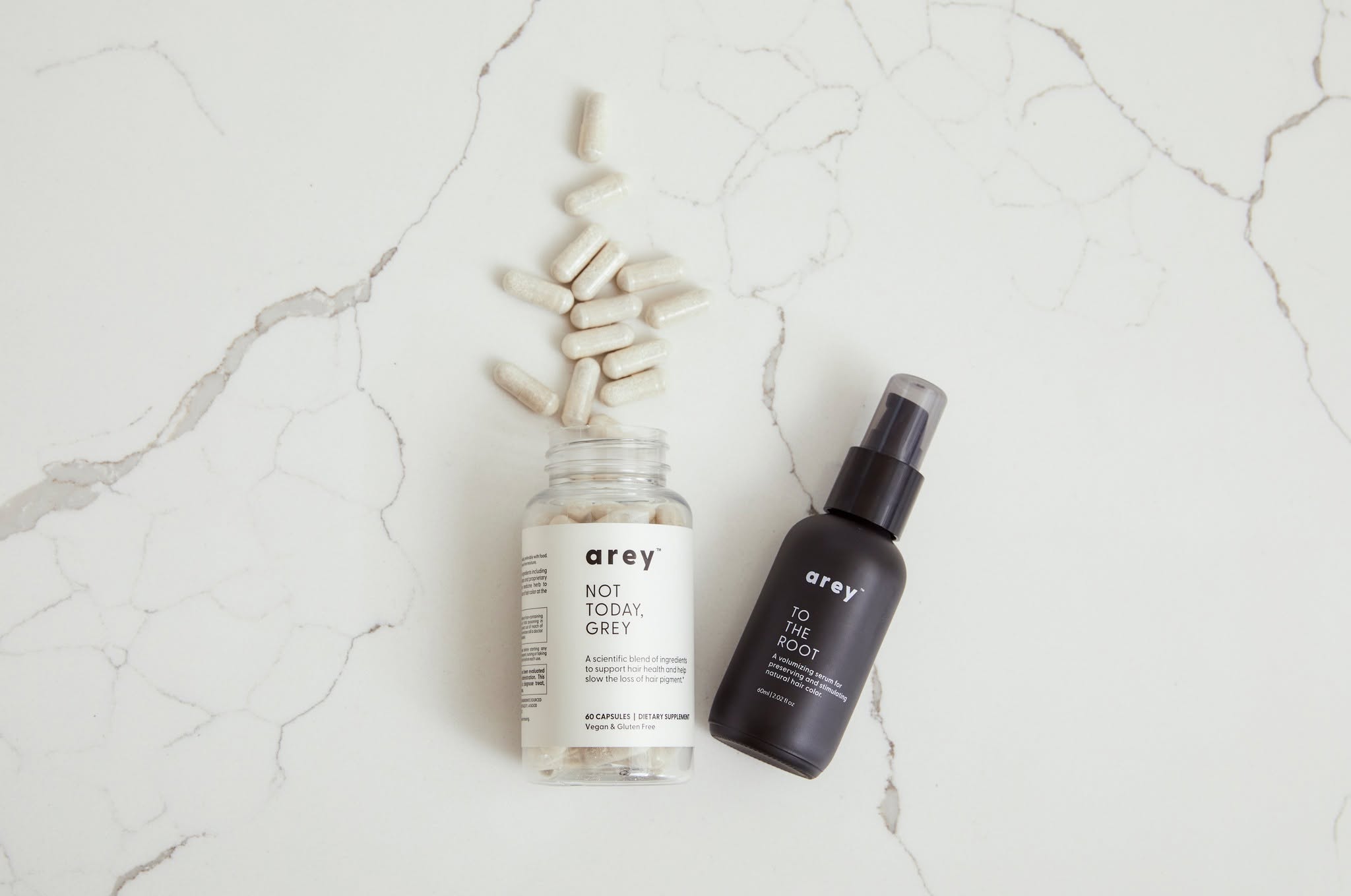
Arey studied its Not Today, Grey supplement and To The Root serum together in a six-month, randomized, double-blind, placebo-controlled clinical trial of 173 participants. The study has been accepted for publication in the Journal of Drugs in Dermatology.
“We’re not a hockey-stick growth company,” says Conrad. “We’ve had great growth throughout the last five years, but it’s slow and steady growth, and that’s intentional.”
Although Nutrafol went from a Unilever Ventures investment to being acquired by Unilever, Conrad and Small recognize that such outcomes are uncommon. Of the 105 companies Crunchbase lists as having received backing from Unilever Ventures, Beauty Independent identified just three that Unilever or Hindustan Unilever subsequently took majority ownership of: Ioma, Nutrafol and Minimalist. Today, Ieva Group owns Ioma.
With Arey, Unilever Ventures has exposure to the anti-graying and hair longevity categories that have ample room for growth as the wider prestige haircare category surges. The United States market for anti-graying hair and beard products was estimated at just $46.6 million in 2025 by Market Glass. According to Circana, prestige haircare sales rose 11% in the first half of 2026, with hair serums jumping nearly 60% as treatments and scalp-focused products fueled growth.
Conrad likens hair longevity to the evolution of skincare toward more proactive care, a mindset she says is gaining traction with younger Arey customers. The brand’s core customer has shifted from roughly 40 to 45 years old to 35 to 40 years old, according to Conrad.
She says, “For me, longevity means healthier hair for longer, and getting on top of it is much easier than trying to fix it after it’s already damaged.”